
Australia has a pretty interesting connection with Germany, doesn’t it? Beyond the obvious love for a cold lager or a reliable hatchback, the cultural and scientific fingerprints of Germany are all over our daily lives. Think about it. When you’re grumbling about your WiFi signal or pondering the mysteries of the universe while staring at the stars in the Outback, you’re touching the legacy of German minds. Honestly, it’s hard to imagine where we’d be without a few specific people from Central Europe who decided that “good enough” just wasn’t an option.
It’s not just about heavy textbooks and classical music that feels a bit too long. We are talking about people who flipped the script on how we see reality, how we communicate, and even how we print the very words you’re reading right now. So, let’s take a bit of a trip through history. No boring lectures, just the highlights of ten Germans who genuinely moved the needle for humanity.
Albert Einstein: The Man Who Made Physics Cool
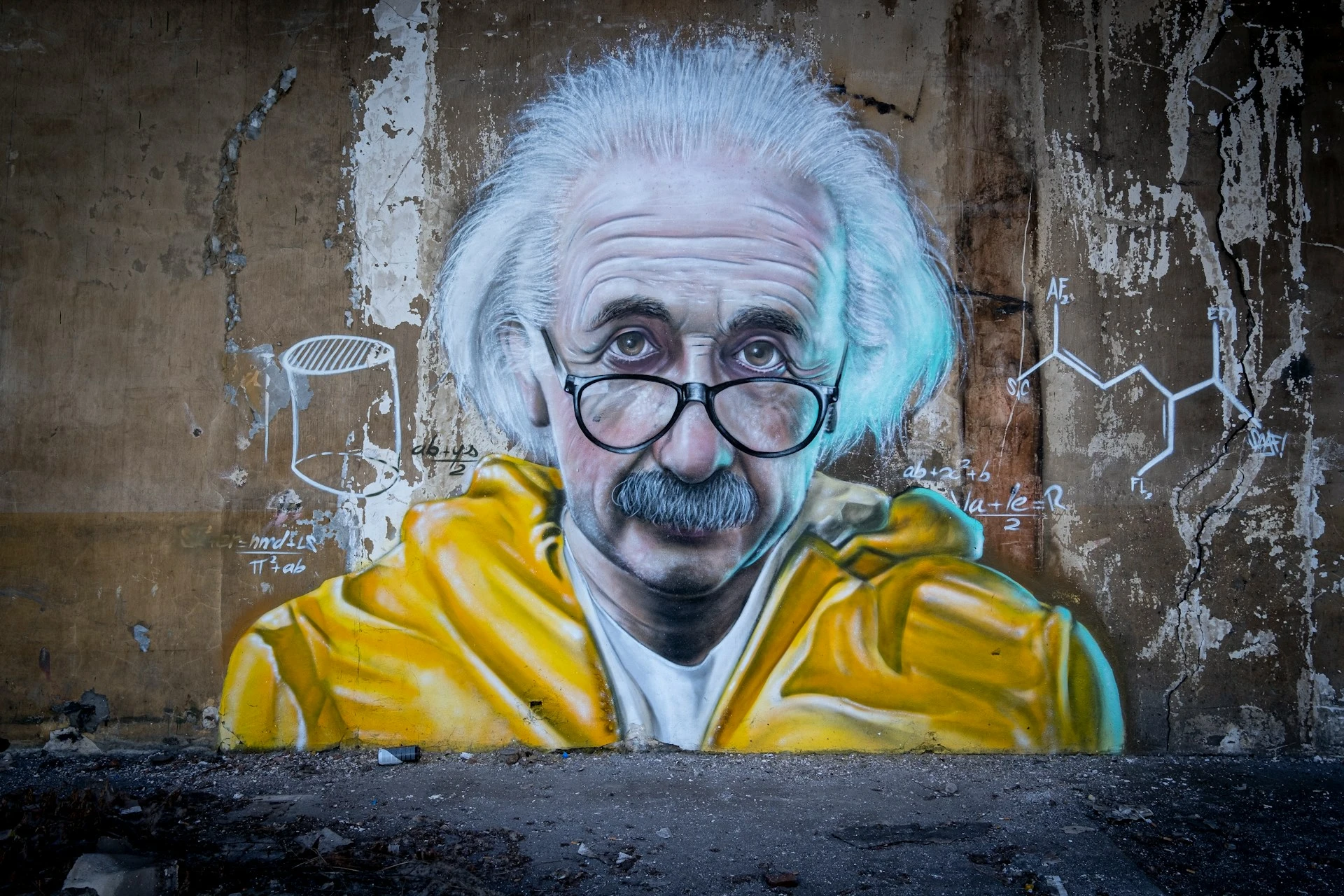
You can’t start a list like this without the guy with the wild hair. Albert Einstein is basically the poster boy for genius. Born in Ulm, he didn’t just study physics; he broke it and rebuilt it. Before him, everyone thought time and space were pretty straightforward. Then he comes along with E=mc2 and suddenly everything is relative. It’s a bit mind-bending when you really sit with it, isn’t it?
His work on the General Theory of Relativity isn’t just for people in white lab coats. It’s the reason your GPS actually works. Without his calculations, the timing on satellites would drift, and you’d end up three streets away from the pub you were trying to find in Melbourne or Sydney. He was also a massive advocate for peace, which is a nice touch for someone so influential. He eventually moved to the US, but those formative years and his groundbreaking “miracle year” papers were deeply rooted in the German intellectual tradition.
Johannes Gutenberg: The Original Disrupter
Long before the internet and social media, there was Johannes Gutenberg. If you think your smartphone changed the world, imagine being around when the printing press dropped. Before the mid-1400s, if you wanted a book, someone had to hand-write the whole thing. It took forever, and only the super-rich or the church could afford them. Gutenberg changed the game with movable type.
He didn’t just invent a machine; he invented the information age. Suddenly, ideas could travel. People could read the news, learn science, and form their own opinions without a middleman. It was the ultimate “power to the people” move. Without Gutenberg, literacy rates would probably still be in the basement, and you definitely wouldn’t be reading this blog post right now. He’s the reason we have a global culture of shared knowledge.
The Great German Innovators
Let’s look at how some of these figures stack up in terms of their primary field and the “vibe” they brought to history. It’s a mix of logic and absolute creative chaos.
| Name | Main Field | Big Achievement | Impact Score (1-10) |
|---|---|---|---|
| Albert Einstein | Physics | Theory of Relativity | 10 |
| Johannes Gutenberg | Innovation | The Printing Press | 10 |
| Ludwig van Beethoven | Music | 9th Symphony | 9 |
| Karl Benz | Engineering | The Modern Car | 10 |
| Immanuel Kant | Philosophy | Categorical Imperative | 8 |
Ludwig van Beethoven: Rock Star of the 1800s
If you like drama in your music, you have Beethoven to thank. He was the bridge between the polite, powdered-wig era of Mozart and the wild, emotional Romantic period. The guy was a rebel. He famously started going deaf in his late 20s, which is basically a nightmare for a musician. But did he quit? No way. He wrote some of his most powerful stuff, like the 9th Symphony, when he couldn’t hear a single note.
His music isn’t just “old stuff.” It’s full of grit and struggle. When you hear that “da-da-da-dum” from the 5th Symphony, that’s raw emotion. He proved that art could be a personal statement, not just background noise for royal dinner parties. In many ways, he set the stage for every solo artist who’s ever poured their heart into a track since.
Karl Benz: The Guy Who Put Us on Wheels
Australians love a good road trip. Whether it’s the Great Ocean Road or a trek across the Nullarbor, our lives revolve around cars. Well, we can thank Karl Benz for that. In 1886, he patented the Benz Patent-Motorwagen. It looked a bit like a giant tricycle with a lawnmower engine, but it was the world’s first actual car.
His wife, Bertha Benz, was actually the one who proved it worked by taking it on the first long-distance drive without telling him. Talk about a power couple. Benz’s engineering didn’t just change transport; it changed how cities are built and how we see distance. Every time you turn the key (or press the start button), you’re using a descendant of his original vision. The car made the world smaller and gave us the freedom to just get up and go.
Martin Luther: The Man Who Challenged the System
You don’t have to be religious to appreciate what Martin Luther did. In the early 1500s, he looked at the most powerful institution in the world-the Catholic Church-and basically said, “I think you’re doing it wrong.” He nailed his 95 Theses to a church door in Wittenberg and sparked the Protestant Reformation.
This wasn’t just about theology. It was about individual conscience. Luther translated the Bible into German so regular people could read it, which actually helped standardize the German language. His actions led to massive shifts in politics, education, and even the way we think about work (the “Protestant work ethic”). He showed that one person with a strong conviction can actually move a mountain, or at least a very large church.
The Scientific and Philosophical Heavyweights
German history is packed with people who liked to ask “why?” and “how?” until their heads hurt. Here are a few more who left a mark that won’t fade.
- Max Planck: The father of quantum theory. He figured out that energy comes in little packets called “quanta.” He basically opened the door for Einstein and all modern physics.
Johann Sebastian Bach: The Architect of Sound
If Beethoven was the emotional heart of music, Bach was the brain. He lived a bit earlier, in the Baroque era, and his music is incredibly complex. It’s like a mathematical puzzle that sounds beautiful. Many musicians today say that Bach is the “father” of everything that came after. Even jazz and pop artists use structures that Bach perfected hundreds of years ago.
He was a hardworking guy, a church organist who had about 20 kids and just churned out masterpieces every week. There’s a sense of order and divinity in his work that’s hard to find anywhere else. He didn’t care about being famous; he just wanted to write the best music possible for the glory of something higher. That kind of dedication is pretty rare these days.
Comparison of Impact Across Eras
It’s interesting to see when these people lived. Germany wasn’t even a unified country for a lot of this history, which makes their individual achievements even more impressive.
| Era | Key Figures | Global Atmosphere |
|---|---|---|
| Renaissance/Reformation | Gutenberg, Luther | Breakdown of old hierarchies, birth of printing. |
| Baroque/Enlightenment | Bach, Kant | Focus on logic, reason, and structured art. |
| Industrial/Romantic | Beethoven, Benz | Emotion meets machinery; the world speeds up. |
| Modern/Atomic | Einstein, Planck | Discovery of the invisible laws of the universe. |
Anne Frank: A Voice for the Millions
While most people on this list are here for science or art, Anne Frank is here for her humanity. Born in Frankfurt, her family fled to Amsterdam to escape the Nazis. We all know the story of the Secret Annex. Her diary, found after the war, became one of the most read books in history.
Why does she matter so much? Because she gave a face and a voice to an unimaginable tragedy. Through the eyes of a teenage girl, we see the best and worst of what humans are capable of. Her optimism in the face of absolute darkness is something that still resonates today. She reminds us why we need to protect freedom and why every single life has a story worth telling. It’s a heavy legacy, but a vital one.
Otto von Bismarck: The Iron Chancellor
You can’t talk about Germany without mentioning the guy who actually made it a country. Otto von Bismarck was a master of “Realpolitik”-basically, playing the political game with zero illusions. In the late 1800s, he stitched together a bunch of small states into the German Empire.
But here’s the cool part for us: he also introduced the world’s first modern welfare state. He created sickness insurance, accident insurance, and old-age pensions. He didn’t do it because he was a softie; he did it to keep the workers happy so they wouldn’t start a revolution. Regardless of his motives, he created the blueprint for the social safety nets that we value so much in places like Australia today. He was a tough, complicated man who basically designed the modern state.
Michael Schumacher: The Speed King
Let’s shift gears to something a bit more modern. If you grew up in the 90s or early 2000s, Michael Schumacher was the undisputed king of Formula 1. He didn’t just win; he dominated. With seven world championships, he redefined what it meant to be a professional athlete in motorsports.
His work ethic was legendary. He’d spend hours with his engineers, obsessing over every tiny detail of the car. That German precision we always hear about? Schumacher lived it. He brought a level of fitness and technical knowledge to the sport that changed it forever. Even now, as he deals with the aftermath of a tragic skiing accident, his influence on F1 is everywhere. He made racing a global phenomenon and inspired a whole generation of drivers.
How Their Legacy Lives on Today
It’s easy to think of these people as just statues or names in a book, but their influence is actually pretty “live.” Here’s how you might encounter them in a normal week:
- On the road: Every time you see a Mercedes-Benz or even just use an internal combustion engine, you’re seeing Karl Benz’s legacy.
So, what’s the common thread here? Honestly, it seems to be a mix of stubbornness and a massive amount of curiosity. Whether it’s Luther challenging the church or Einstein challenging the nature of time, these people weren’t afraid to go against the grain. They weren’t just “famous”; they were catalysts. They pushed the boundaries of what we thought was possible, and in doing so, they gave us the modern world.
It’s a bit of a reminder that big changes usually start with one person asking a difficult question or trying a different way of doing things. Germany has definitely produced more than its fair share of those people. And while we might have a bit of a laugh about German efficiency or their love for sausages, you’ve got to give credit where it’s due. The world would be a much quieter, slower, and probably more boring place without them.
Anyway, that’s my take on the heavy hitters. There are plenty of others-like Marlene Dietrich or even the Brothers Grimm-who could have made the cut, but these ten feel like the foundation. They’re the ones who didn’t just change Germany; they changed the whole map for the rest of us.
Common Questions About Famous Germans
Who is the most famous German ever?
Most people would say Albert Einstein. He’s the universal symbol for intelligence, even if he spent his later years in America. His impact on science is just too big to ignore.
Did a German really invent the car?
Yep, Karl Benz is widely credited with creating the first true internal combustion engine car in 1886. It was a three-wheeler, but it definitely started the whole trend.
Why are there so many famous German composers?
During the 18th and 19th centuries, the various German states were huge patrons of the arts. Music was a big part of social and religious life, which gave geniuses like Bach and Beethoven the space to thrive.
What did Johannes Gutenberg actually do?
He invented the movable-type printing press. It doesn’t sound sexy, but it allowed books to be mass-produced, which basically triggered the Renaissance and the Scientific Revolution.
Was Anne Frank German?
Yes, she was born in Frankfurt, Germany. Her family moved to the Netherlands to escape the rise of the Nazi party, but her roots were firmly German.
Is Michael Schumacher still the best F1 driver?
That’s a huge debate! Lewis Hamilton has matched his record of seven titles, but many fans still consider Schumacher the GOAT because of how he rebuilt the Ferrari team.
What is the “Protestant work ethic”?
It’s a concept linked to Martin Luther and later Max Weber. It’s the idea that hard work, discipline, and frugality are a result of a person’s values. It had a massive impact on the economy of Northern Europe and America.
The Wrap Up
Looking back at these ten icons, it’s pretty clear that Germany’s contribution to the world is massive. From the way we move and communicate to the way we understand the very fabric of reality, these individuals didn’t just observe the world-they reached out and reshaped it. It’s a legacy of deep thought, incredible discipline, and often, a fair bit of rebellion. Whether you’re a fan of classical music, a tech geek, or just someone who enjoys the convenience of a modern life, you’re probably carrying a bit of German history in your pocket or your head. Honestly, it’s a pretty impressive track record for one part of the world. Next time you see a Benz on the street or hear a bit of “Ode to Joy,” maybe give a little nod to the people who started it all. They definitely earned it.
And hey, if you ever find yourself in a pub quiz, you’ve now got enough trivia to carry your team to victory. You’re welcome!
Cheers for reading along. It’s always good to dive into the stories behind the names we think we know. Catch you in the next one!
Leave a Reply