
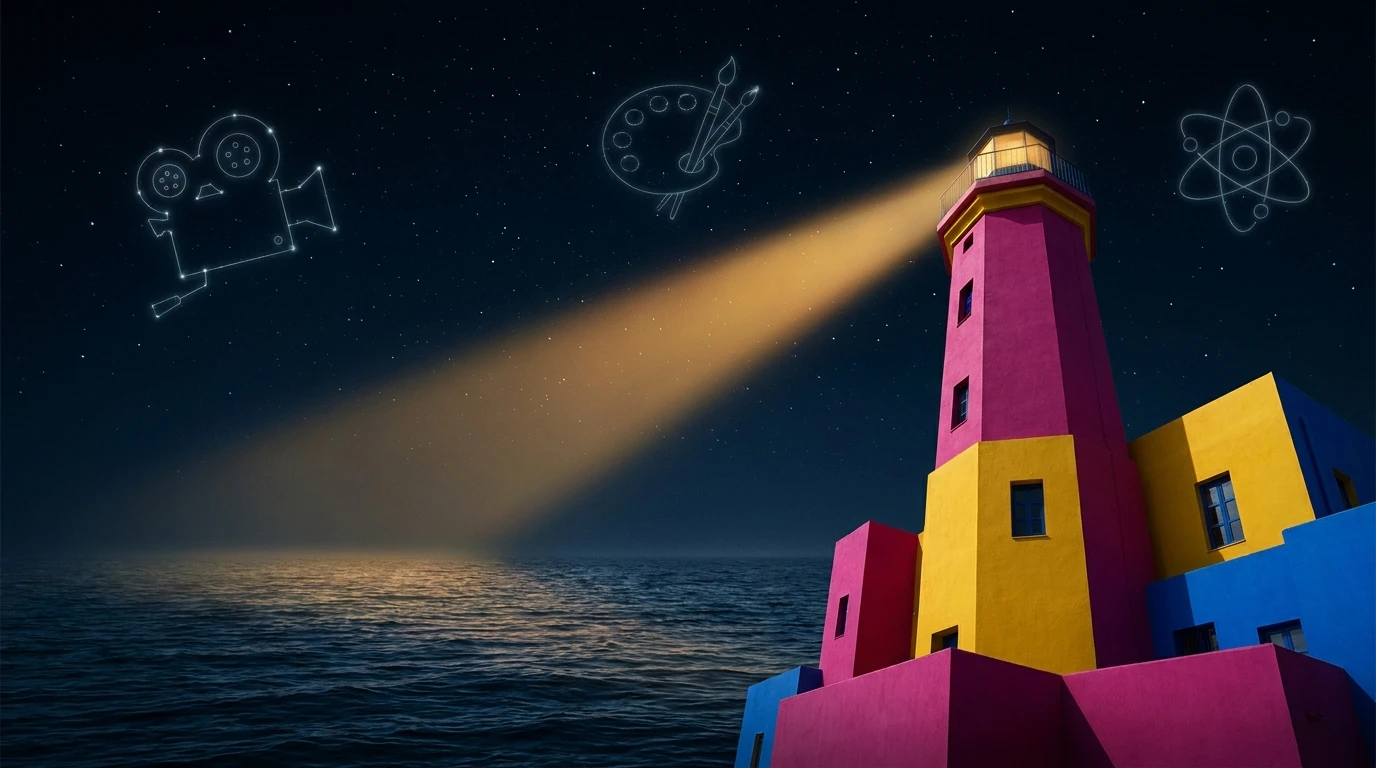
How Famous Mexicans Have Shaped the Global Stage
Ever wondered which famous mexicans have quietly (or rather loudly) completely rewritten the rules of art, science, and global cinema? You might immediately think of a few Hollywood stars or legendary surrealist painters, but the sheer scope of their influence is absolutely massive. Funny enough, my very first soul-stirring exposure to authentic Mexican cinema happened thousands of miles away from North America, right in the heart of Kyiv. I was sitting in a tiny, independent movie theater near the historic Podil district, watching a visually mind-bending masterpiece by Guillermo del Toro while sipping a traditional Ukrainian uzvar. That surreal blend of vibrant Latin American storytelling mixing with a chilly Eastern European evening hit me perfectly. It made me realize how deeply rooted and universally relatable this culture truly is.
When we talk about famous mexicans, we are not just listing random celebrities walking down a red carpet. We are mapping out a distinct network of visionary creators who have dictated how we watch movies, how we protect our planet’s fragile atmosphere, and how we understand deeply personal art. You see their creative fingerprints absolutely everywhere. Whether you are scrolling through a digital streaming service, reading up on climate science, or walking through a modern art gallery, their massive contributions are inescapable. The legacy built by these individuals is etched into the very DNA of our global culture, and their stories are nothing short of spectacular.
The Core Impact of Visionary Minds
The magnitude of what these incredible individuals bring to the global table goes way beyond simple entertainment or passing fame. We are talking about genuine paradigm shifts. You can trace the entire evolution of modern cinematography, climate science, and modern art directly through the hands of these creators. Their true value proposition lies in a completely unique perspective—a blend of magical realism, raw emotional honesty, and absolute technical mastery that resonates across all borders.
To really grasp this, let’s look at a quick breakdown of some of the most influential figures and the specific domains they completely revolutionized:
| Name | Primary Field | Global Impact & Legacy |
|---|---|---|
| Frida Kahlo | Fine Arts & Painting | Redefined surrealism, feminism in art, and raw self-portraiture. |
| Alfonso Cuarón | Cinematography | Pioneered long-take visual storytelling and won multiple Oscars. |
| Mario Molina | Chemistry & Science | Discovered the CFC ozone depletion threat, winning a Nobel Prize. |
Take Salma Hayek, for instance. She didn’t just become a highly successful actress; she shattered long-standing Hollywood stereotypes and became a powerhouse producer, forcefully pushing the narrative of complex Latin American women to the forefront of global media. Or look at Carlos Santana. He didn’t just play the guitar; he completely fused Latin rock with blues and jazz, creating an entirely new genre of music that changed the global soundscape.
The dominance of famous mexicans can be clearly categorized into a few distinct areas of unparalleled excellence:
- Cinematic Dominance: The ‘Three Amigos’ of cinema (del Toro, Cuarón, and Iñárritu) have practically held a monopoly on the Best Director Academy Award for years, entirely reshaping how visual stories are told.
- Scientific Breakthroughs: Beyond art, their relentless pursuit of scientific truth has literally saved our planet’s atmosphere from rapid deterioration.
- Artistic Revolutions: The muralist movement and deeply personal surrealism created a completely new visual language for political and personal expression.
Roots, Evolution, and Modern Icons
Origins of the Cultural Boom
To truly understand the weight of these personalities, you have to look back at the chaotic, fiercely creative period immediately following the Mexican Revolution. The early 20th century was a massive melting pot of identity and fierce nationalism. This was the era of the great muralists like Diego Rivera, David Alfaro Siqueiros, and José Clemente Orozco. They didn’t just paint pictures; they painted massive, unavoidable political statements on the walls of public buildings so that art was no longer locked away for the elite. This raw, unapologetic approach to cultural identity set the initial stage for Mexican creatives to loudly claim their space on the global stage. It taught future generations that their specific cultural voice was powerful, necessary, and worthy of worldwide attention.
The Golden Age of Mexican Cinema
By the 1940s and 1950s, the country entered its Golden Age of Cinema. This period birthed legendary famous mexicans like María Félix, Pedro Infante, and Dolores del Río. Dolores del Río actually became one of the very first Latin American crossover stars in Hollywood, bringing an unprecedented level of elegance and fierce independence to the silver screen. This era wasn’t just about making movies; it was an industrial boom that exported the romantic, dramatic, and deeply musical soul of the country to audiences across Europe and the Americas. The aesthetic established during this time heavily influenced international filmmakers and set a incredibly high standard for production design and storytelling.
Modern Era Global Icons
Fast forward to the modern era, and the influence has only compounded. Now, as we navigate through 2026, the global impact of these creators is stronger and more integrated than ever before. Streaming platforms are packed with brilliant showrunners from Mexico City. Tech innovators are launching startups that solve massive logistical problems. Actors like Diego Luna and Gael García Bernal have seamlessly transitioned from gritty independent films to massive blockbuster franchises like Star Wars and Marvel, proving that the talent pool is endlessly versatile. They carry the legacy of the Golden Age and the muralists into cutting-edge digital formats.
Scientific and Technical Deep Dive
The Chemistry That Saved the Sky
While artists and actors often grab the flashy headlines, we absolutely must talk about the famous mexicans who operated in laboratories and completely changed the course of human history. The most prominent example is Dr. Mario Molina. Alongside F. Sherwood Rowland, Molina began investigating chlorofluorocarbons (CFCs)—chemicals heavily used in refrigerators and aerosols during the mid-20th century. At the time, everyone thought these chemicals were perfectly safe. Molina’s rigorous technical research proved that once CFCs reached the upper stratosphere, ultraviolet light broke them apart, releasing highly reactive chlorine atoms. A single chlorine atom can destroy over 100,000 ozone molecules before it is removed from the stratosphere.
Pioneers of Space and Technology
His groundbreaking work led directly to the 1987 Montreal Protocol, an international treaty designed to phase out the production of numerous substances responsible for ozone depletion. Without his exact mathematical models and relentless advocacy, the Earth’s protective shield would have been critically compromised. Beyond environmental science, figures like Rodolfo Neri Vela broke atmospheric boundaries. Neri Vela was the first Mexican astronaut to go to space, flying aboard the Space Shuttle Atlantis in 1985. His mission involved deploying critical communications satellites and conducting complex scientific experiments in zero gravity.
Let’s look at some undeniable scientific facts driven by these innovators:
- Mario Molina was awarded the Nobel Prize in Chemistry in 1995 for his intricate work on atmospheric chemistry and the formation and decomposition of ozone.
- The Montreal Protocol, spurred by Molina’s findings, is widely considered the most successful environmental agreement in human history, practically eliminating CFC usage globally.
- Rodolfo Neri Vela conducted extensive experiments on human physiology and plant growth during his STS-61-B mission, providing invaluable data for long-term space habitation.
- Modern Mexican engineers are currently at the absolute forefront of developing drought-resistant agricultural technologies to combat global climate shifts.
A 7-Day Guide to Experiencing Their Brilliance
You can’t just read about this kind of cultural and intellectual wealth; you have to actively experience it. Here is a highly curated, actionable 7-day plan to immerse yourself completely in the incredible work of these famous mexicans.
Day 1: Cinematic Masterpieces
Start your week with visual perfection. Watch “Pan’s Labyrinth” by Guillermo del Toro. Pay close attention to the intricate practical effects and the dark, magical realism that expertly critiques fascism. Follow it up with Alfonso Cuarón’s “Roma” to experience a deeply personal, stunningly photographed love letter to Mexico City.
Day 2: The Raw Power of Canvas
Take a virtual, high-definition tour of La Casa Azul (The Blue House), the historic home and sanctuary of Frida Kahlo. Spend hours analyzing “The Two Fridas” and “Self-Portrait with Thorn Necklace and Hummingbird.” Let the visceral pain, vibrant colors, and fierce independence wash over you.
Day 3: Literary Genius
Pick up a copy of “The Labyrinth of Solitude” by Nobel laureate Octavio Paz. This isn’t just an essay; it is a surgical dissection of the Mexican identity, history, and the universal human condition of feeling isolated. It will completely change how you view cultural psychology.
Day 4: Musical Legends
Put on a high-fidelity headset and listen to Carlos Santana’s groundbreaking album “Abraxas.” Let tracks like “Oye Como Va” and “Black Magic Woman” demonstrate the absolute perfection of blending Afro-Latin polyrhythms with screaming electric blues guitar.
Day 5: Culinary Maestros
Food is art. Attempt a recipe from renowned chef Enrique Olvera. Try making a complex, slow-cooked mole or elevated street tacos. Understand that traditional Mexican cuisine is recognized by UNESCO as an Intangible Cultural Heritage of Humanity for its profound historical roots.
Day 6: Architectural Wonders
Spend your day studying the Pritzker Prize-winning architecture of Luis Barragán. Look up photos of the Casa Barragán. Notice how he masterfully uses stark, massive walls painted in vivid pinks and yellows, manipulating natural light to create spaces of profound emotional serenity.
Day 7: Modern Innovators and Space
Wrap up your week by watching a documentary on José Hernández, the migrant farmworker who learned English, earned an engineering degree, and pushed through countless rejections to become a NASA astronaut. His story is the ultimate testament to relentless human grit and technological ambition.
Myths and Reality
There are quite a few misconceptions floating around about this topic. Let’s set the record straight.
Myth: Famous Mexicans are solely concentrated in the entertainment and sports industries.
Reality: Absolutely false. They are Nobel laureates in chemistry, pioneers in space exploration, and leading engineers at massive global tech firms.
Myth: Mexican cinema is mostly limited to overly dramatic soap operas (telenovelas).
Reality: While telenovelas are a wildly popular global export, the country’s film directors are the most critically acclaimed visionaries in modern Hollywood, dominating the Oscars for cinematography and direction.
Myth: The culture is entirely homogeneous and uniform.
Reality: The cultural output spans incredibly diverse roots, blending brilliant indigenous traditions with ultra-modern cosmopolitan, European, and global tech influences.
Myth: Frida Kahlo is the only genuinely renowned painter from the region.
Reality: She is a massive icon, but the muralist movement included dozens of titans like Rufino Tamayo and David Alfaro Siqueiros who defined 20th-century public art.
Frequently Asked Questions & Conclusion
Who is the most famous Mexican director?
Guillermo del Toro, Alfonso Cuarón, and Alejandro González Iñárritu are arguably the most famous, often referred to as the ‘Three Amigos’ of modern cinema.
Has a Mexican ever won a Nobel Prize?
Yes. Mario Molina won the Nobel Prize in Chemistry (1995), Octavio Paz in Literature (1990), and Alfonso García Robles won the Nobel Peace Prize (1982).
What makes Frida Kahlo so globally famous?
Her unflinching, deeply emotional self-portraits tackled themes of chronic pain, bold feminism, and indigenous identity long before they were mainstream concepts.
Who was the first Mexican in space?
Rodolfo Neri Vela was the very first, launching aboard the Space Shuttle Atlantis in 1985 to conduct vital scientific research.
Why is Mexican cuisine considered a cultural heritage?
Because it retains incredibly ancient indigenous farming and cooking techniques, passed down uninterrupted through countless generations.
Who is the most famous Mexican musician globally?
Carlos Santana is widely considered one of the most famous, completely revolutionizing global music by fusing rock with Latin rhythms.
Are there famous Mexicans in modern technology?
Absolutely. From aerospace engineers to software developers leading Silicon Valley initiatives, their presence in STEM is rapidly expanding globally.
So, there you have it. The phenomenal influence of famous mexicans is woven deeply into the fabric of everything we consume, from the air we breathe to the screens we watch. They are the bold artists who challenge our perspectives, the brilliant scientists who guard our future, and the incredible storytellers who bring us all closer together. If this breakdown changed the way you view global culture, do yourself a favor and share this guide with a friend who loves history, art, or science. Keep exploring, keep watching, and never stop appreciating the massive cultural forces that make our world so incredibly vibrant!
Leave a Reply