So, what happened in 2012?
If you catch yourself randomly asking what happened in 2012, you are definitely not alone. It feels like an eternity ago, yet somehow the memories are incredibly fresh. That entire year was a chaotic, unforgettable mix of supposed apocalyptic prophecies, massive cultural shifts, and gigantic global sporting events that completely reshaped our shared memory. I remember exactly where I was during the summer of that year. I was walking down Khreshchatyk Street in Kyiv because Ukraine was proudly co-hosting the UEFA Euro 2012 football championship with Poland. The sheer energy in the air was magnetic. The massive fanzone was completely buzzing with thousands of tourists from Sweden, England, France, and beyond. Swedish fans set up this massive, vibrant camp on Trukhaniv Island, painting the city yellow and blue in a completely different way. It genuinely felt like Kyiv was the center of the universe for those few weeks.
Now that we are living in 2026, looking back at that vibrant, slightly crazy summer feels incredibly nostalgic. We thought the world was going to end in December, but instead, we just ended up doing the Gangnam Style dance at every single wedding and party. You really have to look closely at the events of that time to understand how our current digital culture was born. Let us talk about why that specific year left such a massive, permanent footprint on the globe and why we still joke about it.
To truly grasp the vibe of that era, we need to look at the immense cultural benefits of analyzing past viral phenomenons. Understanding the timeline of that year gives us a brilliant map of how internet culture transitioned from random funny clips to global, algorithmic dominance. The value proposition here is simple: if you understand the media landscape of that time, you understand how we got to where we are now. Here are two quick examples of that shift. First, PSY’s “Gangnam Style” completely broke YouTube’s view counter, proving that non-English music could dominate the entire planet purely through digital word-of-mouth. Second, the “Kony 2012” documentary became the fastest-growing viral video ever at the time, showing both the incredible power and the severe pitfalls of internet activism.
| Event / Milestone | Immediate Impact | Long-Term Legacy |
|---|---|---|
| Mayan Calendar End | Global panic mixed with heavy internet sarcasm and massive party planning. | Became the ultimate pop-culture joke regarding fake doomsday predictions. |
| UEFA Euro 2012 | Brought millions of tourists to Ukraine and Poland, sparking a massive economic boost. | Solidified the region’s ability to host top-tier international mega-events. |
| London Olympics | United the world with an unforgettable opening ceremony featuring James Bond and the Queen. | Remembered as one of the most culturally vibrant and successful modern Olympics. |
Looking back, there are some very clear lessons we picked up from the chaos of that time. Here is a quick breakdown of what we learned:
- Viral media permanently lost its borders. A catchy song from South Korea could literally force the biggest video platform on earth to rewrite its backend code just to handle the traffic.
- Mobile internet started to fully dominate our attention. People were live-tweeting events like the Super Bowl and the Olympics from their smartphones instead of just watching TV.
- International sporting events reached absolute peak digital integration, creating a blueprint for how fans interact with live sports online today.
Those shifts might seem normal to us now, but back then, they were wildly fresh and exciting.
Origins of the Doomsday Hype
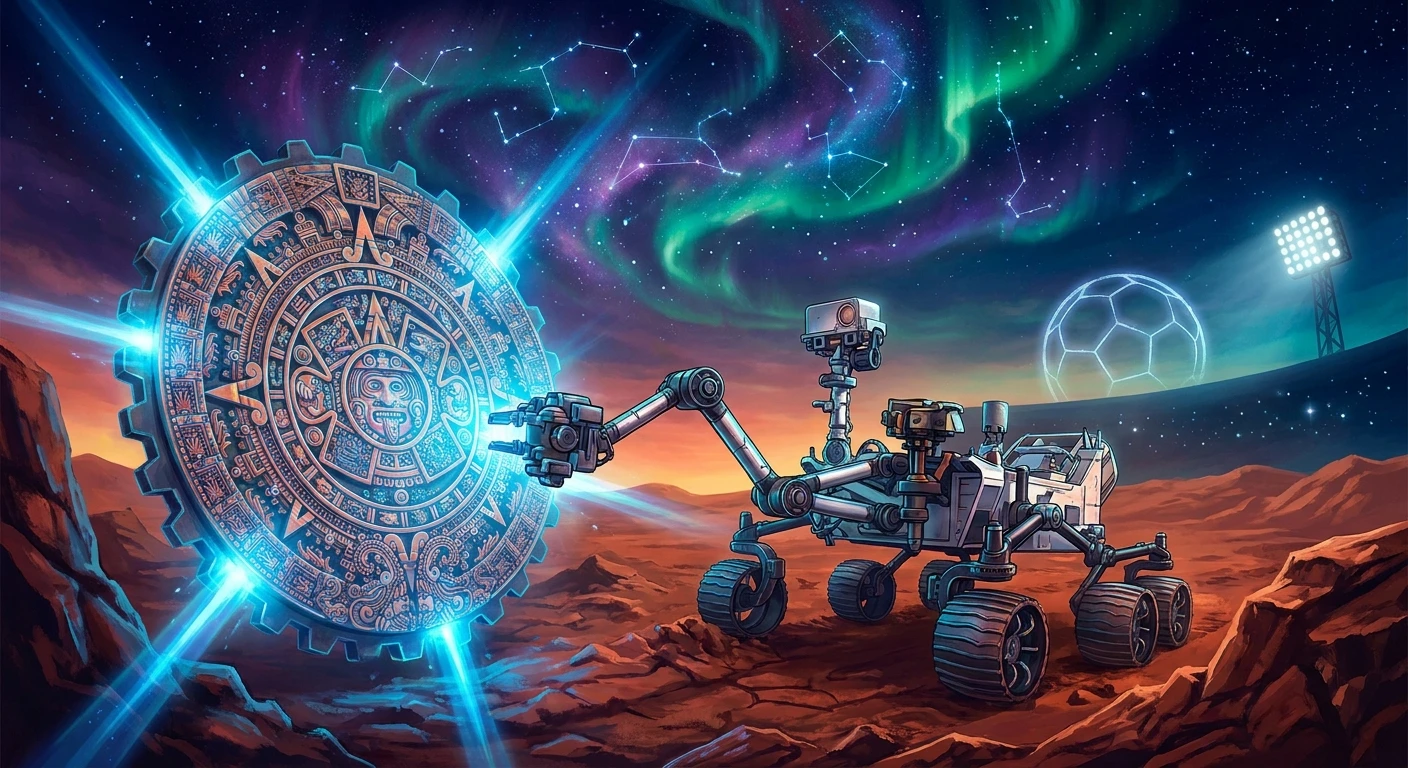
You cannot talk about this era without addressing the giant, apocalyptic elephant in the room: December 21. The origins of this massive global panic stemmed from a severe misinterpretation of the Mesoamerican Long Count calendar, often just called the Mayan calendar. Ancient Maya civilization tracked time in large cycles called Baktuns. The 13th Baktun was scheduled to finish precisely in late December. Somehow, early internet forums, late-night conspiracy radio shows, and sensationalist news outlets spun this simple calendar reset into an absolute guarantee of planetary destruction. Hollywood even capitalized on it early by releasing a blockbuster disaster movie a few years prior, ensuring the anxiety was deeply embedded in mainstream pop culture.
Evolution of the Year’s Narrative
As the months actually ticked by, the evolution of the narrative shifted dramatically from impending doom to unprecedented human achievement. Instead of fire raining from the sky, we got to see Felix Baumgartner jump from a balloon in the actual stratosphere, breaking the sound barrier with his own body during the Red Bull Stratos event. We got to see Marvel’s The Avengers completely redefine the summer blockbuster, proving that interconnected cinematic universes were a goldmine. The tension of the doomsday clock was entirely overwritten by people just living their lives, enjoying massive cultural drops, and connecting on platforms like Twitter and Facebook which were hitting their golden growth phases.
Modern State of the Nostalgia
Now that we are firmly settled into 2026, the modern state of this specific nostalgia is stronger than ever. Generation Z, who were mostly young kids back then, look back at it as the “golden era” of the internet. It is viewed as a time before algorithms completely dictated every single thing we consume. The aesthetics, the neon colors, the shutter shades, and the early Instagram filters evoke a weirdly comforting feeling. It represents the last breath of the truly chaotic, untamed web before intense corporate monetization took over completely.
The God Particle Breakthrough
While everyone was arguing about the end of the world, scientists in Switzerland were busy figuring out the fundamental building blocks of the universe. In July, physicists at CERN announced the discovery of a new particle consistent with the Higgs boson. Often referred to by the media as the “God particle,” this was a monumental achievement for the Large Hadron Collider. The Higgs boson is crucial because it helps explain why other particles have mass. Without it, the universe as we know it would not exist. The sheer technical collaboration required to smash protons together at nearly the speed of light and measure the fallout is staggering. It proved the Standard Model of particle physics was basically spot on.
The Mars Curiosity Landing
In August, NASA pulled off one of the most stressful and technically brilliant maneuvers in the history of space exploration. The Curiosity rover landed on Mars. Because the rover was the size of a small car, they could not just bounce it onto the surface using airbags like they did with older models. Instead, engineers invented a totally new system called a “sky crane.” This rocket-powered backpack hovered over the Martian surface and gently lowered the rover down on nylon cords.
- The entire landing sequence was famously dubbed the “Seven Minutes of Terror” because of a massive communication delay.
- Curiosity weighed nearly 2,000 pounds, making it the heaviest human-made object to land on Mars at the time.
- Its primary mission was to determine if Mars ever had an environment capable of supporting small life forms called microbes.
- The rover carried a laser that could vaporize rocks to analyze their chemical composition from a distance.
These scientific leaps proved that humanity was far more focused on moving forward than worrying about ancient calendars.
If you want to fully immerse yourself in the nostalgia, I have put together a fun, actionable 7-Day Plan to totally relive the vibes of that era. Grab some snacks, fire up your screens, and follow this menu.
Day 1: Movie Night with The Avengers
Start your week by watching the movie that changed Hollywood forever. The Avengers was the first time we saw Iron Man, Captain America, Thor, and the Hulk properly team up on screen. It is loud, it is funny, and it perfectly captures the optimistic, blockbuster energy of the time.
Day 2: Stream the London Olympics Highlights
Go to YouTube and pull up the opening ceremony of the London Games. Watch the Queen jump out of a helicopter with James Bond. Then, check out Usain Bolt breaking records on the track. The production value and global unity on display were absolutely unmatched.
Day 3: The Ultimate Music Throwback
Create a playlist featuring the biggest hits of the year. You absolutely must include Gotye’s “Somebody That I Used to Know,” Carly Rae Jepsen’s “Call Me Maybe,” and of course, PSY’s “Gangnam Style.” Let the infectious pop beats transport you back to simpler times.
Day 4: Study the Mars Sky Crane
Spend a few hours watching documentaries or NASA’s archived footage of the Curiosity landing. The “Seven Minutes of Terror” video is incredibly gripping. It is a fantastic reminder of what human ingenuity can accomplish when brilliant minds work together.
Day 5: Re-experience the Football Magic
Search for the best goals and moments from the UEFA Euro championship hosted by Poland and Ukraine. Watch Spain’s incredible tiki-taka football as they dominated the tournament and ultimately won the final in Kyiv. The atmosphere in the stadiums was purely electric.
Day 6: Explore the Higgs Boson
Take some time to read up on or watch a simple explainer video about CERN and the Large Hadron Collider. Understanding the basic concept of the Higgs field gives you a profound appreciation for the invisible mechanics of the universe.
Day 7: Embrace the Doomsday Humor
Wrap up your week by watching Roland Emmerich’s disaster movie “2012” (even though it came out a bit earlier, it set the tone). It is completely over-the-top, scientifically ridiculous, and incredibly fun. It is the perfect way to laugh at the panic we all supposedly felt.
It is wild how many crazy stories spread back then. Let us clear up some of the most persistent rumors.
Myth: The Mayan calendar explicitly predicted the absolute end of the world in December.
Reality: The calendar simply reached the end of a very long cycle, known as a Baktun. Much like our calendar flips from December 31 to January 1, their calendar just rolled over to a new cycle. Mayans never predicted an apocalypse.
Myth: The viral campaign “Kony 2012” successfully captured its target and changed international policy overnight.
Reality: While it became the most watched viral video ever at the time, it was heavily criticized for oversimplifying a complex conflict and promoting “slacktivism.” The target of the campaign was not captured as a result of the video.
Myth: Gangnam Style was the first viral video ever created.
Reality: Viral videos had existed for years (like “Charlie Bit My Finger”), but Gangnam Style was the first to cross the massive milestone of 1 billion views on YouTube, fundamentally shifting how the music industry viewed internet metrics.
Who won the Euro football championship that year?
Spain won the tournament, completely dominating Italy 4-0 in the final match held in Kyiv.
Did the world actually end?
Obviously not. The panic was entirely fabricated by modern media and internet conspiracies misunderstanding ancient timekeeping.
What was the highest-grossing movie?
Marvel’s The Avengers took the top spot, earning over $1.5 billion worldwide at the box office.
Where were the Summer Olympics held?
The Summer Games were hosted in London, United Kingdom, bringing spectacular athletic feats and a memorable opening ceremony.
What significant scientific particle was discovered?
Scientists at CERN confirmed the discovery of a particle consistent with the Higgs boson, a major milestone in physics.
Who jumped from the edge of space?
Felix Baumgartner jumped from a helium balloon in the stratosphere, breaking the sound barrier in freefall.
Was it a leap year?
Yes, it was a leap year, meaning February had 29 days, adding an extra day to a wildly eventful calendar.
Looking back at all these milestones proves just how completely packed that twelve-month stretch was. We survived the supposed end of the world, witnessed incredible leaps in science and space exploration, and danced to some of the catchiest pop music ever produced. If you enjoyed this trip down memory lane, drop a comment below and share your absolute favorite memory from that wild era!
Leave a Reply