
The Profound Historical Legacy of September 4th
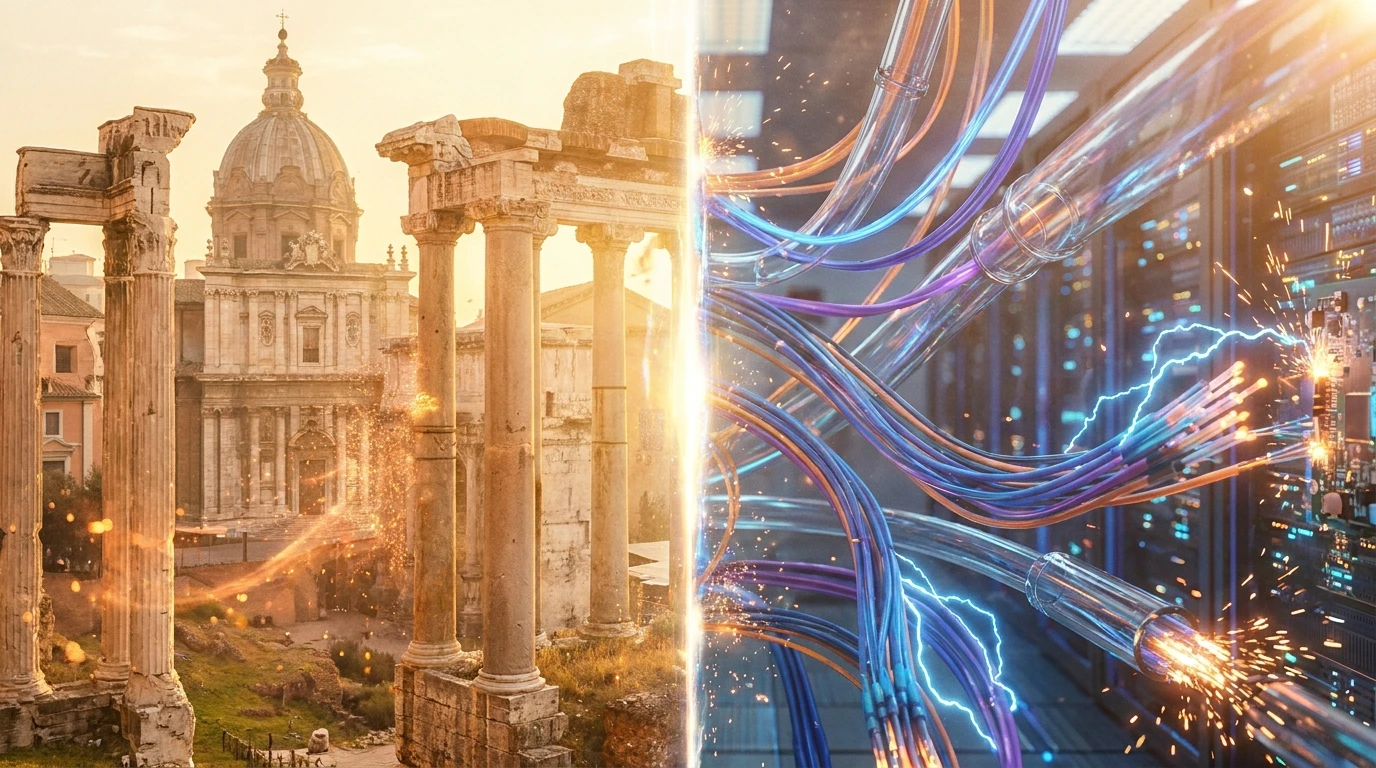
When you evaluate the vast timeline of human civilization, September 4th stands out as an extraordinary anchor point where ancient empires fell, technological boundaries shattered, and enduring cultural milestones took root. Far from being just another ordinary page on the calendar, this specific late-summer day serves as a unique cross-section of global development. By analyzing the patterns of events that cluster around early September, historians identify distinct rhythms in political declarations, scientific breakthroughs, and societal shifts. As the northern hemisphere transitions from the intense heat of August into the harvest season, human activity historically peaked, leading to concentrated moments of decisive action. The sheer density of monumental events occurring on this date demands a meticulous historical inspection. Whether examining the definitive collapse of the Western Roman Empire when Romulus Augustulus was deposed in 476 AD, the brilliant electrification of lower Manhattan by Thomas Edison in 1882, or the foundational incorporation of Google in 1998, the breadth of human achievement recorded during these exact twenty-four hours is absolutely extraordinary. This comprehensive analysis breaks down the chronological significance of the day, isolating the socio-political impacts and detailing how one calendar date repeatedly altered the trajectory of human society. We analyze the long-term ramifications of these events, evaluating how aggressive decisions made centuries ago continue to dictate our contemporary geopolitical and technological frameworks. The recurring theme of relentless innovation and institutional transition remains the definitive characteristic of this remarkable date.
Core Milestones: Evaluating the Impact
The intrinsic value of studying specific calendar dates lies in understanding the cyclical nature of human ambition and the culmination of long-term generational projects. On this particular day, multiple sectors of society experienced sudden, paradigm-shifting changes that completely reorganized daily human life. To truly grasp the staggering magnitude of the date, we must categorize these shifts into distinct operational spheres. Recognizing that major corporate and governmental entities often finalize colossal projects in early September helps economists and sociologists forecast future behavioral patterns.
Read also: Events and Significance of the 29th August; What Happened on 18th July? Historic Events & Birthdays.
- Technological Infrastructure Births: The establishment of both physical electrical grids and digital information frameworks that currently dictate global communication networks.
- Imperial and Governance Transitions: The formal cessation of ancient administrative models, which violently gave way to medieval and eventually modern structural frameworks.
- Cultural Broadcasting and Media Milestones: The first successful commercial implementations of transcontinental media broadcasts and consumer imaging technologies that unified previously fragmented populations.
These milestones provide a clear value proposition for historical researchers. For instance, the transition from antiquity to the Middle Ages hinges directly on the events of this day. Similarly, the genesis of the modern information age can be traced back to a specific garage in California on this exact date. Below is a structured breakdown of the most impactful events that characterize the legacy of the day.
| Event Category | Notable Historical Milestone | Global Impact Metric |
|---|---|---|
| Political Shifts | Deposition of Romulus Augustulus (476 AD) | Triggered the definitive transition from Classical Antiquity to the Middle Ages in Europe. |
| Technological Innovation | Foundation of Google (1998) | Revolutionized global information retrieval, digital advertising, and internet commerce. |
| Scientific Endeavors | Activation of Pearl Street Station (1882) | Initiated the worldwide era of commercial electrification and urban modernization. |
| Media and Arts | George Eastman registers Kodak (1888) | Democratized photography, allowing everyday citizens to capture and preserve visual history. |
Each of these four pillars represents a moment where the prevailing status quo was entirely dismantled. Odoacer’s decision to spare the young emperor Romulus while stripping him of power created a new geopolitical map in Europe. Edison’s flip of the switch at 3:00 PM energized 400 incandescent lamps in the Wall Street district, proving that alternating or direct current could be monetized and safely distributed to the public. Eastman’s roll-film camera eliminated the need for heavy, toxic glass plates, making art accessible to the masses. Page and Brin’s algorithm fundamentally changed how humanity indexes its collective intelligence.
The Ancient Origins of Early September Shifts
To fully appreciate the gravity of the date, we must look at the mechanics of the ancient Roman calendar. Originally, September functioned as the seventh month of the year, preceding the insertion of January and February. The cultural significance of the early September days revolved heavily around intense preparation for the upcoming autumn equinox. Agricultural harvests strictly dictated military and political movements across the Mediterranean and European theaters. Campaign seasons for ancient armies had to conclude before the harsh winter weather arrived, meaning late summer and early autumn were prime times for decisive battles, sieges, and political coups. The deposition of the Roman Emperor in 476 AD by the Germanic king Odoacer was perfectly timed with these logistical realities. Odoacer knew that securing power before the winter months was crucial for consolidating his rule over the Italian peninsula, effectively ending centuries of imperial dominance from Rome and Ravenna.
Evolution Through the Industrial Era
As human society progressed from agrarian rhythms to mechanized industries, the significance of the date evolved from agricultural and military milestones to astonishing industrial achievements. The nineteenth century brought rapid acceleration. On this day in 1882, Thomas Edison activated the Pearl Street Station in lower Manhattan, the world’s first commercial central power plant. This singular engineering triumph utilized giant Jumbo dynamos to distribute direct current electricity to local businesses, forever changing urban living, extending working hours, and setting the foundation for the glowing metropolises we recognize today. Just six years later, in 1888, George Eastman received a patent for his roll-film camera and officially registered the trademark name Kodak. This invention transitioned photography from a dangerous, chemically intensive profession into a casual consumer hobby, effectively inventing the concept of the snapshot.
The Modern State of Digital Milestones
The late twentieth century shifted the focus of this date heavily toward the digital and telecommunications realm. On this day in 1951, President Harry S. Truman addressed the nation in the first live, transcontinental television broadcast in the United States, utilizing a newly constructed microwave radio relay system by AT&T. This broadcast shrank the continent, allowing millions to experience an event simultaneously regardless of geography. Decades later, the formal incorporation of Google in 1998 marked the definitive dawn of the modern internet era. What began as a university research project named BackRub was officially codified into a corporate entity on this date, eventually indexing billions of web pages and fundamentally altering human cognition and memory retention. The legacy of the day remains deeply intertwined with these radical technological leaps.
Astronomical and Calendar Mechanics
Beyond human achievements, this date possesses specific astronomical characteristics based on the Earth’s elliptical orbit around the Sun. During early September, the Earth maintains an orbital velocity of approximately 29.78 kilometers per second. As the planet approaches the September equinox, the solar declination drops steadily toward the celestial equator. This orbital geometry results in an observable, rapid loss of daylight minutes each day in the Northern Hemisphere, while the Southern Hemisphere experiences the exact opposite effect.
- Solar Declination Shifts: The sun’s zenith marches aggressively southward, altering shadow lengths and signaling biological changes in flora and fauna.
- Atmospheric Thermodynamics: Ocean heat absorption in the Northern Hemisphere reaches its maximum annual threshold, providing massive thermal fuel for tropical cyclonic development in the Atlantic basin.
- Gregorian Calendar Adjustments: Historical leap year calculations and the shift from the Julian to the Gregorian system required meticulous realignments to ensure this specific solar position remained consistently dated.
Meteorological Patterns and Climate Observations
Historically, the thermodynamic realities of early September have directly shaped the outcomes of major events. In the Atlantic, this date falls squarely within the statistical peak of hurricane season. The maximum oceanic thermal capacity creates an environment ripe for intense barometric pressure drops. Ancient and early modern naval fleets had to strictly account for these volatile meteorological patterns, often delaying invasions or altering merchant shipping routes to avoid catastrophic losses. Understanding these atmospheric dynamics is essential for grasping why certain military campaigns were abruptly halted or why specific agricultural harvests were rushed precisely during this short calendar window.
Day 1: Analyzing the Fall of the Roman Empire
Begin your week-long historical exploration by diving deeply into the primary sources detailing the events of 476 AD. Read the surviving accounts of Odoacer’s march on Ravenna and the subsequent message sent by the Roman Senate to Emperor Zeno in Constantinople, declaring that the West no longer required its own emperor. Understand the geopolitical vacuum this created.
Day 2: The Electrification of the Modern City
Focus your research entirely on the engineering marvel of Thomas Edison’s Pearl Street Station. Study the technical diagrams of the Jumbo dynamos and analyze the aggressive corporate battle between direct current and alternating current. Map out the original 400 lamps illuminated in lower Manhattan and evaluate how this localized grid expanded globally.
Day 3: The Democratization of Photography
Examine the mechanical patents filed by George Eastman in 1888. Analyze how the shift from heavy, fragile glass photographic plates to flexible, continuous roll film completely altered media consumption. Investigate the marketing genius behind the nonsensical but highly memorable trademark name Kodak and its impact on consumer culture.
Day 4: Transcontinental Broadcasting History
Review the immense technical challenges overcome during the 1951 transcontinental television broadcast. Learn about the AT&T microwave radio relay system, which required highly synchronized towers spaced strategically across the American landscape to bounce television signals from coast to coast without massive signal degradation.
Day 5: The Birth of the Digital Search Era
Explore the original PageRank algorithm patent filed by Larry Page and Sergey Brin. Read about the early garage days of Google and how their unique mathematical approach to counting and qualifying backlink citations completely outclassed existing search engines like AltaVista and Yahoo, setting the stage for digital dominance.
Day 6: Astronomical Observations
Step outside and track the solar declination in your local area. Map the shadow lengths at precise solar noon to physically connect with the time of year. Observe the meteorological conditions, noting the atmospheric shifts that signal the rapid approach of the autumnal equinox and the changing seasonal thermodynamics.
Day 7: Synthesizing the Historical Data
Compile all the gathered information into a comprehensive, interconnected timeline. Recognize the compounding nature of these events: how the fall of empires necessitates new structures, how electrification powers mass media, and how digital algorithms organize the massive output of that media. Synthesize these facts to appreciate the monumental weight of the date.
Myths and Historical Realities
Myth: The fall of Rome on this day resulted in an immediate, catastrophic societal collapse and sudden widespread chaos.
Reality: Life continued largely unchanged for the average Roman citizen on the peninsula; the shift was primarily an administrative restructuring at the absolute highest levels of government, with Germanic kings maintaining existing Roman laws and bureaucratic systems.
Myth: Thomas Edison invented the actual lightbulb on this specific calendar date.
Reality: Edison did not invent the lightbulb on this day. Rather, he activated the first commercial electrical distribution plant, proving that a centralized power grid could sustainably power preexisting lightbulbs in numerous separate locations.
Myth: Google’s domain name was registered on this exact date in 1998.
Reality: The domain name was actually registered a year earlier in September 1997. The events of 1998 on this specific date pertain strictly to the formal legal incorporation of the company in California, establishing it as a corporate entity.
Why is this specific date so prominent in technological history?
Early September traditionally aligns with the end of summer vacations and the beginning of the fiscal and academic year, leading to strategic corporate launches and massive technological unveilings by major institutions.
Who was Romulus Augustulus?
He was the last functioning Western Roman Emperor, formally deposed on this date in 476 AD, marking the symbolic end of the classical Roman Empire in Western Europe.
Where was the first commercial power plant located?
The Pearl Street Station was constructed and activated in lower Manhattan, New York City, powering a small localized grid for nearby financial institutions.
What did George Eastman accomplish on this day?
In 1888, he successfully patented the revolutionary roll-film camera and officially registered the trademark name Kodak, creating the modern consumer photography industry.
When was Google officially incorporated?
The search engine giant was formally established as a legal corporate entity on September 4, 1998, moving from a research project to a massive business venture.
What major television event happened in 1951?
President Harry S. Truman’s speech at the Japanese Peace Treaty Conference was broadcast live across the United States, becoming the first transcontinental television broadcast.
How does the solar system align on this date?
The Earth is positioned in its late-summer orbital phase, rapidly approaching the autumnal equinox, causing noticeable shifts in daily sunlight hours across the mid-latitudes.
Is this date recognized as a public holiday?
While it undeniably marks numerous staggering historical and technological events, it is not currently recognized as a universally observed international public holiday.
Conclusion
The monumental shifts recorded on September 4th—from the deposition of ancient emperors to the activation of the first electrical grids and the incorporation of dominant search algorithms—remind us of the relentless, compounding pace of human progress. Each of these milestones irrevocably altered the trajectory of our global society. Engage deeply with these historical milestones, share this comprehensive timeline with fellow history enthusiasts, and continue aggressively researching the specific dates that built our complex modern world.
Leave a Reply