
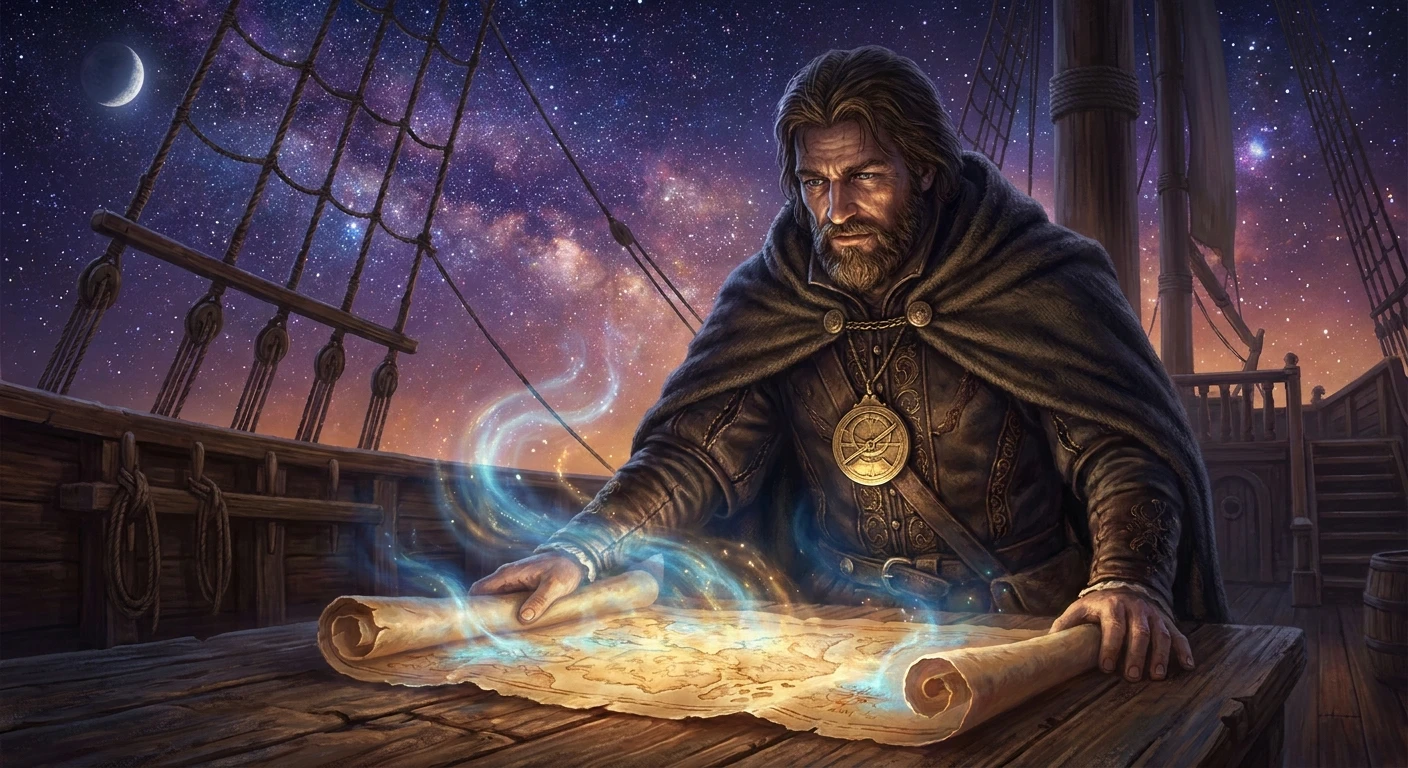
Famous Explorers: Navigating the Unknown
Hey there, if you are genuinely curious about the greatest famous explorers who ever lived, you just landed in the absolute best spot. Let me tell you right now, these historical figures were not just reading maps; they were actively drawing them by sailing into terrifying, pitch-black nothingness. Growing up near the wide banks of the Dnipro River in Kyiv, Ukraine, I spent my childhood watching the currents and dreaming about those early trading ships moving down to the Black Sea. That deep sense of absolute wonder is completely universal. Back then, taking a boat out meant risking your life against mythical sea monsters, massive storms, and total starvation. Fast forward to 2026, and we literally have GPS running on our wrists, which makes it totally wild to think about what these historical navigators actually pulled off without any digital help whatsoever. We are going to map out the exact paths they took, the insane psychological barriers they crashed through, and how their sheer stubbornness completely rewired our understanding of the globe. You pack a single canvas bag, kiss your family goodbye, and sail directly off the edge of the known universe. That takes serious, unmatched guts, and I cannot wait to share these epic stories with you.
When we actually talk about these brave navigators, we are looking at the original venture capitalists and startup founders of their era. They had to pitch a wild, borderline crazy idea to a king or queen, secure massive bags of gold, hire a crew of rough, desperate sailors, and execute a multi-year project with an incredibly high mortality rate. The value they brought back was immense: new global trade routes, exotic spices that were worth more than gold, and the charting of entirely new continents. Take Ferdinand Magellan, for example. He basically pitched the idea of sailing entirely around the globe. Most people at the court thought his crew would literally fall off the edge of the planet or get eaten by leviathans. Another great example is Roald Amundsen, who treated his South Pole run like a highly optimized modern logistics company. He prioritized learning indigenous dog-sledding techniques over just using European brute force, which totally saved his life and won him the race. Let me map out a quick look at some key players and what they accomplished in their respective lifetimes:
| Explorer Name | Key Achievement | Primary Region Mapped |
|---|---|---|
| Christopher Columbus | Pioneered early transatlantic voyages | The Americas and Caribbean |
| Marco Polo | Navigated the vast overland Silk Road | Asia, specifically the Mongol Empire |
| James Cook | Executed precision mapping of the ocean | Oceania, Hawaii, and Australia |
So, what exactly made them succeed when hundreds of others simply vanished at sea without a trace? It really comes down to a few core traits that you can actually study:
- Massive Risk Tolerance: They completely accepted that failure meant a painful death, and they confidently sailed forward anyway, leaning into the danger.
- Unwavering Vision: Even when facing violent mutinies, total starvation, and horrifying diseases, they held onto the mental map of their ultimate goal.
- Cross-Cultural Adaptation: The ones who survived long enough to make it home were usually the ones who learned to trade, listen, and communicate quickly with new, unfamiliar civilizations.
- Extreme Resourcefulness: They frequently had to fix shattered wooden hulls in the middle of raging typhoons using barely any tools or raw materials.
Origins: The First Steps Outward
You have to realize that this epic human adventure did not just start with dudes in puffy shirts sailing from the ports of Spain and Portugal. Long before that era, Polynesian wayfinders were crossing thousands of miles of open, treacherous Pacific Ocean in hand-carved wooden outrigger canoes. They navigated simply by reading the subtle shifting of the stars, the temperature of ocean swells, and the specific flight paths of migratory birds. It is honestly mind-blowing when you think about the skill required. At the same time, the ancient Phoenicians were pushing out of the safe Mediterranean bubble, mapping out complex trading routes across the rough coasts of Northern Africa. They were the original maritime trailblazers who set the stage, testing the waters for everything that followed centuries later.
Evolution: The Golden Age of Discovery
Fast forward to the 15th and 16th centuries, and things got incredibly, fiercely competitive. You had massive, wealthy European empires pouring basically unlimited funds into finding faster routes to India and the highly lucrative Spice Islands. The invention of the caravel—a super fast, highly maneuverable ship equipped with lateen sails—changed the game entirely for everyone involved. Suddenly, captains could sail directly against the wind, which meant they could cross the brutal, stormy Atlantic and actually have a chance of making it back home alive. This era was wild, intensely chaotic, and heavily driven by the promise of ridiculous, unimaginable wealth. Spices like nutmeg and clove were literally worth their weight in silver, making every voyage a massive gamble for absolute fortune.
Modern State: Where Are We Now?
Okay, so here we are securely living in 2026. The major blank spots on our terrestrial maps are mostly filled in, right? You can pull out your phone, load up an app, and look at the highly detailed street view of a tiny island in the middle of nowhere. But the raw, unyielding spirit of those original navigators is completely alive and well today. Now, we are sending pressurized submersibles down into the crushing, terrifying dark of the Mariana Trench to look at bioluminescent aliens. We are launching autonomous rovers into the dusty, freezing craters of Mars. The vehicle has drastically changed from a leaky wooden galleon to a titanium rocket, but the core human itch to see what is over the next distant hill remains exactly the same. We just swapped the oceans of water for the oceans of space.
The Tech Behind the Early Voyages
Let us talk about the specific gear they used. You might mistakenly think they just randomly guessed their way across the water, praying for the best, but they actually utilized some seriously brilliant mathematical tools. The math, geometry, and astronomy involved were absolutely top-tier for their specific time period. Long before satellites pinged our locations, you had to rely entirely on the vast night sky. Navigators spent years studying complex star charts, learning how to read the heavens like an open book. If the sky was heavily overcast for weeks, you were flying totally blind, which is terrifying to even imagine.
Biological and Psychological Factors
But cutting-edge tech was only half the battle. The harsh biological reality of spending six to eight months on a damp, rotting wooden boat was absolutely horrific. The daily diet was mostly heavily salted beef and rock-hard biscuits that were usually crawling with weevils. Psychologically, the deep isolation was completely crushing. You had zero communication with the outside world. No letters, no radios. If your ship went down on a hidden reef, nobody was ever going to know what happened to you. It took a totally different breed of human to handle that stress.
- The Astrolabe: A heavy, handheld brass device that captains used to measure the exact angle of the sun or stars above the horizon to figure out their precise latitude on the globe.
- The Sextant: A slightly more modern, refined upgrade that gave incredibly precise measurements based on celestial bodies, helping ships avoid deadly hidden reefs in the dark.
- Dead Reckoning: An incredibly risky mathematical method of calculating your current position by using a previously determined position and advancing that based upon known or estimated sailing speeds over time.
- Scurvy Prevention: They eventually figured out, after thousands of agonizing deaths, that lacking fresh fruit caused your teeth to literally fall out and your old scars to completely open up. Citrus quickly became a mandatory medical prescription.
- Chronometers: Highly accurate, stabilized mechanical clocks that finally allowed sailors to calculate their longitude safely, ending centuries of getting completely lost moving east-to-west across the oceans.
Listen, you absolutely do not need to buy a massive wooden galleon to act like a true pioneer today. You can literally adopt their fearless mindset right now, right where you are. Here is a highly effective 7-day step-by-step guide to completely rewiring your brain to think exactly like the greats.
Step 1: Embrace the Unknown
Start your week on Monday by deliberately putting yourself in a completely unfamiliar situation. Take a bizarre route home you have never driven before. Check out a neighborhood you always skip. The human brain heavily loves comfortable routine, but you absolutely need to shock it into high alert to build awareness.
Step 2: Master Your Navigational Tools
Pick one complex, critical tool you use daily and learn exactly how it functions under the hood. Whether it is a dense software program at work or your car engine, stop taking the daily magic for granted and deeply understand the mechanics. Knowledge is absolute power.
Step 3: Pack Like a Minimalist
On Wednesday, try living exclusively out of a small, packed bag. Cut the daily clutter. When you finally realize how incredibly little you actually need to survive and be completely happy, your background anxiety about losing material things plummets dramatically.
Step 4: Build Your Crew
You simply cannot do epic things totally alone. Reach out to three solid friends today and pitch them a wild, highly ambitious weekend project. See who eagerly bites. You desperately need a trusted, capable circle to weather the inevitable storms of life.
Step 5: Chart a New Route Daily
Break your rigid, predictable schedule. If you always eat at the exact same time, violently shift it. If you religiously read a specific genre, grab a book entirely outside your comfort zone. Force constant adaptation so you never get mentally sluggish.
Step 6: Document Your Findings
Keep a detailed captain’s log. Write down your sharpest observations, your embarrassing failures, and your weirdest thoughts at the end of every single day. Writing physically solidifies the hard lessons you randomly learned from the daily chaos.
Step 7: Share the Map
Finally, take whatever valuable thing you figured out this week and actively teach it to someone else. The absolute greatest navigators always brought their precise maps home so the very next generation could go even further into the unknown.
Let us clear up some absolute nonsense you probably learned in grade school while daydreaming in history class. The stories have been heavily romanticized over the years.
Myth: They always knew exactly where they were going and had a perfect plan.
Reality: Half of them were completely, utterly lost. Columbus famously thought he had bumped into the outer islands of Asia, completely unaware a massive, entirely new continent was blocking his way.
Myth: They traveled as completely independent, romantic lone wolves.
Reality: Behind every famous name was a massive, highly bureaucratic corporate structure. They had royal investors, massive crews, and relied heavily on brilliant indigenous guides who actually knew the local terrain.
Myth: The maps they used were basically accurate and highly reliable.
Reality: Early maps were full of literal guesswork and artistic fantasy. Cartographers would just draw terrifying sea monsters and massive mythical continents to fill in the huge blank spaces they were too embarrassed to leave empty.
Myth: They were completely fearless, unstoppable superhumans.
Reality: If you read their private, unfiltered journals, they were absolutely terrified. They worried constantly about starvation, running out of fresh water, and total violent mutiny from their desperate crews.
Who is considered the most famous explorer?
It is highly subjective, but Christopher Columbus and Marco Polo usually top the list due to the massive, permanent global shifts their incredible journeys eventually caused across multiple continents.
Did the Vikings reach America first?
Absolutely. Leif Erikson successfully landed in North America roughly 500 years before Columbus ever set sail, setting up a small, temporary timber camp in what is now Newfoundland, Canada.
What did Marco Polo actually do?
He bravely traveled the dangerous overland Silk Road all the way to China and served directly in the royal court of Kublai Khan, bringing back highly detailed accounts of paper money, coal, and complex postal systems.
Why did they search for the Northwest Passage?
European traders desperately wanted a significantly faster, ice-free sea route straight across the top of North America to reach highly lucrative Asian markets without having to sail all the way around South America.
Who first circumnavigated the globe?
Ferdinand Magellan usually gets the historical credit, but he actually died in a battle in the Philippines. It was his incredibly skilled second-in-command, Juan Sebastián Elcano, who successfully finished the brutal trip.
What exactly was the Silk Road?
It was definitely not a single paved road, but rather a massive, highly complex network of interconnected dirt trade routes linking Europe, the Middle East, and deep Asia over thousands of miles.
Are there any unexplored places left on Earth?
Yes, massive, pitch-black sections of the deep ocean floor and vast, incredibly complex underground cave systems remain completely unseen and untouched by human eyes even today.
So, there you have it. The romantic golden era of creaky wooden ships and brass compasses might technically be over, but the fiery human drive to actively push boundaries is still totally alive. Grab your gear, step aggressively outside your safe comfort zone, and start charting your own wild course today. If you want to dive deeper into the mindset of absolute legends, read our guide on building relentless focus and start your own adventure today!
Leave a Reply