
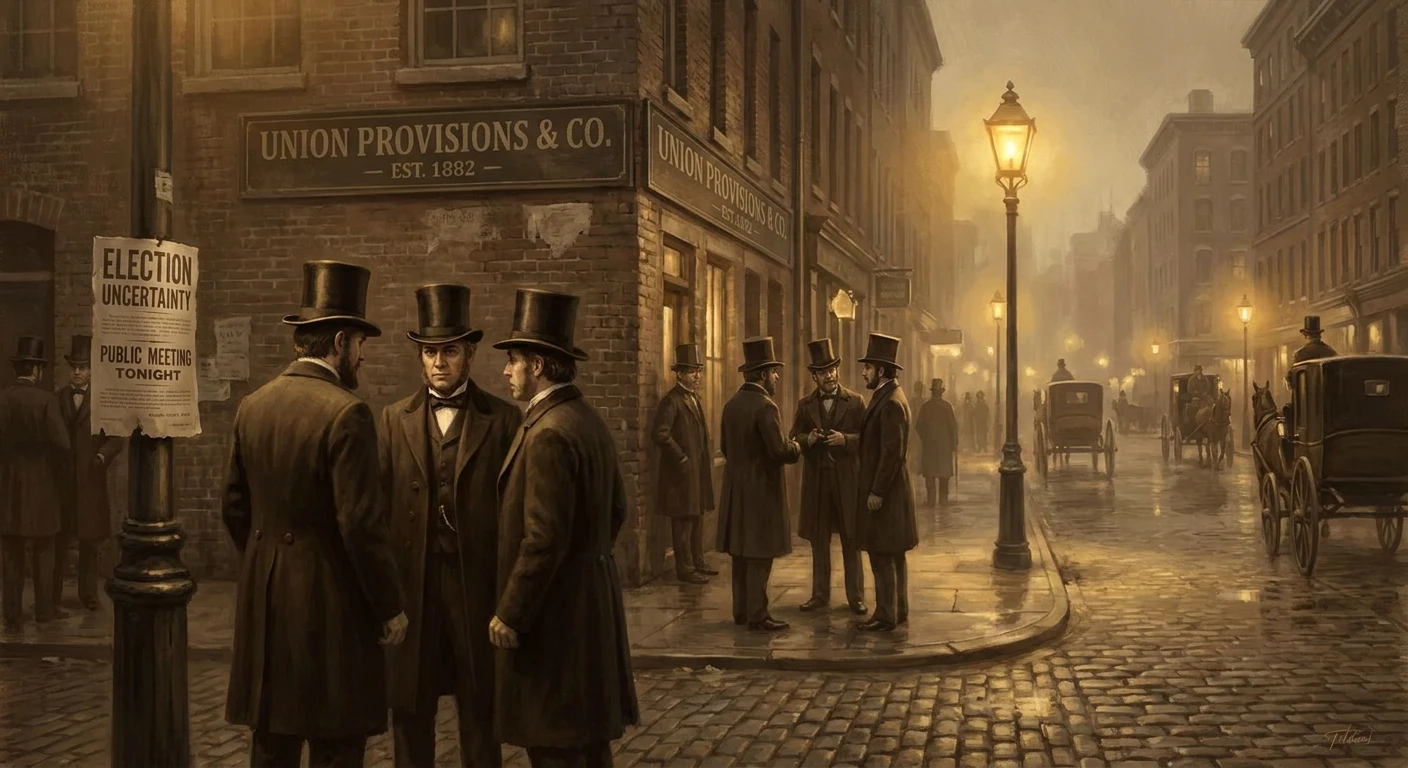
Unmasking the Legend of bill the butcher
You’ve probably seen the incredible cinematic portrayals, but getting to know the real bill the butcher is an entirely different kind of wild ride. My buddy from Kyiv was actually visiting me in New York last week, and we ended up talking about how the gritty, intense street factions of 1850s Manhattan oddly reminded him of some of the fierce local neighborhood rivalries back in Ukraine during the late 90s. Both eras were defined by a total lack of structured authority and raw street survival. The truth is, we need to look far past the Hollywood glare to understand William Poole, the actual flesh-and-blood man behind the legend. His life wasn’t just about brawling; it was completely intertwined with brutal bare-knuckle politics, aggressive nativist movements, and a rapidly changing urban landscape.
I want to break down exactly who this guy was, why he held so much power, and how his legacy shaped the criminal and political underground of America’s biggest city. By looking at the hard facts, we get a front-row seat to the chaotic birth of modern political machines. Trust me, the reality is way more fascinating than the fiction, and it gives us a completely different perspective on how cities operate when the rule of law is practically non-existent. Let’s get right into the thick of it.
The Core of the Conflict: Gangs, Politics, and Power
To really get a grip on what made this era tick, you have to understand the political ecosystem of New York City during the mid-19th century. William Poole wasn’t just a random thug throwing punches in alleyways; he was a highly calculated political enforcer. At the time, the city was flooded with new immigrants, primarily from Ireland, who were fleeing famine. This massive demographic shift threatened the established, American-born Protestant working class. Poole became the muscle for the Native American Party, widely known as the “Know-Nothings,” who were fiercely anti-immigrant. On the flip side, you had Tammany Hall, the massive Democratic political machine that realized they could secure total control by trading favors and protection for the immigrant vote.
Let’s look at a quick breakdown of the main players running the streets back then:
| Faction / Group | Key Figure | Primary Motivation |
|---|---|---|
| The Bowery Boys / Nativists | William Poole (Bill) | Anti-immigration, preserving local American-born dominance |
| The Dead Rabbits | John Morrissey | Irish immigrant protection and territory control |
| Tammany Hall | Boss Tweed (Later Era) | Absolute political control through voter manipulation |
Understanding this dynamic is crucial for a couple of reasons. First, it shows us how deeply intertwined organized crime and early American democracy truly were. The ballot box was literally guarded by guys with brass knuckles. Second, it highlights how economic anxiety and rapid demographic shifts create extreme friction in urban environments. To maintain his grip on his territory, Poole relied on a few highly effective strategies.
Here are the top three ways he kept his power intact:
- Voter Intimidation: He and his gang would physically blockade polling stations, beating up anyone who tried to vote for the pro-immigrant Tammany Hall candidates.
- Bare-Knuckle Supremacy: He built an almost mythological reputation in unregulated boxing matches. If you could win a brutal, bloody fight that lasted for hours, you commanded instant respect from the street gangs.
- Strategic Political Alliances: He wasn’t acting alone. He was directly funded and protected by wealthy, upper-class nativist politicians who needed someone to do their dirty work without getting their own hands dirty.
The Origins of a Street Brawler
William Poole was born in Sussex County, New Jersey, but his family moved to New York City when he was just a kid. His father was a butcher, and William naturally learned the trade, eventually opening his own shop in Washington Market. That’s exactly where the famous nickname comes from. He wasn’t carrying around meat cleavers just to look terrifying; he was actually a working-class tradesman. But the butcher shop was basically just a day job. His real passion, and where he truly excelled, was in the brutal underground world of street fighting and gang leadership. The Bowery was his kingdom, and he quickly rose through the ranks of the Washington Street gang before becoming a leading figure for the Bowery Boys, a massive coalition of street-level enforcers.
The Evolution of New York Gangs
Back then, there were no organized police forces like we have today. The “police” were often highly corrupt and aligned with whatever political faction paid them the most. This meant that gangs functioned as unofficial militias. As the influx of Irish immigrants reached its peak in the late 1840s and early 1850s, the tension reached a boiling point. The gangs evolved from localized street toughs protecting a single block into massive, politically motivated armies. Poole’s crew essentially acted as the paramilitary wing of the Know-Nothing political party. They were highly organized, using distinct clothing, handshakes, and strict codes of silence to maintain loyalty. It wasn’t just about street brawls anymore; it was a full-blown culture war for the soul and control of New York City.
The Modern State of Historical Memory
Now that we are living in 2026, it is honestly pretty wild to look back at how we remember guys like Poole. Pop culture has turned him into this larger-than-life supervillain, a symbol of extreme American nativism and brutal violence. But historians are increasingly looking at him through the lens of urban economics. He represents the desperate, violent reaction of a working class that felt totally displaced by globalization and mass migration. The real tragedy is how these poor, working-class communities—both the native-born Americans and the incoming Irish immigrants—were ultimately manipulated by wealthy politicians who pitted them against each other for political gain. Our modern understanding is starting to recognize the massive political machinery operating right behind the guys throwing the punches.
The Sociology of 19th Century Turf Wars
Let’s geek out for a second and talk about the actual sociology and science behind why these specific neighborhoods became such intense powder kegs of violence. The mid-19th century saw New York experiencing hyper-urbanization. We’re talking about a population exploding faster than housing, sanitation, or basic infrastructure could possibly handle. The infamous Five Points neighborhood was essentially built on top of a filled-in swamp that was constantly sinking and releasing toxic gases. This created unparalleled levels of physical and psychological stress among the residents.
When you pack thousands of economically desperate people into tiny, diseased tenement buildings, territorial violence becomes an almost inevitable sociological outcome. The environment itself was literally toxic. People formed gangs not just out of malice, but as a basic survival mechanism to secure scarce resources like jobs, clean water, and safe sleeping spaces.
The Mechanics of Bare-Knuckle Combat
And we can’t ignore the physical realities of the combat these guys engaged in. Bare-knuckle boxing in the 1850s wasn’t like modern MMA or boxing. There were very few rules, no gloves, and fights could last for over an hour, consisting of dozens of rounds. The physiological toll this took on the human body was astronomical. Let’s look at a few hardcore facts about this era of combat:
- Bone Fractures: Without padded gloves, fighters frequently shattered their own metacarpal bones. This is actually why their fighting stances look so weird in old drawings; they were protecting their hands by aiming for the body instead of the skull.
- Endurance over Power: Because a fight didn’t end until someone couldn’t physically stand up at the scratch line, cardiovascular endurance and pain tolerance were vastly more important than knockout power.
- Grappling and Gouging: Under the London Prize Ring Rules, grappling, throwing, and sometimes eye-gouging were heavily utilized, making it closer to a brutal street fight than a refined sport.
- Lack of Medical Care: Serious cuts and concussions went completely untreated, leading to massive rates of secondary infections that often proved fatal days after the fight ended.
Day 1: Start at Foley Square
If you want to genuinely understand this history, you need to walk the ground. Let’s lay out a 7-day historical deep-dive plan for exploring the actual remnants of Poole’s world. Start your journey at Foley Square in Lower Manhattan. Today, it’s surrounded by massive courthouses, but this general area sits right on the edge of what used to be the infamous Five Points slum. Stand there and try to imagine the sprawling, chaotic intersection that once defined the most dangerous neighborhood in the Western Hemisphere. It sets the baseline for the entire experience.
Day 2: Walk the Old Bowery
On the second day, you need to walk the length of the Bowery. This was the stomping ground of the Bowery Boys. Back in the 1850s, this street was lined with theaters, oyster houses, and incredibly rowdy taverns. It was the absolute cultural epicenter for working-class, native-born Americans. Look for the older, shorter brick buildings that still survive between the modern high-rises; some of those very bricks witnessed the street fights that made Poole famous.
Day 3: Map Out the Five Points Intersection
Head over to Columbus Park on day three. This park literally sits right on top of the old Five Points neighborhood. Find the exact spot where Anthony, Cross, Orange, and Little Water streets used to intersect. This was the absolute heart of darkness, the turf that the Dead Rabbits violently defended against nativist incursions. It’s incredibly surreal to see locals practicing Tai Chi today in the exact spot where some of the bloodiest street riots in American history took place.
Day 4: Investigate Tammany Hall’s Legacy
Spend your fourth day tracking down the history of Tammany Hall. While the original buildings are long gone, you can visit Union Square, where the later iterations of the political machine set up shop. Spend an afternoon reading up on Boss Tweed and how the Democratic machine operated. You can’t fully grasp the gang wars without understanding the invisible hands that were writing the checks and rigging the elections.
Day 5: Dive Into Nativist Political History
Day five is for the archives. Hit up the New York Public Library or the Museum of the City of New York. Look for original broadsides, political cartoons, and newspapers from the 1854 elections. Seeing the actual anti-immigrant propaganda and Know-Nothing party rhetoric printed in ink really brings the intense, xenophobic atmosphere of Poole’s era to life in a way that reading a textbook just can’t match.
Day 6: Explore Immigrant Tenement Life
You absolutely must visit the Tenement Museum on the Lower East Side for day six. While it focuses slightly later in the 19th century, it gives you a profoundly accurate, claustrophobic look at how the Irish and German immigrants actually lived. When you see how cramped and harsh the living conditions were, you totally understand why young men poured out into the streets to fight for territory and respect.
Day 7: Reassess the Cinematic Interpretations
On your final day, sit down and watch any movies or documentaries about the era with a totally fresh perspective. You’ll instantly spot the historical inaccuracies, the mashed-up timelines, and the dramatized clothing. But more importantly, you’ll appreciate the underlying truth of the raw, violent energy that defined mid-19th century New York. You’ll finally see the real man behind the legendary character.
Myths vs. Historical Reality
There is so much nonsense floating around about this guy. Let’s clear up some of the biggest misconceptions right now so you have the straight facts.
Myth: He died during the massive New York City Draft Riots.
Reality: William Poole was actually shot and killed in 1855 at Stanwix Hall by a rival named Lewis Baker. He was dead for eight years before the 1863 Draft Riots ever happened.
Myth: He walked around carrying a meat cleaver to murder people.
Reality: While he was a legitimate butcher by trade, in street fights he primarily relied on his bare-knuckle boxing skills and, like many gang leaders of the era, carried a revolver. The cleaver is mostly a theatrical invention for dramatic effect.
Myth: His rival was a guy named “Amsterdam Vallon.”
Reality: His actual real-life archenemy was John Morrissey, a heavily backed Irish enforcer for Tammany Hall who eventually became a legitimate U.S. Congressman. Truth really is stranger than fiction.
Myth: He was just a random street criminal.
Reality: He was a highly influential, organized political operative for the Know-Nothing Party, using targeted violence to manipulate local elections and intimidate opposing voters.
Was he a real historical figure?
Yes, absolutely. William Poole was a real man who lived in New York City during the mid-19th century.
When exactly did he live?
He was born in 1821 and died on March 8, 1855, after lingering for days from a gunshot wound.
Who actually killed him?
He was shot by a Welsh immigrant and rival named Lewis Baker during an altercation at a bar on Broadway.
What was the Know-Nothing Party?
It was a massive nativist political movement in the 1850s that strongly opposed immigrants and followers of the Catholic Church.
Did he actually say “I die a true American”?
Yes, historical accounts from 1855 confirm those were his famous, highly publicized last words on his deathbed.
Where is he buried?
He is buried in Green-Wood Cemetery in Brooklyn, New York, which is still a wildly popular historical site today.
Why did the Bowery Boys fight the Dead Rabbits?
It was a massive turf and culture war over political control, jobs, and ethnic dominance between native-born Americans and new Irish immigrants.
How accurate are pop culture depictions of him?
Visually and thematically they capture the brutal spirit of the era perfectly, but they heavily alter dates, names, and major historical events for dramatic pacing.
Wrapping It Up
So, there you have it. The actual history of William Poole is a gritty, incredibly complex story about immigration, corrupt politics, and urban survival in a rapidly expanding city. It’s a harsh reminder of how extreme political division and lack of resources can tear a community apart. Even here in 2026, studying these chaotic historical moments gives us a ton of perspective on modern society. If you found this deep dive fascinating and learned something new, definitely share this post with your friends and let us know your thoughts in the comments below!
Leave a Reply