
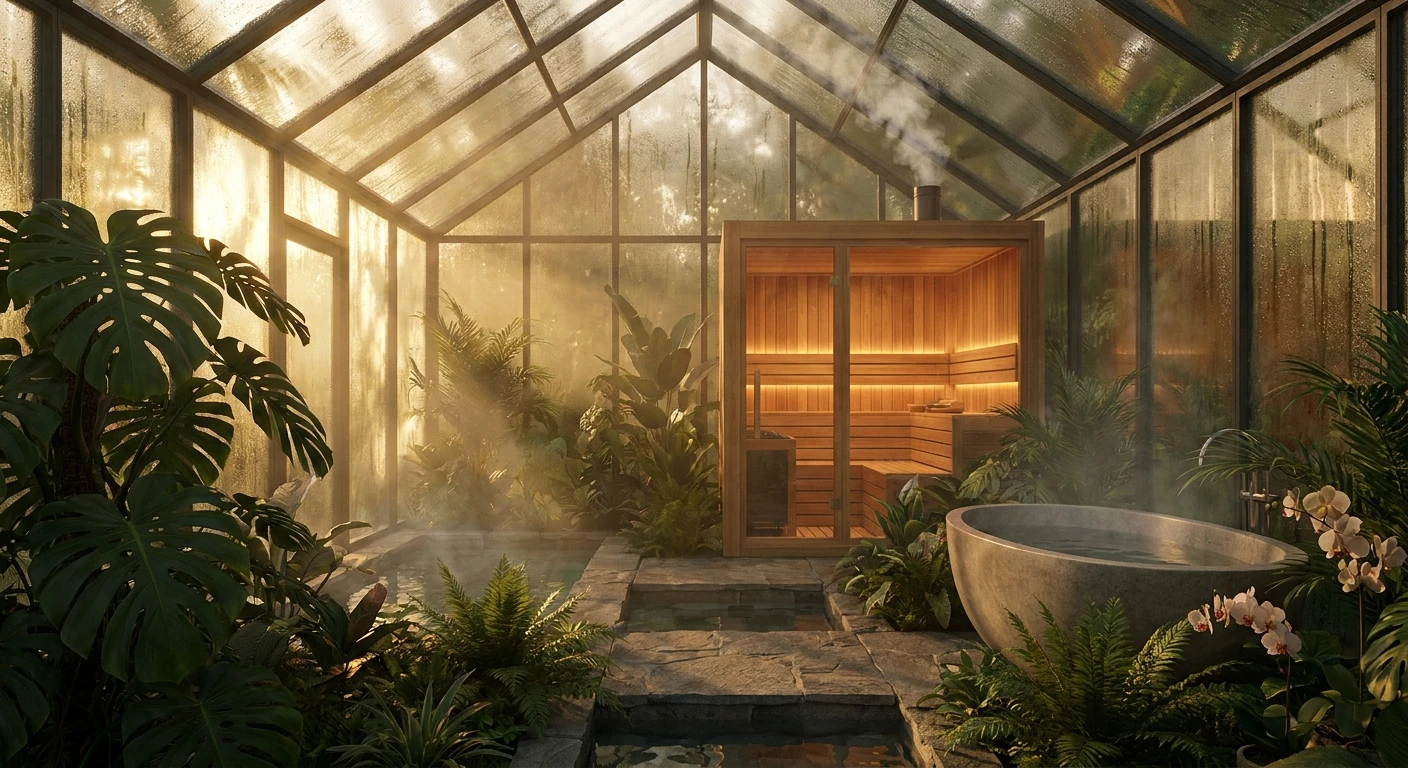
What is a Greenhouse Bathhouse?
The concept of a Greenhouse Bathhouse merges botanical cultivation with thermal therapy, creating a closed-loop ecosystem where radiant heat, ambient humidity, and living plants interact in perfect synergy. Imagine sitting in a deeply restorative cedar room, surrounded by a thick, luminous jungle of thriving flora just beyond the glass. It is a highly efficient architectural design that captures the surplus energy naturally generated by the bathing process and redirects it to support agricultural or ornamental growth, especially in colder climates.
By nesting a thermal core inside a larger horticultural envelope, the Greenhouse Bathhouse achieves a remarkable environmental balance. The bathing area benefits from the constant oxygenation provided by the foliage, while the plants soak up the residual heat and moisture venting from the spa. This symbiotic loop heavily reduces the total energy required to heat the garden space during winter months, essentially allowing you to grow tropical or delicate plants in harsh climates just by enjoying your regular wellness routine. You get an immersive, restorative environment that connects human health directly with plant vitality, establishing an entirely self-sustaining ecosystem right in your backyard.
Read also: Window Jeannie Baker: A Visual Journey Through Time; The Ultimate Botany Badminton Guide.
Core Benefits and Structural Dynamics
The architectural genius of the Greenhouse Bathhouse lies in its dual-purpose functionality. You are not simply building a luxury retreat; you are constructing an integrated thermal battery. Every time you fire up the stove, you are actively heating the surrounding horticultural space. This value proposition hinges on a few major pillars: absolute energy efficiency, unparalleled air purification, and extended growing seasons.
For example, if you live in a northern climate with harsh, freezing winters, cultivating citrus trees or orchids is typically a massive drain on electrical resources. However, by venting the residual heat from the bathing chamber directly into the surrounding glass enclosure, you can maintain a frost-free microclimate effortlessly. Another example is the psychological impact; traditional bathing spaces are often dark and claustrophobic. By placing the structure inside a vibrant, light-filled botanical sanctuary, the physiological benefits of heat therapy are combined with the well-documented mental health benefits of nature immersion.
Here is a breakdown of how this integration outperforms traditional setups:
| Feature | Standalone Traditional Spa | Integrated Greenhouse Bathhouse |
|---|---|---|
| Thermal Efficiency | Wastes excess heat into the open outdoor air | Captures and recycles heat to sustain plant life |
| Air Quality | Requires mechanical vents to prevent stuffiness | Naturally oxygenated and filtered by dense foliage |
| Aesthetic and Mood | Often a dark, enclosed, visually limited space | Bright, lush, expansive jungle environment |
To fully capitalize on this design, you must understand the primary structural benefits:
- Maximized Thermal Retention: The outer glass shell acts as a windbreak and initial insulator, drastically lowering the energy required to heat the inner bathing chamber.
- Enhanced Respiratory Wellness: The constant transpiration from the plants creates a naturally humidified, oxygen-rich environment that is vastly superior to artificially filtered air.
- Year-Round Agricultural Yield: The stable, elevated temperatures allow you to harvest herbs, microgreens, and exotic fruits regardless of the snow falling outside.
- Psychological Restoration: The visual connection to living greenery lowers cortisol levels and enhances the relaxation response during heat therapy.
Tracing the Roots of Botanical Spas
Origins in Ancient Rome and Victorian England
The desire to combine thermal wellness with horticulture is far from a modern invention. Ancient Roman architects often built sprawling thermae directly adjacent to elaborate, enclosed courtyard gardens. The warm water flowing beneath the floors not only heated the bathing rooms but also warmed the soil, allowing exotic plants from conquered territories to thrive in cooler Mediterranean winters. Fast forward to Victorian England, and the wealthy elite began constructing massive glass conservatories. These structures were originally designed to house tropical specimens like palms and orchids brought back from overseas expeditions. Eventually, clever engineers began routing the exhaust flues from large estate boilers through these glasshouses, accidentally inventing an early prototype of the botanic heat-exchange model.
Evolution Through the 20th Century
During the 1970s back-to-the-land movement, off-grid builders and permaculture pioneers began experimenting with passive solar designs. They recognized the inherent wastefulness of heating a standalone cabin while simultaneously paying to heat a separate greenhouse. Builders started nesting the structures together. By burying the back walls into the earth and wrapping the front in southern-facing glazing, they created spaces where a simple wood-burning stove could sustain a bathing room while keeping a vegetable garden alive through sub-zero winters. This era marked a shift from pure luxury to rugged, eco-conscious self-sufficiency.
The Modern State of Botanical Bathing
Today, the Greenhouse Bathhouse has evolved into a sophisticated architectural discipline. Modern advancements in double and triple-pane glazing, smart climate control sensors, and non-toxic moisture barriers have made these structures more durable and efficient than ever. You no longer have to worry about condensation rotting the timber frames, thanks to advanced vapor management systems. Contemporary designs range from sleek, minimalist urban sanctuaries using hydroponics, to massive, rustic off-grid domes operating entirely on sustainable biomass. The focus has entirely shifted toward regenerative design—spaces that give back exactly as much energy as they consume.
The Science of Symbiotic Heating
Thermodynamics and Passive Solar Gain
Understanding the physics behind the structure is critical for success. The outer glass envelope works on the principle of passive solar gain. Short-wave solar radiation passes through the glass, strikes the thermal mass inside (like stone floors or water barrels), and is re-radiated as long-wave heat, which cannot easily escape back through the glass. When you initiate the bathing sequence, the inner stove generates intense, acute heat. As this thermal energy naturally bleeds through the insulated walls of the inner room, it is trapped by the outer glass shell, creating a secondary warm zone perfectly suited for botanical life.
Phytoremediation and Humidity Exchange
From a biological standpoint, the plants perform an essential function called phytoremediation. When humans undergo heat therapy, they exhale elevated levels of carbon dioxide. The dense foliage eagerly absorbs this CO2 for photosynthesis, releasing pure oxygen back into the microclimate. Furthermore, the steam generated by the bathing process provides necessary ambient moisture for tropical plants, while the plants themselves release moisture through transpiration, creating a perfectly balanced humidity loop.
- Specific Heat Capacity: Water has a high specific heat capacity, meaning a plunge pool inside the greenhouse will absorb excess heat during the day and slowly release it at night, stabilizing ambient temperatures.
- Transpiration Cooling: During extreme summer days, the plants naturally cool the enclosure through transpiration, acting as a biological air conditioning system.
- Vapor Pressure Deficit (VPD): By balancing the heat of the stove with the humidity of the plants, you achieve an optimal VPD, which maximizes plant nutrient uptake and prevents the air from feeling oppressively harsh to human lungs.
- R-Value Optimization: The dual-layer design (inner timber wall plus outer glass shell) exponentially increases the total R-value of the structure, buffering against extreme external weather fluctuations.
7-Step Guide to Planning Your Own Botanical Spa
Step 1: Site Selection and Solar Orientation
The foundation of a successful Greenhouse Bathhouse relies entirely on positioning. You must orient the longest glazed side of the structure toward the true south (or true north in the southern hemisphere) to maximize winter solar gain. Avoid placing the structure under large, brittle trees that could drop branches on the glass, but consider the benefits of deciduous trees that provide natural shade during the blistering summer months and drop their leaves to let light through in the winter.
Step 2: Designing the Thermal Envelope
You are essentially building a building within a building. The inner chamber must be constructed using rot-resistant woods like western red cedar, hemlock, or thermally modified ash. The outer shell requires high-quality, tempered, double-paned insulated glass. Using cheap, single-pane polycarbonate will result in rapid heat loss and severe condensation issues during the colder months.
Step 3: Selecting Climate-Appropriate Flora
Do not plant desert cacti next to a steam vent. You must select plants categorized into distinct micro-zones. Place high-humidity, heat-loving tropicals (like Monstera, ferns, and orchids) closest to the inner thermal core. Place hardier, cool-tolerant plants closer to the outer glass walls where the temperature will naturally fluctuate more drastically overnight.
Step 4: Installing Moisture and Vapor Barriers
Moisture is the enemy of structural integrity. You must install a continuous, high-temperature vapor barrier (typically aluminum foil) behind the interior paneling of the inner chamber. This reflects radiant heat back into the bathing space and absolutely prevents steam from penetrating the wall cavities, which would otherwise lead to black mold and structural rot.
Step 5: Integrating the Heating Mechanism
You must decide between an electric heater or a traditional wood-burning stove. A wood stove provides incredible radiant heat and works perfectly off-grid, but you must carefully design the flue pipe to exit the glass roof safely, using insulated thimbles to prevent the glass from shattering due to thermal shock. Electric heaters offer precise thermostatic control, which is highly beneficial if you are trying to maintain a strict baseline temperature for sensitive exotic plants.
Step 6: Implementing Ventilation and Airflow
Stagnant air invites fungal diseases for plants and a suffocating environment for humans. Install adjustable intake vents low to the ground near the heating source, and exhaust vents high up on the opposite wall. The outer greenhouse also needs automated roof vents that open via wax-cylinder pistons when the interior gets too hot, ensuring the plants do not bake during peak summer afternoons.
Step 7: Final Commissioning and Balancing
Once built, you must run the system through several test cycles without any delicate plants inside. Monitor the maximum heat output, track how quickly the outer enclosure cools down after the fire goes out, and observe where condensation pools. Adjust your watering schedules, fan placements, and venting gaps based on these empirical observations before moving in your expensive botanical collection.
Debunking Common Misconceptions
Because the Greenhouse Bathhouse combines two radically different microclimates, several persistent myths surround its construction and daily use.
Myth: The extreme heat will immediately kill all the plants.
Reality: The plants are not inside the inner bathing chamber; they live in the outer horticultural envelope. The heavy insulation of the inner walls ensures only a gentle, ambient warmth bleeds into the garden, mimicking a mild tropical breeze rather than a blistering furnace.
Myth: You will deal with constant mold and structural rot.
Reality: Mold only thrives in stagnant, poorly constructed environments. With correct foil vapor barriers, proper drainage floors, and adequate cross-ventilation, the space remains incredibly sanitary. The plants actually help manage ambient moisture levels.
Myth: It is too expensive to maintain in cold climates.
Reality: The entire premise is built on thermal efficiency. The inner structure dramatically reduces the heating load for the outer greenhouse. It is significantly cheaper to run this combined system than it is to heat a standalone greenhouse of the same size.
Myth: A standard glass greenhouse is sufficient.
Reality: A cheap, single-pane aluminum kit will fail. The massive temperature differentials require heavy-duty timber or thermally broken aluminum frames and insulated glazing to prevent the glass from cracking and the heat from escaping instantly.
Frequently Asked Questions
What is the ideal temperature balance?
The inner chamber typically operates between 150°F and 190°F (65°C to 88°C), while the outer botanical envelope should comfortably hover between 60°F and 80°F (15°C to 26°C), depending entirely on your specific plant selections and outdoor weather conditions.
Which plants survive best near the sauna wall?
Tropical understory plants thrive in the warm, humid periphery. Think Bird of Paradise, various Philodendrons, Calatheas, and dense Boston ferns. They love the gentle radiant heat and the frequent spikes in ambient humidity.
Do I need building permits for this structure?
In most municipalities, yes. Because it involves a permanent foundation, a dedicated heating source (especially wood-burning stoves), and complex water drainage, you will likely need architectural plans approved by local zoning boards.
How do you prevent the glass from shattering?
Thermal shock is mitigated by using double-paned, tempered glass. Additionally, ensuring that the intense heat source is properly shielded and that the stovepipe is isolated from the glass using specialized insulated flashing prevents localized overheating.
Can I retrofit an existing greenhouse?
Yes, but it requires substantial reinforcement. You must ensure the existing foundation can support the heavy thermal mass of the inner room, and you will likely need to upgrade the glazing to prevent massive heat hemorrhaging.
Is a wood-burning stove safe inside?
Absolutely, provided it is installed to strict fire-safety codes with non-combustible heat shields, proper clearances to all wooden surfaces, and an accurately drafted chimney system that clears the highest point of the roof.
How much daily maintenance is required?
Beyond the normal rituals of tending to the fire or emptying ash, the botanical side requires standard greenhouse care: monitoring soil moisture, occasional pruning, and ensuring automated vents are functioning. The integrated system essentially waters and humidifies itself during regular use.
Conclusion: Designing and building a Greenhouse Bathhouse is an extraordinary investment in both personal wellness and environmental harmony. You are creating a living, breathing sanctuary that warms your bones while nurturing vibrant plant life. If you are ready to completely elevate your daily routine, start sketching your site plan, consult with local thermal architects, and take the first step toward building your ultimate botanical oasis today!
Leave a Reply