
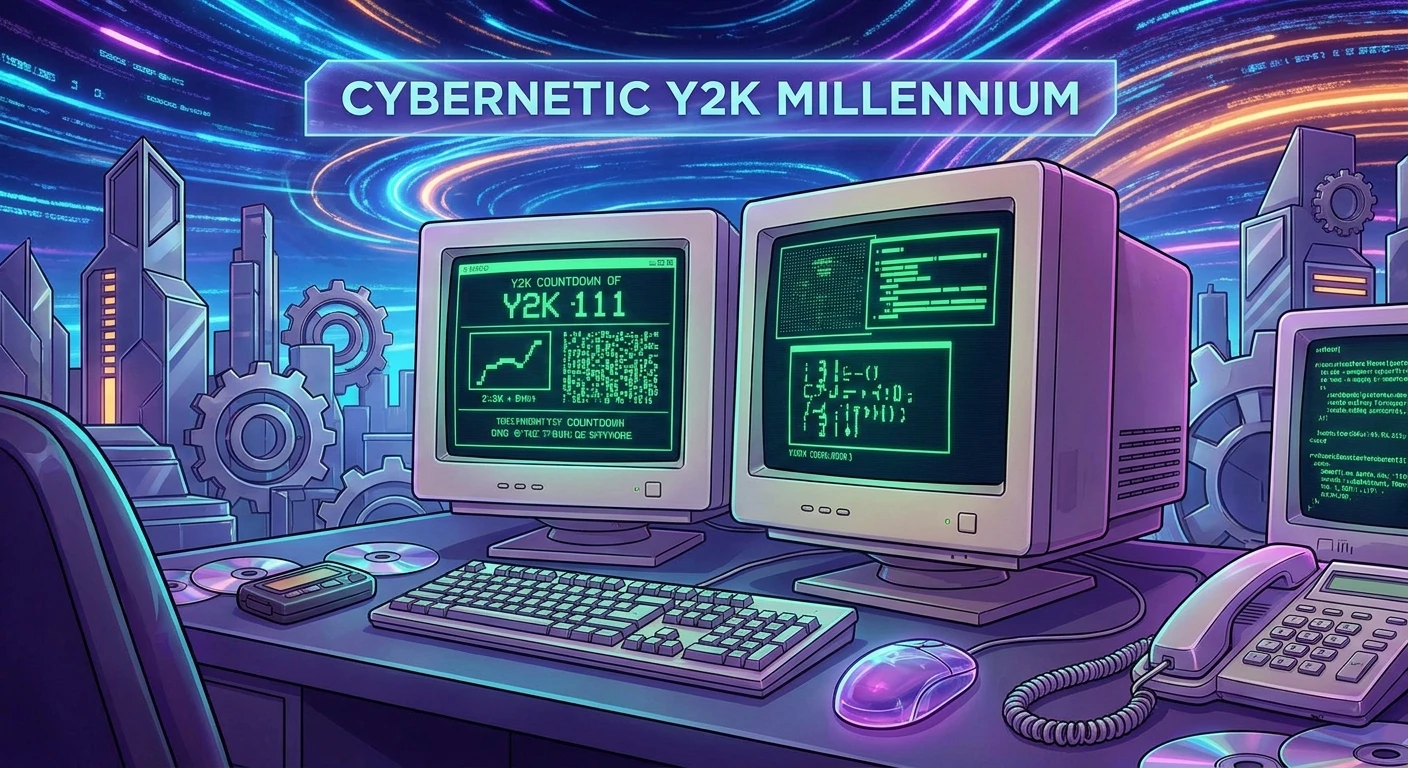
A Retrospective Look at What Happened in 1999
Ever find yourself looking back to understand exactly what happened in 1999? It offers a fascinating, multi-layered glimpse into a year totally defined by massive tech anxiety, huge cultural moments, and real geopolitical shifts. As the twentieth century wrapped up, global citizens navigated the looming threat of the Y2K software bug, watched the historic birth of the Euro currency, and saw the technology sector experience an unprecedented economic boom. The year operated basically as a high-speed, volatile bridge between the analog past and our rapidly accelerating digital future.
Our collective memory often paints the late nineties in broad strokes of dial-up internet tones and blockbuster cinema, but the specific events of these twelve distinct months fundamentally shaped the foundation of modern digital infrastructure and global politics. From the halls of the United States Senate dealing with presidential impeachment proceedings early in the year to the global expansion of digital communication networks, this period deserves a much closer look. By examining the political realignments, the explosive growth of Silicon Valley startups, and the profound changes in global entertainment paradigms, we gain crucial context for how modern society operates. The final year of the decade set a complex stage for the new millennium, leaving an infrastructural and cultural legacy that still dictates economics, technology, and international relations decades later.
Read also: What Happened in 1966: Key Events and Historical Milestones; What Happened in 1963: A Complete Timeline of Events.
Understanding the core geopolitical and economic events requires breaking down the massive structural shifts that altered global stability. A definitive value proposition emerges when analyzing the late nineties: periods of intense technological anxiety often drive massive infrastructural upgrades that benefit society long after the initial panic subsides. We see this principle operating clearly through two major examples: the worldwide modernization of banking databases to prevent calendar errors, and the rapid deployment of high-capacity broadband internet networks designed to replace traditional, slower dial-up connections. Both examples showcase how perceived crises can accelerate necessary industrial evolution.
Here is a breakdown of the defining global milestones across different critical sectors:
| Global Sector | Major Defining Event | Long-Term Global Impact |
| International Economics | Introduction of the Euro currency | Fundamentally altered European monetary policy and united continental financial markets. |
| Technology & Infrastructure | Global Y2K software preparation | Forced massive upgrades of legacy database systems across banking and power grids. |
| Geopolitics & Diplomacy | Panama Canal handover completion | Transferred vital shipping logistics control to Panamanian sovereign authority. |
To fully grasp the magnitude of these shifts, we must deeply examine the specific technological and cultural movements that defined daily life. The integration of technology into ordinary households accelerated rapidly, creating entirely new social and economic paradigms. Three critical developments fundamentally altered the landscape of the late nineties:
- The Launch of New Digital Currencies and Markets: On January 1, eleven sovereign nations officially established the Euro for accounting purposes and electronic payments, a move that permanently shifted European economic power dynamics and streamlined cross-border commerce.
- The Proliferation of Peer-to-Peer Networks: The release of revolutionary software programs like Napster forever changed the global music industry’s distribution model, proving that decentralized networks could successfully distribute massive amounts of data and initiating decades of fierce copyright litigation.
- The Expansion of Global Information Networks: Worldwide internet usage rapidly surged past 150 million active global users, creating the massive, highly engaged foundational consumer base required for the impending, highly speculative dot-com economic bubble.
These monumental shifts meant that the average household suddenly possessed direct access to global markets, irreversibly changing human interaction.
Origins of the Millennium Anxiety
The intense roots of the cultural atmosphere characterizing the close of the decade started years earlier in the academic computer labs of the mid-twentieth century. Early software developers, desperately trying to conserve highly expensive and physically massive magnetic memory space, programmed operating systems to record dates using only the final two digits of a calendar year. As the clock ticked relentlessly closer to the year 2000, cybersecurity experts realized that vital infrastructure—spanning international banking ledgers, commercial aviation scheduling, and municipal power grids—might interpret “00” as the year 1900. This deep structural oversight birthed a unique psychological environment globally, characterized by urgent corporate preparation, intense media speculation, and widespread public anxiety regarding the stability of modern civilization.
Evolution of the Dot-Com Era
Throughout the late nineties, venture capital flowed rapidly and recklessly into newly formed internet-based startups. The financial ecosystem evolved aggressively during the final twelve months of the decade, pushing the NASDAQ composite index toward historic, highly unsustainable highs. Retail and institutional investors alike frequently ignored traditional business metrics such as profit margins, sustainable growth, or actual revenue generation, favoring rapid user acquisition and ubiquitous brand visibility. This massive speculative frenzy paradoxically funded immense technological hardware deployments, paying for thousands of miles of subterranean fiber-optic cables that eventually survived the financial crash to form the robust backbone of our current global internet architecture.
Modern State of Late Nineties Nostalgia
Decades later, the specific cultural and technological output of the era enjoys intense re-evaluation and renewed popularity across modern media. The defining aesthetic characteristics of the period—translucent consumer electronics, heavily stylized metallic graphic design, and early, experimental digital art—are frequently referenced in contemporary fashion and industrial design. Furthermore, the cinematic achievements released during those twelve months are routinely classified by critics as foundational texts of modern visual storytelling and special effects engineering. Current historical analysis views the period not merely as a quaint transitional phase, but as a highly distinct cultural epoch where older analog traditions and radical digital innovations briefly coexisted in fragile harmony.
Architectural Changes in Telecommunications
The underlying technical infrastructure required to support the explosive, unprecedented growth of consumer web traffic necessitated massive, highly expensive leaps in hardware engineering. Network engineers transitioned heavily from relying on aging copper telephone wires to deploying Dense Wavelength Division Multiplexing (DWDM) over vast fiber-optic networks. DWDM technology ingeniously allowed multiple distinct data streams to travel simultaneously over a single optical fiber by utilizing different, highly specific wavelengths of laser light. This multiplexing exponentially increased network bandwidth capabilities without incurring the prohibitive, massive cost of manually laying new physical cables across entire continents. Concurrently, basic consumer access transitioned rapidly from standard 56k modems utilizing audible acoustic frequencies to asymmetric digital subscriber lines (ADSL), which brilliantly split the available frequency spectrum on existing copper lines to allow simultaneous voice communication and high-speed data transmission.
Scientific Milestones in Space Exploration
Moving far beyond the digital realm, scientific achievement in sophisticated aerospace engineering reached several critical historical junctures. The deployment of complex orbital infrastructure demanded unprecedented international cooperation and extremely precise mathematical engineering from multiple space agencies. Key aerospace achievements included:
- The Launch of the Chandra X-ray Observatory: NASA successfully deployed this highly advanced space telescope to detect invisible X-ray emissions from incredibly hot, violent regions of the universe, such as exploded stars, quasars, and supermassive black holes.
- The Mars Global Surveyor Operations: The robotic spacecraft successfully utilized highly dangerous aero-braking maneuvers, intentionally dipping into the thin Martian atmosphere to gradually lower its operational orbit through atmospheric drag without consuming massive amounts of irreplaceable chemical propellant.
- The Assembly of the International Space Station: The Space Shuttle Discovery successfully docked with the nascent modular ISS, safely delivering vital structural supplies and physically demonstrating the logistical viability of modular, long-term orbital habitation construction.
These technical triumphs laid the robust, necessary groundwork for the continuous, uninterrupted human presence in low Earth orbit that characterizes modern international space exploration.
To fully understand the cultural, political, and historical weight of the era, you should systematically consume the media and technical documentation that defined it. Follow this highly structured, seven-day immersive guide to deeply explore the defining characteristics of the year.
Day 1: Analyze the Political Landscape
Begin your investigation by researching the major geopolitical shifts of the period. Focus specifically on the formal, legally binding handover of the Panama Canal from the jurisdiction of the United States to sovereign Panama, studying the long-term diplomatic and international economic trade implications of this monumental transition.
Day 2: Study the Tech Boom
Carefully review the historical financial charts of the NASDAQ composite. Track the initial public offerings of major technology companies from the era, analyzing how rampant investor psychology drove unprecedented market capitalizations entirely without corresponding revenue or viable business models.
Day 3: Explore the Cinematic Renaissance
Dedicate dedicated time to analyzing the groundbreaking visual effects and complex narrative structures introduced in global cinema. Screen essential blockbuster films that successfully pushed digital compositing, wire-fu martial arts choreography, and non-linear storytelling into mainstream western entertainment.
Day 4: Understand the Y2K Preparation
Read archived software engineering reports and declassified government contingency plans regarding the millennium bug. Evaluate exactly how global IT sectors quickly mobilized millions of programmers to meticulously patch legacy code, ultimately preventing a systemic infrastructural failure across global markets.
Day 5: Review the Music Industry Disruption
Investigate the technical software architecture of early peer-to-peer file-sharing networks. Trace the complex legal battles and economic fallout that permanently altered how audio content is monetized, licensed, and distributed globally across the internet.
Day 6: Examine Aerospace Achievements
Look deeply into the official deployment records of space shuttle missions during the late nineties. Focus specifically on the highly complex orbital mechanics and robotic engineering required to safely assemble large modular structures in the hostile vacuum of space.
Day 7: Synthesize the Cultural Impact
Compile your diverse findings to draw clear historical parallels between late nineties technological optimism and current modern developments in artificial intelligence. Recognize how massive infrastructural investments made during speculative bubbles often heavily support later, highly stable societal innovations.
Public memory often severely distorts historical reality, blending facts with highly dramatized fiction. Let us firmly clarify several common misconceptions regarding the end of the decade.
Myth: The Y2K bug was a complete media hoax invented by software companies to generate massive consulting revenue.
Reality: The millennium bug was a highly genuine, deeply concerning infrastructural threat. The total lack of disaster was the direct, positive result of billions of dollars spent and millions of intense hours worked by programmers who successfully patched crucial legacy systems just before the deadline.
Myth: The infamous dot-com crash occurred exactly simultaneously with the end of the year.
Reality: While highly speculative tech investment absolutely peaked during the final months of the decade, the actual bursting of the massive financial bubble and subsequent devastating market crash did not fully materialize until the spring of the following year.
Myth: Dial-up internet was completely phased out by broadband before the new millennium.
Reality: Despite the aggressive expansion of early DSL and cable modems in urban centers, the vast majority of residential households globally continued to rely on standard 56k dial-up connections well into the early 2000s.
What was the defining economic event of the year?
The successful introduction of the Euro for electronic financial transactions across eleven unified European nations.
Did the global human population reach a milestone?
Yes, the United Nations officially declared that the global human population successfully surpassed six billion people.
What major space telescope was successfully launched?
NASA successfully deployed the advanced Chandra X-ray Observatory into a highly elliptical Earth orbit.
Which major software company faced massive antitrust litigation?
The United States government vigorously pursued landmark antitrust action against Microsoft regarding its aggressive browser integration tactics.
What happened to the strategic Panama Canal?
Administrative and sovereign control was officially transferred from the United States to the Panamanian government.
How did global music distribution permanently change?
The sudden launch of digital file-sharing platforms introduced massive, decentralized peer-to-peer music piracy.
What was the dominant architectural network shift?
Telecommunications companies massively deployed advanced fiber-optic networks to rapidly handle heavily increasing consumer internet traffic.
By thoroughly analyzing the international economics, rapidly advancing technology, and defining cultural milestones, we clearly see exactly how the final days of the twentieth century successfully engineered the digital reality we navigate daily. If you found this rigorous historical breakdown highly valuable, please share this comprehensive guide with your professional network and subscribe to our newsletter for more analytical deep dives into recent global history!
Leave a Reply