
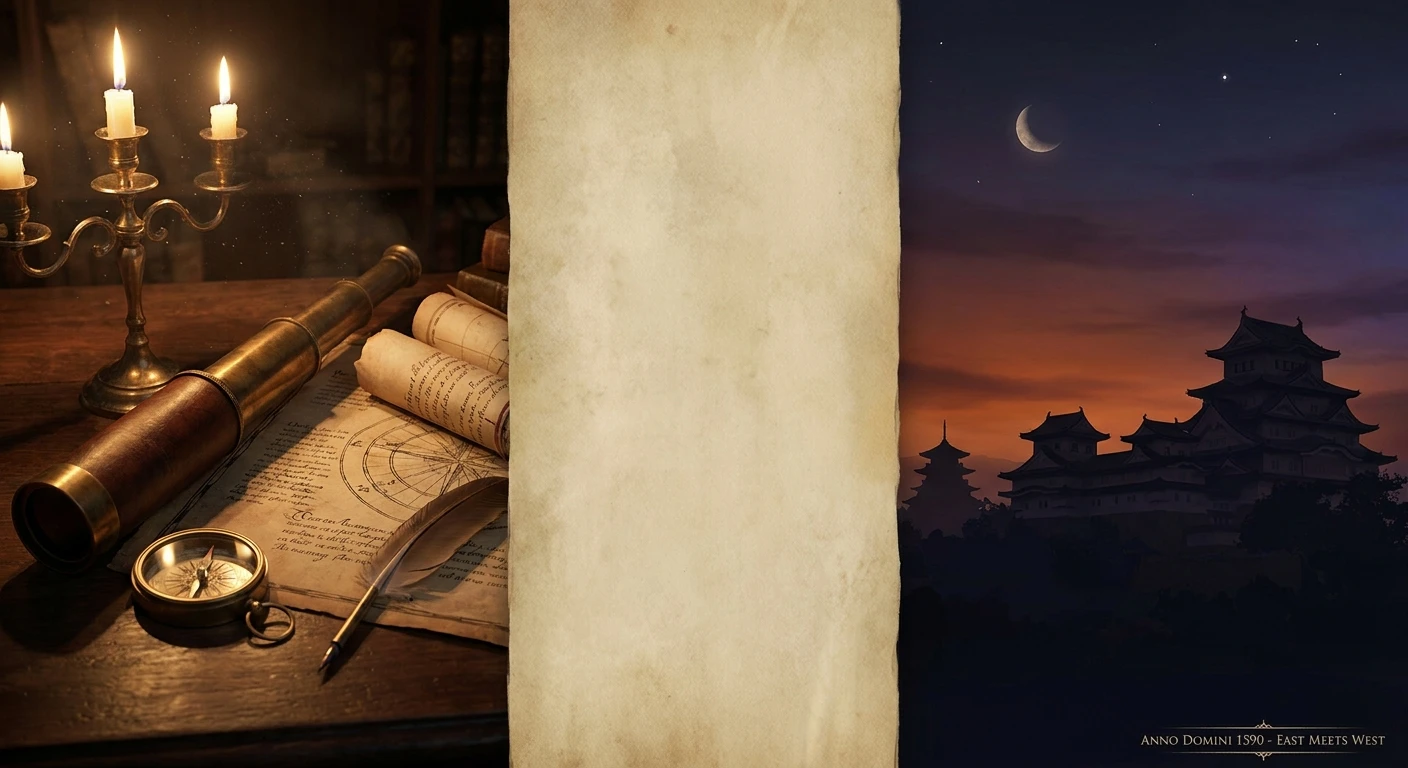
The Global Landscape of 1590: A Year of Mystery and Power
When you look back at the historical footprint of 1590, you are looking at a profound geopolitical crossroads. This specific twelve-month period operated as a major catalyst for sweeping changes across multiple continents. From the shores of the New World to the heavily fortified castles of the Japanese archipelago, 1590 reshaped the global balance of power, science, and literature. For historians and enthusiasts alike, 1590 stands as the precise moment when the chaotic feudal wars of Japan began to definitively close, while the colonial ambitions of European powers met with chilling, unexplained setbacks. The year acts as a historical hinge. It is the time when the English Renaissance was beginning to find its most enduring literary voices, and simultaneously, early scientists in the Netherlands were experimenting with lenses that would eventually alter human perception of the microscopic universe. Understanding 1590 requires looking past isolated incidents and recognizing a worldwide pattern of consolidation and discovery. Leaders were securing their borders, intellectuals were writing epic poems that would define generations, and the average citizen was navigating a world that felt rapidly expanding yet terribly unpredictable. This was an era where communication took months, yet the ripples of political decisions made in London, Madrid, Kyoto, and Rome violently crashed into one another, leaving behind a legacy that historians are still actively analyzing today.
The Structural Mechanics of a Changing World
To truly grasp the magnitude of 1590, one must analyze the specific structural shifts occurring in global empires. This year was not simply a collection of random historical occurrences; it was a period of calculated imperial strategies, sudden demographic mysteries, and technological prototyping. The European theater was still recovering from the shockwaves of the Spanish Armada’s defeat two years prior, prompting massive naval rebuilding programs in Spain and an aggressive, albeit often uncoordinated, maritime expansion by England. Meanwhile, the Eastern hemisphere experienced one of its most significant political unifications. The intricate balance of these events demonstrates how interconnected the world was becoming, long before the modern era of globalization.
Read also: Top Historical Events That Shaped Human Civilization; What Happened in 1963: A Complete Timeline of Events.
| Global Event in 1590 | Geographic Location | Historical Significance |
|---|---|---|
| The Disappearance of the Roanoke Colony | North America (Modern-day North Carolina) | Governor John White returned to find the settlement completely abandoned, leaving behind only the word CROATOAN carved into a post. This remains one of history’s greatest unsolved mysteries. |
| The Siege of Odawara | Japan | Toyotomi Hideyoshi successfully defeated the Hojo clan. This monumental victory effectively eliminated the last major independent resistance, leading to the unification of Japan and the end of the Sengoku period. |
| The Thirteen-Day Papacy | Rome, Italy | Pope Urban VII was elected and subsequently died of malaria within thirteen days. He left a bizarre legacy by enacting the world’s first known public smoking ban before his sudden passing. |
| Publication of The Faerie Queene | London, England | Edmund Spenser published the first three books of his epic poem, fundamentally shaping English literature and establishing a new standard for allegorical poetry dedicated to Queen Elizabeth I. |
Beyond these isolated events, the foundational changes of 1590 established precedents that would dictate the trajectory of the 17th century. Here are the primary structural impacts felt during this pivotal year:
- The Centralization of Japanese Authority: The successful conclusion of the Siege of Odawara meant that the devastating regional civil wars were largely over. Toyotomi Hideyoshi instituted strict class systems and sword hunts, disarming the peasantry and solidifying the samurai as the sole warrior class, which dictated Japanese social structure for centuries.
- The Reality Check on English Colonization: The loss of the Roanoke colony forced English investors and the crown to rethink their colonial strategies. The immense financial loss and human tragedy proved that sustaining a foothold in the Americas required vastly more resources, better supply lines, and stronger military protection than previously estimated.
- The Acceleration of Early Optical Science: The work being done by Dutch spectacle makers in 1590 laid the groundwork for the Scientific Revolution. The realization that multiple lenses could be aligned to magnify unseen objects shifted the scientific paradigm from purely theoretical philosophy to active, observational mechanics.
- The Shifting Mediterranean Power Dynamics: Treaties and trade agreements negotiated in 1590, particularly involving the Ottoman Empire and European states like England, demonstrated a pragmatic approach to diplomacy where religious differences were temporarily set aside for mutual economic and military benefits against a common Spanish enemy.
The Prelude to the Final Decade of the 16th Century
The events of 1590 did not materialize in a vacuum. The geopolitical climate was heavily heavily influenced by the immediate aftermath of the 1588 Spanish Armada. King Philip II of Spain, rather than accepting defeat, spent 1589 and 1590 heavily reforming his navy. The Spanish military machine redesigned its galleons, improved its naval artillery, and fortified its colonial ports in the Americas. This period of intense militarization meant that the oceans were highly contested, dangerous spaces. English privateers, emboldened by their survival, continuously harassed Spanish shipping lanes, creating a volatile environment of state-sponsored piracy. This intense naval rivalry severely disrupted global communication and trade, directly contributing to the tragic delay of supply ships reaching vulnerable outposts like Roanoke.
Global Empires in Conflict and Expansion
While Europe was locked in a bitter struggle for Atlantic supremacy, the Ottoman Empire in 1590 was finalizing the Treaty of Constantinople, temporarily halting their exhausting conflict with the Safavid Empire. This treaty allowed the Ottomans to secure their eastern borders and redirect their formidable military focus back toward European territories and Mediterranean dominance. Simultaneously, the Ming Dynasty in China, under the Wanli Emperor, was experiencing a period of immense cultural production and economic prosperity, though the underlying bureaucratic friction that would eventually weaken the dynasty was beginning to quietly manifest. The global stage was defined by these massive, sprawling empires attempting to secure their perimeters while managing severe internal administrative challenges.
Cultural and Scientific Milestones
Culturally, 1590 was a Renaissance high-water mark. In London, the theatrical scene was exploding. A young playwright named William Shakespeare was likely beginning his early career, possibly working on the Henry VI plays. The publication of Thomas Lodge’s prose romance ‘Rosalynde’ in 1590 would later provide the direct inspiration for Shakespeare’s ‘As You Like It’. Meanwhile, in the realm of science, the rigid adherence to Aristotelian physics was being slowly dismantled. Thinkers were beginning to question established dogma, favoring direct observation and mathematical proof, creating an intellectual environment ripe for the technological breakthroughs occurring in northern European workshops.
The Optical Revolution: Early Lenses and Navigation
Perhaps the most profound technical development attributed to the era surrounding 1590 is the invention of the compound microscope. In the Dutch city of Middelburg, spectacle makers Zacharias Janssen and his father Hans are widely credited with creating the first device of this kind. By placing two lenses in a sliding tube, they discovered that the magnification of the objective lens could be multiplied by the eyepiece lens. While these early instruments were essentially novelties with a magnification power of only 3x to 9x, the underlying optical geometry was revolutionary. This invention permanently altered the trajectory of human knowledge, proving that human vision could be artificially enhanced to explore entirely new physical frontiers.
Architectural and Military Engineering
The military engineering of 1590 was characterized by the rapid evolution of the trace italienne, or star fort. As artillery became increasingly destructive, medieval high walls were rendered obsolete. Engineers in 1590 were actively designing low, thick, angled bastions designed to deflect cannonballs and eliminate blind spots for defending infantry. This architectural shift required massive financial investments and completely altered the nature of siege warfare. A siege was no longer a quick assault but a prolonged, highly technical engineering project involving complex trench networks and precise geometric calculations.
- Compound Microscope Conception: The alignment of convex and concave lenses in a tube structure, creating a multiplied magnification effect for the first time in recorded history.
- Galileo’s De Motu: Around 1590, Galileo Galilei was formulating his early, groundbreaking essays on the mechanics of motion, challenging the long-held Aristotelian belief that heavier objects fall faster than lighter ones.
- Cartographic Advancements: Mapmakers in 1590 were rapidly refining the Mercator projection, heavily updating nautical charts based on the continuous influx of new data from privateers and colonial explorers.
- Metallurgical Refinements: The production methods for cast-iron cannons were being standardized in 1590, leading to weapons that were less prone to catastrophic misfires and capable of sustaining prolonged bombardments.
Step 1: Investigating the Roanoke Disappearance
If you were to trace the defining moments of 1590 chronologically, your first major focus would be August 18. On this day, Governor John White finally managed to return to Roanoke Island after a brutal three-year delay caused by the Anglo-Spanish War. Stepping onto the island, he expected to find his family and over a hundred settlers. Instead, he found a dismantled fortress and the letters CRO carved into a tree, with the full word CROATOAN carved into a palisade post. The meticulous dismantling of the houses suggested a planned departure rather than a frantic massacre, setting the stage for centuries of historical debate regarding their assimilation into local indigenous tribes.
Step 2: Witnessing the Siege of Odawara
Your next analytical step takes you to Japan during the summer of 1590. The mighty Hojo clan, secure in their supposedly impregnable Odawara Castle, faced an overwhelming coalition force led by Toyotomi Hideyoshi. Hideyoshi did not just attack; he orchestrated a masterpiece of logistical warfare. He built a temporary city for his massive army, complete with merchants and entertainers, essentially starving the Hojo out while his troops lived in relative comfort. The surrender of Odawara was the definitive end of independent warlord resistance, completing the unification of the Japanese archipelago.
Step 3: Analyzing the Thirteen-Day Papacy
Moving to the autumn of 1590 in Rome, you encounter one of the strangest footnotes in Vatican history. Pope Sixtus V died in August, and on September 15, Giovanni Battista Castagna was elected as Pope Urban VII. His reign lasted exactly thirteen days before he succumbed to malaria. Yet, in that incredibly brief window, he managed to implement the first known public smoking ban, threatening to excommunicate anyone who took tobacco in the porchway of or inside a church. He also initiated massive public works subsidies before his abrupt death completely reset the papal political landscape.
Step 4: Exploring the Ming Dynasty Literary Scene
Simultaneously in 1590, the Ming Dynasty in China was experiencing a massive surge in the publishing industry. The popularization of woodblock printing allowed literature to reach a broader audience than ever before. This era saw the compilation and widespread reading of vernacular fiction. The cultural mindset of 1590 China was deeply engaged with classical philosophical texts, early theatrical scripts, and sprawling historical romances that cemented the structural rules for Chinese literature for the next four hundred years.
Step 5: Examining Early European Optical Workshops
In the quiet workshops of the Netherlands, the 1590s marked the transition of glassmaking from a basic trade to an applied science. You would observe artisans meticulously grinding glass to exact curvatures. They were learning, through trial and error, how the physical shape of glass refracts light. This tactile, hands-on experimentation in 1590 laid the direct physical foundation for both the microscope and the telescope, tools that would soon tear down the geocentric model of the universe and reveal the cellular nature of life.
Step 6: Tracking the Spanish Naval Rebuilding
By 1590, the Spanish Empire was executing one of the largest industrial naval projects in history. King Philip II recognized that the cumbersome galleons of 1588 were inadequate. Spanish shipyards in 1590 were ordered to build vessels that were sleeker, faster, and armed with standardized, high-quality artillery. This massive allocation of silver from the Americas into military infrastructure reshaped the Spanish economy and ensured that Spain would remain a dominant, highly lethal maritime power for decades to come, despite the English propaganda celebrating the Armada’s defeat.
Step 7: Experiencing Elizabethan Theatre
Finally, your journey through 1590 brings you to the muddy, vibrant streets of London. The theater was transitioning from simple morality plays to complex, character-driven narratives. Playwrights like Christopher Marlowe were pushing the boundaries of blank verse, while a young Shakespeare was observing, acting, and beginning to write. The publication of Spenser’s ‘The Faerie Queene’ in 1590 provided a massive boost to English cultural pride. It was a year where the English language was being aggressively expanded, shaped, and weaponized for entertainment and political allegory.
Myth: Galileo dropped weights from the Leaning Tower of Pisa in exactly 1590.
Reality: While Galileo was formulating his theories on gravity and falling bodies around 1590, the story of him dropping spheres from the Leaning Tower of Pisa is widely considered a biographical legend created by his student Vincenzo Viviani. His actual experiments involved rolling balls down precisely constructed inclines to measure acceleration.
Myth: The Roanoke colonists were massacred without a trace in 1590.
Reality: The physical evidence found by John White in 1590, specifically the careful dismantling of homes and the carved message, strongly contradicts the idea of a sudden, violent massacre. Historical consensus leans heavily toward the settlers peacefully relocating and assimilating with the friendly Croatoan tribe due to starvation and lack of supplies.
Myth: The microscope was a perfected scientific instrument immediately in 1590.
Reality: The device created by the Janssen family in 1590 was incredibly primitive. It was considered a fascinating novelty or a toy rather than a serious piece of scientific equipment. It suffered from severe chromatic aberration and blurriness, and it took several more decades before the technology was refined enough to be used for actual biological discovery.
Who was the ruler of England in 1590?
Queen Elizabeth I was the ruling monarch of England in 1590. She was deeply in the middle of her reign, managing the ongoing, costly naval conflicts with Spain while overseeing a massive flourishing of English culture, literature, and domestic security.
What was the main conflict in Japan during 1590?
The primary conflict was the Siege of Odawara. Toyotomi Hideyoshi led a massive coalition of samurai against the Hojo clan. The successful siege effectively ended the Sengoku period, a long era of constant civil war, leading to a unified Japan.
Who was Pope in 1590?
1590 was a highly unusual year for the papacy. Pope Sixtus V died in August. Pope Urban VII was elected in September but died 13 days later. Finally, Pope Gregory XIV was elected in December, meaning there were technically three different Popes recognized during the calendar year.
What major literary work was published in England in 1590?
The most significant literary publication in England in 1590 was the first installment (Books I-III) of Edmund Spenser’s epic poem, ‘The Faerie Queene’. It was an allegorical masterpiece dedicated to Queen Elizabeth I and heavily influenced the future of English poetry.
What did John White find in Roanoke in 1590?
Governor John White returned to the Roanoke colony on August 18, 1590, to find it completely deserted. The settlement had been taken down, and the only clues left behind were the letters CRO carved on a tree and the word CROATOAN carved on a fort post.
Was the microscope actually invented in 1590?
The consensus among historians of science is that the first compound microscope was built in the Dutch city of Middelburg by Zacharias Janssen and his father Hans around the year 1590, though precise documentation from that exact year is scarce and highly debated.
How did the Ottoman Empire fare in 1590?
In 1590, the Ottoman Empire signed the Treaty of Constantinople with the Safavid Empire, effectively ending the Ottoman-Safavid War (1578-1590). This allowed the Ottomans to consolidate their territorial gains in the Caucasus region and shift their military focus.
Conclusion
The year 1590 remains a fascinating, pivotal twelve months in human history. It was a time defined by the harsh realities of colonial expansion, the brilliant dawn of modern scientific instrumentation, and the forceful unification of entirely fractured nations. The events of 1590, from the abandoned palisades of Roanoke to the sprawling siege camps of Odawara, established the geopolitical and cultural foundations for the modern era. If you found this deep dive into 1590 helpful, share this historical guide with your network and keep exploring the incredible milestones of the 16th century today!
Leave a Reply