
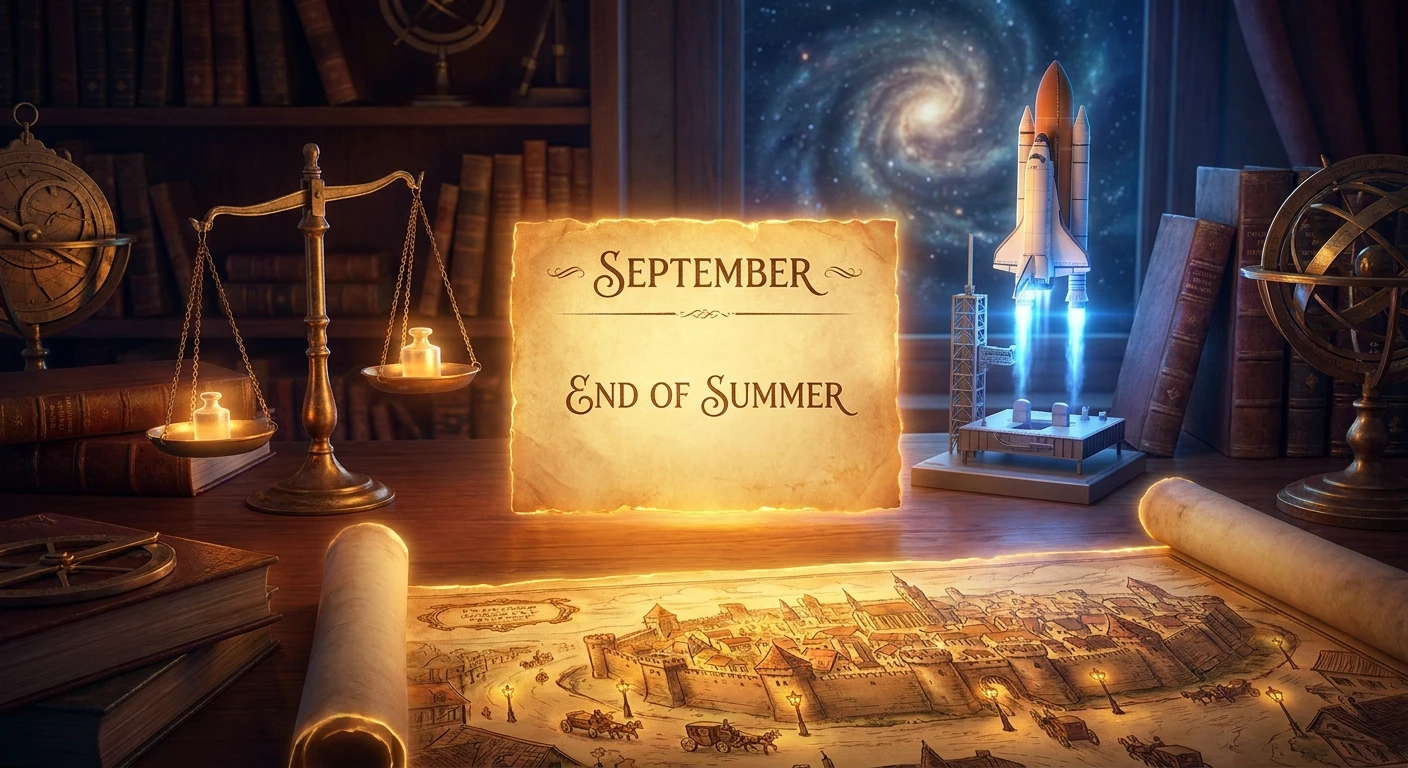
The Hidden Significance of 30th August
When you look back at the calendar, 30th August stands out as a surprisingly pivotal point for numerous historical, cultural, and scientific milestones. Have you ever flipped through the dates of late summer and wondered if anything truly world-changing happened while folks were busy wrapping up their vacations? The truth is, this specific day carries a massive legacy that shapes our modern society in ways we often overlook. From the establishment of major global cities to groundbreaking civil rights confirmations and orbital space flights, the timeline of this day is packed with action. Our thesis here is clear and direct: understanding the specific historical events that unfolded on 30th August gives us a much sharper, more accurate picture of human progress, legal advancements, and global diplomacy. Instead of viewing late summer simply as a seasonal transition, we can observe it as an anchor point for some of the most dynamic shifts in human history. By examining these occurrences closely, you can gain a deeper appreciation for how singular moments on the calendar ripple outward to influence entire generations.
Core Advancements and Global Turning Points
Let me break this down for you. Dates act as anchors in our collective memory, and late summer days often hold massive geopolitical and cultural weight. When we look at the historical timeline, the events of this day showcase a fascinating pattern of institutional founding and human rights milestones. Understanding these milestones helps us grasp the sheer momentum of human progress across different continents and eras. The value of this historical reflection is twofold: first, it connects us directly to the civil rights struggles of the past, and second, it highlights the relentless drive of scientific exploration.
Read also: Famous Historical Events That Shaped Our World; What Happened in 1963: A Complete Timeline of Events.
| Year | Milestone Event | Global Impact |
|---|---|---|
| 1835 | Foundation of Melbourne | Established a major economic, political, and cultural hub in the Southern Hemisphere, shaping Australian history. |
| 1967 | Thurgood Marshall Confirmed | Installed the first African American Supreme Court Justice, fundamentally altering the trajectory of United States civil rights law. |
| 1984 | Space Shuttle Discovery | Launched on its maiden voyage, heavily advancing global space exploration, shuttle capabilities, and satellite deployment operations. |
To further illustrate the sheer density of achievements on this day, consider these prominent examples. First, the legal landscape of the United States was forever changed when the Senate confirmed Thurgood Marshall, proving that entrenched barriers could indeed be broken. Second, the skies above us changed when NASA launched Discovery, pushing the boundaries of what reusable spacecraft could achieve in orbit.
These events showcase three major pillars of societal evolution tied directly to this date:
- Geographical Expansion: The formal laying out and foundation of settlements that would eventually blossom into international megacities, influencing global trade and culture.
- Judicial Equality: The breaking of racial barriers in the highest courts, ensuring that marginalized voices held actual institutional power and authority.
- Technological Innovation: The pushing of aerospace engineering to new limits, allowing humanity to establish a more permanent and effective presence in Earth’s orbit.
Origins of Late Summer Observances
Historically, the end of August was not just another week; it held profound significance for ancient agricultural societies. As the long, intense days of summer began to wane, communities would gather to assess their harvests and prepare for the coming autumn. This transition period naturally lent itself to reflection, civic planning, and major community decisions. Leaders often chose late summer to enact new laws, sign treaties, or establish new territories, knowing that the population was gathered and preparing for the cooler months ahead. The origins of holding major civic events during this window stretch back centuries, creating a subconscious cultural rhythm that favors decisive action before the equinox.
Evolution of Historical Milestones
As societies industrialized and moved away from strict agricultural calendars, the nature of events happening on this date evolved. In the 19th and 20th centuries, this window became a popular time for legislative sessions to wrap up before autumn breaks, leading to massive political decisions, such as key judicial confirmations. Furthermore, aerospace organizations and military operations often utilized the relatively stable late-summer weather patterns for major launches and strategic maneuvers. The evolution of this day shifts from ancient harvest preparations to modern political and technological executions.
Modern State of Global Commemorations
Today, this date holds a more solemn and universally recognized purpose on the international stage. The United Nations has officially designated it as the International Day of the Victims of Enforced Disappearances. This modern observance is designed to raise global awareness about individuals who are arrested, detained, or abducted against their will by state or political organizations. It serves as a powerful reminder of the ongoing struggle for human rights, demanding transparency and justice from governments worldwide. This global recognition adds a profound layer of moral responsibility to how we view the end of August today.
Astronomical Realignment in Late August
You might think of late summer as just a gradual cooling period, but there is some intense science happening above our heads and beneath our feet. As we approach the end of the eighth month, the Earth’s axial tilt begins to noticeably position the Northern Hemisphere for its eventual autumnal transition. This isn’t just about grabbing a lighter jacket; it involves significant, measurable shifts in solar declination. The sun’s path across the sky visibly lowers in the north, altering the angle of insolation. This physical change dictates exactly how heat is absorbed by our oceans and landmasses, triggering what meteorologists track as late-season atmospheric realignments. The exact atmospheric chemistry and temperature gradients are actively changing on this day.
Meteorological Shifts and Seasonal Transitions
Simultaneously, the Southern Hemisphere is shaking off the grip of winter, gearing up for its own vernal equinox. The global atmospheric circulation patterns, including the jet streams, begin their slow migration toward their respective winter or summer positions. This day acts as a subtle fulcrum point in global climatology.
- Axial Tilt Effects: The 23.5-degree tilt of the Earth creates rapidly changing daylight durations by late August, losing several minutes of sunlight daily in higher northern latitudes.
- Oceanic Thermoclines: Sea surface temperatures in the Northern Hemisphere reach their annual maximum around this time, fueling late-summer tropical storm systems and cyclones.
- Atmospheric Pressure: The gradual cooling of northern landmasses begins to shift prevailing pressure systems, leading to more volatile, transitional weather patterns.
- Biological Clocks: Flora and fauna respond to these precise photoperiods (daylight lengths), triggering migration instincts in birds and the halting of growth phases in numerous plant species.
Day 1: Charting Global Milestones
Kick off your historical exploration by mapping out the global events that transpired on this date. You can use digital archives to see original newspaper clippings and historical documents. Finding primary sources from the 1800s or 1900s allows you to read exactly how journalists reported these major shifts in real-time, giving you raw, unfiltered context.
Day 2: Analyzing Legal and Civil Rights Leaps
Focus entirely on the civil rights legacy. Read the actual historical transcripts of Thurgood Marshall’s confirmation hearings. Understanding the political climate, the fierce opposition, and the ultimate triumph provides a masterclass in how constitutional law and societal progress intersect. It is highly recommended to read analyses written by legal scholars regarding this specific confirmation.
Day 3: Studying Broadcasting and Media Evolution
Look into the entertainment and media milestones associated with late August. For instance, massive television transitions often happen as networks prepare for the fall season. Research how late-night broadcasting shifted during the early 1990s around this date, changing the landscape of modern comedic television and audience engagement forever.
Day 4: Investigating the Foundation of Major Cities
Shift your geographic focus to the Southern Hemisphere. Study the urban planning, colonial history, and indigenous impact surrounding the foundation of Melbourne in 1835. Analyze historical maps to see how the city grew from a small settlement on the Yarra River into one of the most culturally diverse and economically powerful cities in the world.
Day 5: Observing UN Human Rights Declarations
Dedicate serious time to human rights awareness. The International Day of the Victims of Enforced Disappearances is an intense, necessary topic. Read reports from Amnesty International or the UN Human Rights Council to understand the scale of this issue in contemporary conflict zones, and learn how global accountability mechanisms function.
Day 6: Connecting Astronomical and Seasonal Changes
Take an astronomical and scientific approach. Use a sky-tracking application to observe the constellation shifts that happen as August ends. Research the exact timing of sunrise and sunset in your local area over a five-day period to mathematically track the changing angle of the sun and the impending equinox.
Day 7: Organizing a Local History Discussion
Bring it all together by hosting a structured discussion with friends, classmates, or colleagues. Share the diverse timeline of events you have discovered, from space launches to human rights observances. Engaging in active dialogue helps solidify historical knowledge and allows you to debate the long-term impacts of these milestones.
Myth: Nothing important happens at the end of August.
Reality: Late August is actually incredibly dense with geopolitical milestones, major space launches, and judicial confirmations, largely because legislative and operational bodies push to complete major initiatives before seasonal changes and autumn recesses.
Myth: Historical dates only matter for academics and historians.
Reality: The events that occurred on this specific date, such as landmark civil rights confirmations, directly impact the legal frameworks, media landscapes, and international laws that govern our daily lives right now.
Myth: The seasonal shift on this date is purely psychological.
Reality: The seasonal changes are driven by hard physics and astronomy. The Earth’s solar declination and resulting thermal absorption shifts are highly measurable, actively altering global weather patterns, oceanic currents, and biological ecosystems.
Myth: Media and entertainment never launch major projects in late summer.
Reality: Networks frequently use this late-summer window to launch highly anticipated programming or transition major talk show hosts, specifically to capture audiences returning from summer routines just before the competitive fall rating season begins.
What is the most famous event on this date?
While subjective, the confirmation of Thurgood Marshall to the US Supreme Court in 1967 and the maiden voyage of the Space Shuttle Discovery in 1984 are widely considered the most historically significant milestones of this day.
What UN awareness day falls on 30th August?
The United Nations officially observes the International Day of the Victims of Enforced Disappearances to raise global awareness about individuals detained or abducted by state actors.
Which major global city was founded on this day?
Melbourne, Australia, was founded on this date in 1835 by settlers venturing from Van Diemen’s Land (modern-day Tasmania), eventually growing into a massive global metropolis.
Did any significant space missions launch on this day?
Yes, NASA’s Space Shuttle Discovery (STS-41-D) launched on its maiden flight on this date in 1984, successfully deploying three communication satellites and operating a solar wing experiment.
What is the birthstone for this month?
The traditional birthstones for this late summer month are the Peridot, Spinel, and Sardonyx, symbolizing strength, protection, and clarity.
What is the zodiac sign for late August?
Individuals born on this date fall under the earth sign of Virgo, which spans from late August through late September, traditionally associated with logic, practicality, and diligence.
How does the global weather usually shift around this time?
In the Northern Hemisphere, atmospheric pressure systems begin cooling, causing more volatile storm patterns and lowering sea surface temperatures, while the Southern Hemisphere begins its spring warming cycle.
What makes this day special for civil rights history?
It represents the breaking of a massive racial barrier in the American judicial system with the confirmation of the first African American Supreme Court Justice, fundamentally changing the highest court’s demographics.
In conclusion, 30th August is far more than just another day on the calendar; it is a date etched with profound advancements in human rights, space exploration, and global city founding. By understanding the breadth of these historical milestones, we can better appreciate the complex tapestry of our modern world. If you found this breakdown insightful, take a moment to share this guide with a fellow history enthusiast and keep exploring the incredible events that shaped our past!
Leave a Reply