
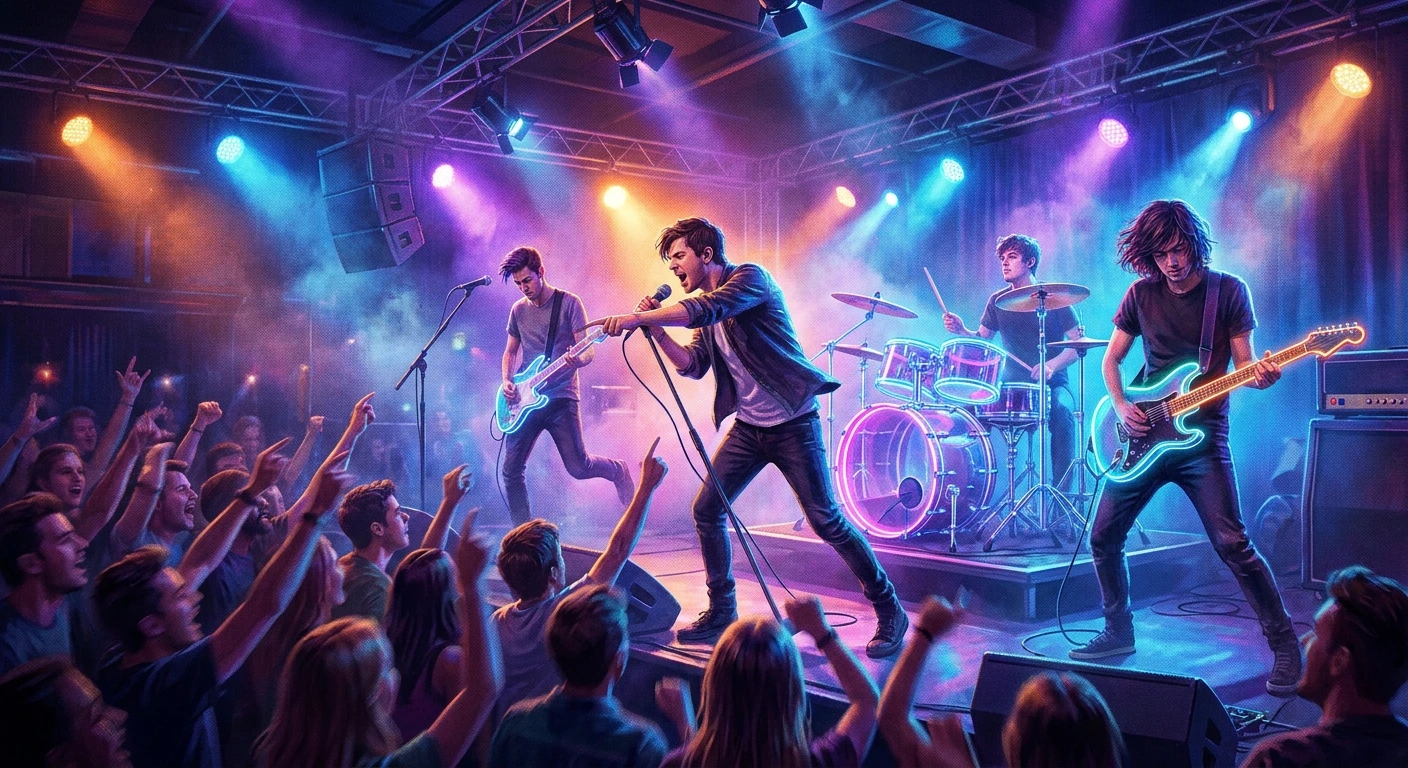
The Phenomenon of the British India Band
When you hear the name, your first thought might be historical, but the British India band is actually one of Australia’s most relentless, energetic, and enduring indie rock exports. Emerging from the vibrant, bustling garage rock scene of Melbourne in the mid-2000s, this four-piece outfit quickly established a reputation for blistering guitar riffs, pulsating drum beats, and lyrics that perfectly captured the angst and euphoria of youth. You do not just listen to their tracks; you feel the raw vibration of their high-octane performances right through your speakers. The group was formed by high school friends Declan Melia, Nic Wilson, Will Drummond, and Matt O’Gorman, who shared a singular vision: playing uncompromising, guitar-driven rock music that leaves a lasting mark on the listener.
Their debut album hit the local charts like a freight train, and they never looked back, eventually releasing a string of highly successful records that earned them ARIA nominations and massive radio play on stations like triple j. The thesis here is straightforward: understanding their trajectory offers a perfect lens into the broader evolution of independent rock music over the last two decades. From sweaty, packed pub gigs to massive festival main stages, their journey represents the quintessential dream of four friends making noise in a garage and conquering a continent with nothing but pure sonic force.
Read also: Best 90s singers: Iconic Voices of a Generation; Guide to the members of the stone roses.
Why Their Discography Belongs in Your Playlist
Adding this group to your daily rotation offers serious musical benefits. The value proposition of engaging with their catalog is the perfect blend of nostalgic early-2000s garage rock energy and sophisticated, mature songwriting. If you appreciate a rhythm section that punches through the mix and lead vocals delivered with unapologetic intensity, their albums will serve as a permanent fixture in your library. It gives you the perfect soundtrack for high-energy workouts, long road trips, or simply fueling your creative sessions.
| Album Title | Release Year | Defining Sonic Characteristic |
|---|---|---|
| Guillotine | 2007 | Frenetic, raw garage rock with sharp guitar stabs. |
| Controller | 2013 | Polished indie pop-rock with atmospheric production. |
| Nothing Touches Me | 2015 | Heavy, driving basslines mixed with stadium-sized choruses. |
There are three absolute standout reasons why music lovers consistently gravitate toward their sound:
- Unrelenting Tempo: They rarely slow down. The majority of their biggest hits maintain a driving tempo that naturally elevates your heart rate and keeps your attention locked in.
- Lyrical Vulnerability: Despite the aggressive musical exterior, Declan Melia’s lyrics often explore themes of heartbreak, existential doubt, and the rapid passage of time, offering listeners a deep emotional connection.
- Consistent Evolution: They never made the same record twice. Transitioning from rough, unpolished punk roots to expansive, synth-tinged alternative rock, their sound grew alongside their audience.
Listening to their discography feels like watching a masterclass in band dynamics. Every member knows exactly when to push the volume and when to pull back, creating a push-and-pull tension that defines the very best of the rock genre.
The Journey Through Time
Origins in Melbourne Classrooms
The story begins in the early 2000s within the walls of a Melbourne high school. Four teenagers bonded over a mutual love for classic rock, punk rock, and the burgeoning indie scenes of New York and London. Instead of simply exchanging CDs, they picked up instruments. Their early practice sessions were notoriously loud, chaotic affairs held in whatever living rooms or garages they could secure. What separated them from countless other high school bands was their sheer work ethic. They played every pub, club, and dive bar that would allow underage or barely-legal musicians onto the stage, slowly building a dedicated local following through word-of-mouth and chaotic, unforgettable live shows.
Evolution Through the Decades
As they transitioned out of the local pub scene, their big break came when they caught the attention of legendary producer Harry Vanda, a foundational figure in Australian rock history known for his work with The Easybeats and AC/DC. Vanda produced their debut album, Guillotine, capturing their live ferocity on tape. By the time they released Thieves in 2008, their sound was getting tighter and more ambitious. Entering the 2010s, they signed with major label backing, leading to the release of Controller. This era saw them incorporating more complex pedal effects, broader dynamic shifts, and cleaner vocal production, achieving massive commercial success and gold record status without losing their indie rock soul.
The Modern State of the Band in 2026
As we navigate through 2026, the music industry looks drastically different than it did during the CD-burning era of their youth. Yet, the group’s streaming numbers remain incredibly robust. Their classic tracks enjoy frequent viral moments on social media platforms, introducing their vintage garage rock swagger to a completely new generation of teenagers. While touring schedules have naturally evolved to accommodate their personal lives and broader creative projects, they remain a beloved staple of the Australian music royalty. Vinyl reissues of their early catalog frequently sell out, proving that the demand for authentic, guitar-based rock music is absolutely timeless.
The Anatomy of Their Sound
The Setup of Their Guitar Tone
To truly appreciate their music, you have to look at the mechanical and technical aspects of their production. The core of their aggressive yet melodic sound lies in the specific gear choices and audio engineering techniques used in the studio. They utilized a classic dual-guitar attack, relying heavily on vintage Fender Telecasters and Gibson ES-335s running through cranked Vox AC30 and Fender Twin Reverb amplifiers. This combination provides that signature ‘chime’ associated with indie rock, but heavily saturated with tube distortion. When the chorus hits, they employ cascading overdrive and fuzz pedals to create a massive wall of sound that fills out the frequency spectrum entirely.
Rhythmic Structures and Vocal Delivery
The rhythm section acts as the crucial anchor. The drums are often tuned to have a sharp, cracking snare sound that cuts through the dense layers of distorted guitars, while the kick drum is EQ’d to sit perfectly with the aggressive, plectrum-picked bass lines. Vocally, the delivery shifts between a spoken-word baritone and a strained, emotive tenor.
- Frequency Masking Avoidance: The bass guitar is typically heavily distorted in the midrange (around 800 Hz) to stand out, allowing the fundamental low frequencies to support the kick drum.
- Vocal Distortion: Studio engineers often ran the lead vocals through a secondary, slightly overdriven channel to add grit and presence without sacrificing lyrical intelligibility.
- BPM Ranges: Most of their prominent singles sit comfortably between 130 and 160 Beats Per Minute (BPM), a psychological sweet spot for creating a sense of urgency.
- Dynamic Compression: During mastering, their tracks utilize heavy bus compression to ensure the quiet, brooding verses slam intensely into the explosive choruses.
Your 7-Day Listening Plan
Day 1: Start with “Guillotine”
Begin your auditory journey at the very beginning. Spend your first day digesting their 2007 debut. Pay special attention to tracks like “Run the Red Light” and “Tie Up My Hands.” Listen to the frantic pacing and the raw, unpolished drum sounds. This day is about understanding the foundation of their aggression and the youthful energy that propelled them onto the national stage.
Day 2: Experience “Thieves”
On the second day, move forward to 2008’s Thieves. Here, you will notice a distinct jump in songwriting maturity. The track “I Said I’m Sorry” is an absolute standout. Focus on how the band uses brief moments of silence and pauses to create tension before launching back into full volume.
Day 3: Transition to “Controller”
Day three is reserved for their massive 2013 commercial breakthrough. Listen to “I Can Make You Love Me” on repeat. This is where you hear the introduction of cleaner production techniques and more melodic, pop-oriented hooks, perfectly balancing their aggressive roots with radio-friendly polish.
Day 4: Deep Listen of “Nothing Touches Me”
Proceed to their 2015 release. This album features a heavier, more atmospheric sound. Pay attention to “Suddenly.” The guitar work here is expansive, almost cinematic, showing a band completely comfortable with experimenting outside the standard garage rock boundaries.
Day 5: Appreciate “Forgetting the Future”
Spend day five with their 2017 record. Tracks like “Precious” highlight a sleek, modern rock approach. You can hear the incorporation of subtle synthesizers and highly polished vocal harmonies that prove the group’s versatility.
Day 6: Live Sessions and Acoustic Sets
Step away from the studio albums. Seek out their live performances, particularly their appearances on triple j’s ‘Like A Version’ segment. Hearing them strip down their heavy rock anthems into acoustic formats reveals the absolute strength of their underlying chord progressions and melodies.
Day 7: B-Sides and Hidden Gems
Conclude your week by hunting down B-sides, EP cuts, and rarities from their early years. Tracks that never made the main albums often contain some of their most experimental and daring musical ideas, giving you a complete, holistic view of their artistic capabilities.
Myths & Reality
Myth: The group originated in the United Kingdom or India, as their name suggests.
Reality: They are entirely Australian, having formed in the suburbs of Melbourne. The name was chosen during their high school years simply because they liked how the words sounded together, completely devoid of geographical origin.
Myth: They rely heavily on backing tracks and synthesizers for their live shows.
Reality: They are staunch defenders of the traditional four-piece rock format. Almost everything you hear at a live gig is generated directly from two guitars, one bass, and a drum kit played in real-time.
Myth: The original lineup fractured early in their career.
Reality: Unlike many bands of their era, the core members maintained incredible stability, sticking together through the vast majority of their recording and touring history.
Frequently Asked Questions
Who is the lead singer?
Declan Melia provides the lead vocals and also plays rhythm guitar, known for his highly energetic stage presence.
What was their debut album?
Their debut full-length album was Guillotine, released in 2007 to massive critical acclaim in Australia.
Have they won any major awards?
They have secured several ARIA (Australian Recording Industry Association) nominations throughout their career and have won numerous independent music awards.
What is their most streamed song?
“I Can Make You Love Me” remains one of their most successful and widely streamed tracks globally.
Are they considered punk or indie?
They sit comfortably in the middle, often categorized as indie rock or garage rock, blending punk energy with pop melodies.
Where did they record their early music?
Many of their formative recordings took place in legendary Australian studios, working with iconic local producers to capture their authentic sound.
Do they have music available on vinyl?
Yes, the vast majority of their discography has been pressed on vinyl, highly sought after by collectors and audiophiles.
This group proves that authentic, guitar-driven music never goes out of style. If your music library is feeling stale, do not wait any longer. Go stream their debut album, add their biggest anthems to your daily playlist, and experience the phenomenal rush of authentic indie rock for yourself today!
Leave a Reply