
What Happened in 1963: Major Events, Culture, and Politics
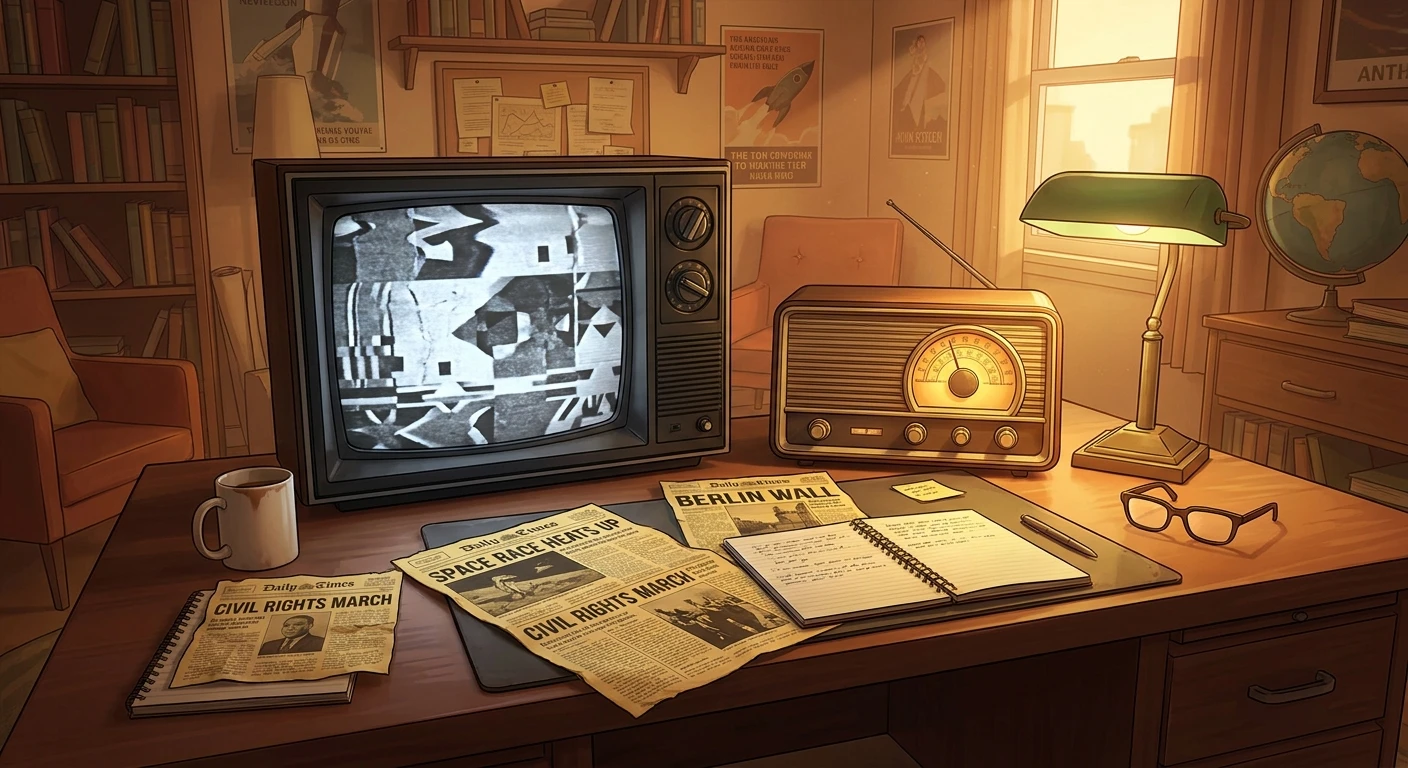
If you are trying to understand exactly what happened in 1963, you are looking at a pivotal twelve months that completely reshaped human history, civil rights, and technological progress. The early sixties served as a massive pressure cooker of political tension, societal evolution, and scientific ambition. We often view history as a series of isolated events, but this specific year functioned as a massive crossroads for the global population. The shadow of the previous year’s Cuban Missile Crisis still hung heavily over international relations, pushing superpowers into a frantic race for dominance in space and military technology. At the same time, a massive cultural shift was brewing, with young people challenging the rigid societal norms established throughout the 1950s. We saw the rise of a profound and organized push for racial equality in the United States, culminating in some of the most famous demonstrations ever recorded. By examining the political assassinations, the legislative battles, and the artistic milestones, we can clearly see how the foundation of our contemporary society was built during these intense twelve months. From the closing of a legendary prison to the launch of a woman into orbit, the events were dramatic, fast-paced, and highly consequential. This guide will walk you through the undeniable facts, major milestones, and permanent changes that defined this unforgettable year.
The Core Shifts That Changed Society
The sheer volume of historical events concentrated into this single year is staggering. To fully grasp the magnitude of the changes, we must look at how civil rights, international diplomacy, and space exploration dominated the global consciousness. The push for human rights reached an absolute fever pitch in the United States, forcing political leaders to finally address systemic inequality on a national stage. Meanwhile, international diplomacy shifted from aggressive brinkmanship to cautious communication, largely driven by the absolute terror experienced during previous nuclear standoffs. The Soviet Union continued to break barriers beyond the Earth’s atmosphere, proving that the space race was far from over. This era was characterized by ordinary people taking extraordinary risks to secure a better future for the next generation.
Read also: How Old Is Kendall Jenner? The Model's Complete Timeline; Famous Historical Events That Shaped Our World.
| Date of Event | Major Milestone | Global Impact and Significance |
|---|---|---|
| August 28 | The March on Washington | Over 250,000 people gathered to advocate for civil and economic rights, heavily influencing future legislation. |
| June 16 | Vostok 6 Launch | Valentina Tereshkova became the first woman to travel into space, completing 48 orbits around the Earth. |
| November 22 | Assassination of President Kennedy | A tragedy that shocked the world, fundamentally altering American politics and culture for decades. |
To break down the massive benefits, harms, and lessons learned from this era, consider the following major societal shifts:
- The Acceleration of the Civil Rights Movement: Grassroots organizing, peaceful protests, and powerful speeches proved that nonviolent resistance could capture the attention of the entire world and force a legislative response.
- The Implementation of Crisis Diplomacy: Superpowers realized the absolute necessity of direct communication to prevent accidental nuclear war, leading to tangible infrastructure meant specifically for emergency de-escalation.
- The Democratization of Pop Culture: The music industry began a massive pivot toward international youth culture, setting the stage for the British Invasion and completely changing how artists interacted with global audiences.
The Origins of the Political Climate
To understand the atmosphere, you must look at the immediate aftermath of World War II and the resulting Cold War. By the time the calendar turned to this specific year, the United States and the Soviet Union had spent nearly two decades engaged in a bitter ideological, economic, and military struggle. The preceding year featured a terrifying standoff over missiles stationed in Cuba, which brought the world dangerously close to total nuclear annihilation. That immense fear prompted a cautious re-evaluation of foreign policy. Leaders realized they needed better mechanisms to talk to one another directly. At home, the economic boom of the post-war years created a growing middle class, but those economic benefits were largely segregated. Black Americans, having fought in global conflicts for freedom overseas, returned to a country that denied them basic rights, sparking a righteous and highly organized demand for immediate systemic change.
The Evolution of Global Movements
Throughout the spring and summer, the demand for equality evolved from localized boycotts into highly coordinated national campaigns. The Birmingham campaign utilized strategic nonviolent direct action to challenge segregation in one of the most strictly divided cities in the American South. The harsh response from local authorities, broadcast on television screens nationwide, shocked the conscience of the public. This momentum organically evolved into the massive demonstration at the Lincoln Memorial. Internationally, the wave of decolonization continued to sweep across Africa, as more nations fought for and declared their independence from European colonial powers, fundamentally redrawing the global map and establishing new political alliances at the United Nations.
The Modern Legacy of the Era
The legislation, cultural shifts, and tragedies of this period still heavily dictate our political landscape today. The Civil Rights Act of 1964 and the Voting Rights Act of 1965 were direct legislative responses to the blood, sweat, and organizing executed throughout the prior months. The tragic death of a young, charismatic American president in November created a massive cultural trauma, leading to an enduring skepticism of government institutions and a permanent loss of political innocence. Furthermore, the environmental awareness, feminist ideologies, and anti-war sentiments that would define the late sixties all found their crucial footing and initial organizing structures during this incredibly dense historical window.
Space Race Technologies and Engineering
The scientific community pushed the absolute boundaries of human capability, particularly in the realm of aerospace engineering. The Soviet Union achieved another massive propaganda and scientific victory with the Vostok 6 mission. The Vostok spacecraft was a marvel of early engineering, designed to keep a human alive in the incredibly harsh environment of low Earth orbit using primitive but highly robust life support systems, thermal controls, and manual reentry protocols. On the American side, the Mercury program concluded with Faith 7, piloted by Gordon Cooper, who orbited the Earth 22 times and tested the limits of human endurance in microgravity. These missions provided essential biomedical data regarding how the human body reacts to extended weightlessness, radiation exposure, and the psychological stress of isolation in a tiny capsule.
Medical and Communications Breakthroughs
Beyond the stars, brilliant minds were solving massive problems on the ground. Medical science took a colossal leap forward with the licensing of a highly effective vaccine to prevent a deadly childhood disease, utilizing decades of virology research. Simultaneously, the way humans communicated and managed logistics received massive upgrades. The introduction of touch-tone dialing revolutionized telecommunications, replacing the slow rotary dial with rapid, frequency-based electronic tones. Meanwhile, national logistics required an overhaul to handle the booming post-war economy.
- The Measles Vaccine: Developed from the Edmonston-B strain, this medical breakthrough drastically reduced childhood mortality rates and became a staple of public health initiatives.
- The ZIP Code System: The Zone Improvement Plan was introduced by the United States Postal Service to drastically improve the sorting and routing of an exploding volume of national mail.
- The Compact Audio Cassette: Philips introduced this magnetic tape sound recording format, which eventually revolutionized portable music and personal audio recording.
- The Arecibo Observatory: Construction was completed on what was then the world’s largest single-aperture radio telescope in Puerto Rico, expanding our ability to study the cosmos.
March 21: Alcatraz Federal Penitentiary Closes
The notorious island prison located in the San Francisco Bay officially shut its doors. Despite its reputation for holding the most dangerous criminals and being totally inescapable, the facility was plagued by absolutely massive operating costs. The constant exposure to salty ocean air caused severe structural degradation, making it financially impossible to maintain the crumbling concrete and rusting iron bars safely.
April 16: Letter from Birmingham Jail
After being arrested for participating in nonviolent protests, Martin Luther King Jr. penned one of the most crucial texts of the civil rights era. Written on the margins of a newspaper, the letter eloquently defended the strategy of nonviolent resistance to racism and argued that citizens have a moral responsibility to break unjust laws rather than wait for justice to arrive on its own timeline.
June 16: First Woman in Space
Cosmonaut Valentina Tereshkova launched aboard Vostok 6, making history and proving that women could endure the extreme physical and psychological rigors of spaceflight. Her mission lasted almost three days, during which she logged more flight time than the combined total of all American astronauts who had flown before her, serving as a massive technical victory for the Soviet space program.
August 28: The March on Washington
A quarter of a million people peacefully converged on the National Mall to demand equal justice and economic opportunity. It was here that Martin Luther King Jr. delivered his legendary and historic address from the steps of the Lincoln Memorial, a rhetorical masterpiece that galvanized the movement and secured massive public support for sweeping federal civil rights legislation.
August 30: The Hotline Between Washington and Moscow
Following the terrifying communication delays experienced during the Cuban Missile Crisis, a direct communications link was established between the Pentagon and the Kremlin. This system was designed to allow leaders to instantly transmit text messages to clarify military movements, de-escalate tensions, and prevent a misunderstanding from triggering a global nuclear conflict.
November 22: The Assassination of President Kennedy
Tragedy struck in Dallas, Texas, as the President of the United States was fatally shot while riding in a presidential motorcade through Dealey Plaza. The event caused immediate global shockwaves, triggered intense mourning, led to the sudden swearing-in of Vice President Lyndon B. Johnson, and spawned decades of intense historical debate and cultural grief.
November 23: Doctor Who Premieres
Just one day after the tragic events in Dallas, the British Broadcasting Corporation aired the very first episode of a science fiction television program featuring a time-traveling alien. Despite the massive news coverage dominating the airwaves, the show slowly gained traction, eventually becoming a global cultural phenomenon and a permanent fixture in science fiction history.
Myths vs. Reality
Myth: The emergency hotline between Washington and Moscow was a literal red telephone sitting on the president’s desk.
Reality: The original hotline established that year was actually a secure teletype machine. Voice communications were considered too easily misunderstood or poorly translated during a crisis, so text-based messages routed through a secure international cable provided a verifiable and precise written record.
Myth: Alcatraz prison was closed because inmates successfully escaped and proved the facility was no longer secure.
Reality: While a famous escape attempt occurred the previous year, the official closure was strictly a financial decision. The prison cost significantly more to operate per inmate than any other federal facility due to the need to import all fresh water, food, and supplies via boat.
Myth: The Beatles were instantly a massive success in the United States upon releasing their first album.
Reality: While they achieved massive dominance in the United Kingdom throughout the year, American record labels initially refused to release their singles. Their massive explosion in American popularity did not officially begin until early the following year.
Who was the President of the United States?
John F. Kennedy served as the 35th president until his tragic death in November, at which point Vice President Lyndon B. Johnson immediately assumed the presidency aboard Air Force One.
When did the most famous civil rights speech occur?
Martin Luther King Jr. delivered his historic address on August 28 during the massive organized protest at the Lincoln Memorial.
What major consumer technology was introduced by Philips?
The compact audio cassette tape was introduced, originally intended for dictation machines but eventually revolutionizing the entire music industry.
Who was the first woman to travel into space?
Soviet cosmonaut Valentina Tereshkova made history by launching into low Earth orbit on June 16 aboard the Vostok 6 spacecraft.
Why did the famous Alcatraz prison close its doors?
The facility was shut down by the federal government primarily due to the exorbitant costs of maintenance and daily operations on a remote, decaying island.
What iconic British television show premiered?
The long-running science fiction series Doctor Who aired its very first episode on the BBC, introducing audiences to the TARDIS.
Which crucial childhood vaccine was licensed?
The first highly effective vaccine against measles was officially licensed, leading to massive public health campaigns that saved countless lives globally.
Conclusion: Reflecting on a Year of Extremes
Understanding exactly what happened in 1963 requires accepting a year defined by absolute extremes. It was a period marked by the highest aspirations of human equality, the incredible technical achievements of space exploration, and the profound sorrow of unexpected national tragedy. The courage shown by activists facing police brutality, the brilliance of engineers calculating orbital mechanics, and the resilience of a public navigating intense Cold War anxiety all forged the reality we navigate today. The events discussed are not just dry historical dates; they are the active foundations of modern civil rights, global diplomacy, and technological convenience. Keep exploring history to understand the roots of our current society!
Leave a Reply