
The Enduring Legacy of Famous Pirates
When you hear the term famous pirates, you likely instantly picture rugged outlaws sailing under the Jolly Roger, burying chests of gold, and staging daring raids on the high seas. Look, the historical reality is significantly more complex and fascinating than anything you have seen in Hollywood blockbusters. The actual men and women who commanded these legendary vessels were not just chaotic sea robbers; they were highly skilled navigators, charismatic leaders, and formidable political disruptors who challenged the absolute authority of the era’s biggest global empires. You might assume their lives were purely driven by a thirst for anarchy, but the truth is quite the opposite. Many maritime outlaws operated under strict codes of conduct, running their ships as early democratic micro-societies. They elected their captains, distributed rations equitably, and even instituted some of the very first documented workplace compensation systems for debilitating injuries. The Golden Age of Piracy, which roughly spanned from the late seventeenth century to the early eighteenth century, completely altered the trajectory of global trade and naval warfare. To truly grasp how these individuals managed to bring heavily armed merchant fleets to a standstill, you have to look past the fictionalized folklore. By examining their actual strategies, their specialized nautical equipment, and the harsh economic conditions that pushed ordinary sailors into a life of maritime crime, we get a surprisingly clear picture of an era that forever changed maritime history.
Operating a rogue vessel on the open ocean required immense logistical coordination. It was not just about hoisting a black flag and hoping for the best. The most successful crews relied on intense psychological warfare to capture massive merchant galleons without ever firing a single destructive broadside. Why? Because firing cannons meant risking catastrophic damage to the very cargo and ship they intended to steal. Intimidation was their primary weapon. By cultivating a terrifying reputation, captains ensured that their targets would usually surrender at the mere sight of their sails. You have to appreciate the sheer efficiency of this model. The economic structure of a typical rogue ship was built on shared risk and shared reward, completely contrasting the brutal, top-down hierarchy of national navies at the time.
Read also: The True Story Behind bill the butcher; Life of charles ix of france Explained.
| Pirate Name | Primary Vessel | Main Area of Operation |
|---|---|---|
| Edward Teach (Blackbeard) | Queen Anne’s Revenge | Caribbean and North Atlantic |
| Bartholomew Roberts | Royal Fortune | West Africa and the Americas |
| Ching Shih | Red Flag Fleet | South China Sea |
To maximize their operational success, these crews adhered to highly structured tactical protocols. Their methods were calculated, efficient, and ruthlessly effective against heavily laden, slow-moving merchant vessels. Here are the core pillars of their strategic framework:
- Implementation of the Pirate Code: Every crew member signed a binding document called the Articles. This contract clearly outlined the fair distribution of stolen goods, rules against internal theft, and specific monetary payouts for the loss of limbs during combat engagements.
- Mastery of Psychological Warfare: Captains intentionally spread terrifying rumors about their own cruelty. They used customized flags, theatrical clothing, and sheer aggressive posturing to force immediate surrenders, thereby preserving both the stolen ship and its valuable contents.
- Utilization of Naval Guerrilla Tactics: Instead of engaging in traditional, line-of-battle naval warfare, they utilized small, incredibly fast sloops. These shallow-draft vessels allowed them to navigate treacherous coastal shoals, easily evading massive military warships that required deep water to sail safely.
This organized approach completely upended traditional maritime commerce, forcing massive trading monopolies to rethink their entire security infrastructure.
The Origins of Privateering
You cannot fully understand maritime outlaws without tracing their roots directly back to state-sponsored privateering. During the sixteenth century, nations like England and France actively issued official documents known as letters of marque. These legal commissions authorized private ship owners to attack and plunder the merchant vessels of rival nations, particularly those belonging to the Spanish Empire. Figures like Sir Francis Drake were essentially legally sanctioned raiders. The governments benefited from the plundered wealth without having to finance massive standing navies. However, this system created a vast population of heavily armed, highly experienced combat sailors who were accustomed to attacking civilian trade ships for immense personal profit. When the official wars ended and the treaties were signed, these seasoned veterans found themselves abruptly out of work. The transition from legal privateer to illegal rogue was, for many, a simple matter of survival.
The Evolution into the Golden Age
By the time the Golden Age reached its absolute peak in the early eighteenth century, the landscape had shifted dramatically. The epicenter of this maritime rebellion moved directly into the Caribbean, with the island of New Providence and its main port, Nassau, becoming a fully functional pirate republic. Here, thousands of outlaws operated entirely outside the jurisdiction of any monarchy. They established a robust black market economy, openly trading plundered sugar, indigo, and manufactured goods with corrupt colonial merchants who were desperate to avoid exorbitant royal taxes. The scale of this operation was staggering. Crews became larger, ships became more heavily armed, and the raids grew increasingly audacious, culminating in blockades of major colonial ports like Charleston.
The Modern State of Maritime Security
Eventually, the major colonial powers realized that this rampant piracy was an existential threat to global capitalism. They responded by deploying massive naval squadrons specifically tasked with hunting down these rogue commanders. The implementation of the harsh Piracy Act of 1698 allowed for rapid trials and executions at sea, bypassing the lengthy legal processes previously required in London. As colonial governors aggressively issued pardons for those who surrendered, while simultaneously executing those who refused, the great confederacies slowly fractured. The legacy they left behind fundamentally reformed maritime law, leading to the establishment of modern naval patrols and international treaties that govern the safe passage of commercial shipping vessels to this day.
The Mechanics of Age of Sail Navigation
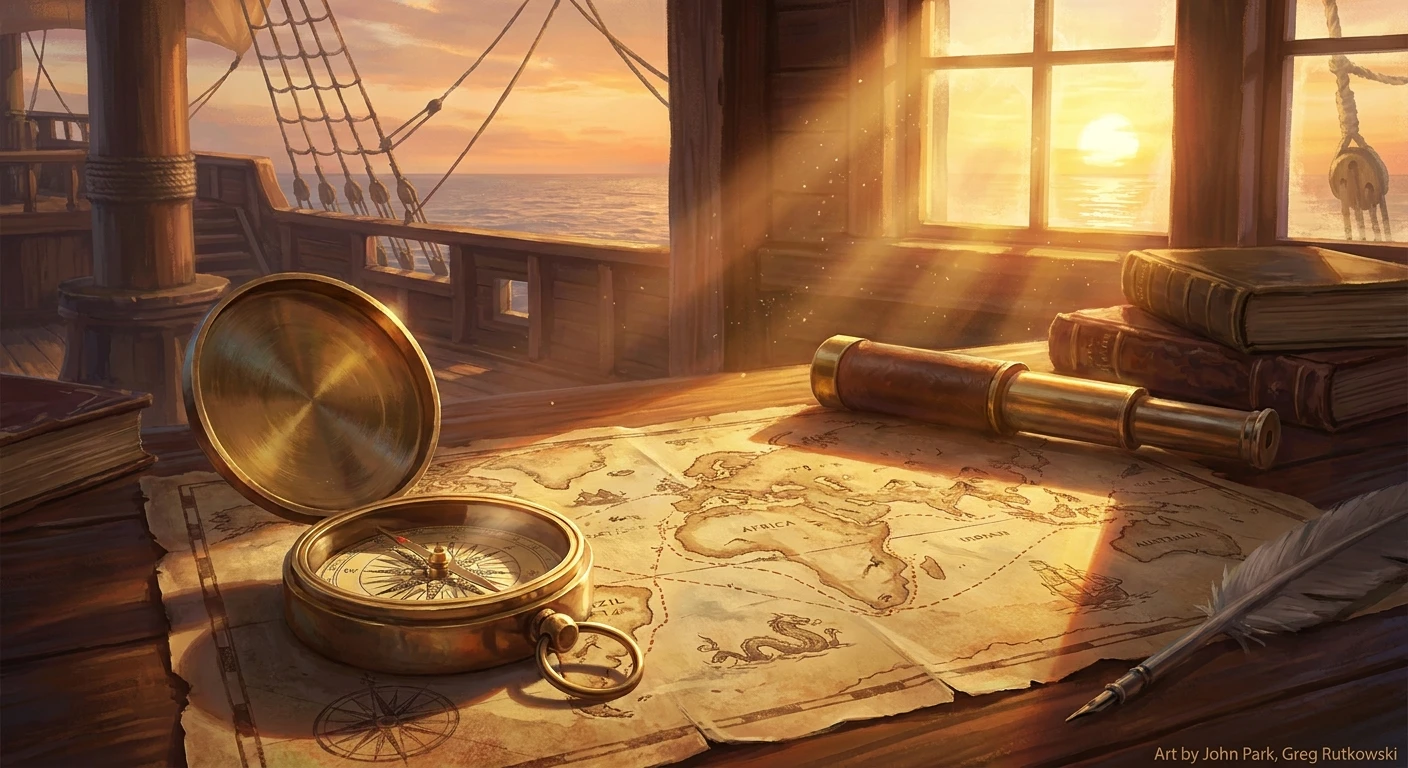
Sailing a heavily armed vessel across the vast, featureless expanses of the Atlantic Ocean required an extraordinary level of scientific understanding. You have to realize that these crews operated entirely without modern GPS, relying instead on analog instruments and their deep knowledge of celestial mechanics. A captain’s ability to calculate latitude using the angle of the sun was often the only thing standing between a successful voyage and death by starvation or shipwreck. They relied heavily on the trade winds and ocean currents, meticulously mapping out routes that allowed them to intercept heavily laden treasure galleons along the Spanish Main. Understanding the wind gauge—the tactical advantage of positioning your ship upwind from the enemy—was absolutely crucial for initiating a successful boarding action.
Careening and Hull Maintenance
One of the most critical, yet frequently overlooked, technical aspects of a maritime outlaw’s survival was the practice of careening. Because they did not have access to official royal drydocks, crews had to regularly beach their ships on isolated, sandy shorelines to perform essential maintenance. Tropical waters caused extreme bio-fouling; barnacles, seaweed, and destructive shipworms would aggressively attach to the wooden hull below the waterline. This accumulation drastically reduced a vessel’s speed and maneuverability. Since speed was a rogue ship’s primary defense against massive military frigates, failing to clean the hull was effectively a death sentence. The crew would use block and tackle systems to physically haul the ship onto its side, painstakingly scraping the hull and applying layers of sulfur, tallow, and pitch to protect the timber.
Here are the key scientific facts regarding their nautical operations:
- Celestial Navigation: Navigators utilized highly specialized instruments like the astrolabe and the cross-staff to measure the altitude of celestial bodies, allowing them to accurately determine their latitude while far out at sea.
- Dead Reckoning: Without a reliable way to calculate longitude until the invention of the marine chronometer, sailors relied on a chip log and an hourglass to estimate their speed through the water, combining this data with compass headings to track their position.
- Fluid Dynamics of Rigging: Fore-and-aft rigging, commonly used on pirate sloops, allowed these vessels to sail much closer to the wind than the square-rigged galleons they hunted, providing a massive aerodynamic advantage during high-speed pursuits.
- Hull Protection Techniques: The application of chemical mixtures, including sulfur and animal fats, created a toxic barrier that temporarily deterred wood-boring mollusks (Teredo navalis) from entirely compromising the ship’s structural integrity.
Step 1: Mapping the Caribbean Hotspots
To truly grasp the strategic brilliance of these maritime outlaws, you must start by geographically mapping their primary operational zones. Look closely at the Caribbean basin, specifically focusing on the Windward Passage and the Straits of Florida. These narrow geographical choke points were natural funnels for heavily laden Spanish galleons carrying immense wealth back to Europe. By positioning their fast sloops in the hidden coves of the Bahamas, rogue crews created the perfect ambush points. Studying these maps reveals exactly why Nassau became the absolute center of their illicit empire.
Step 2: Studying the Pirate Codes
The next essential step is to examine the actual historical documents known as the Articles. By reading the surviving codes, such as those written by Bartholomew Roberts, you immediately see the strict democratic principles at play. These documents meticulously outline everything from the exact division of stolen loot to the severe punishments for desertion during battle. Analyzing these contracts shatters the illusion of absolute chaos, proving that these crews operated highly organized, rule-bound syndicates focused purely on maximizing their financial returns.
Step 3: Analyzing Naval Architecture
You cannot understand their success without studying the specialized vessels they utilized. Forget the massive, lumbering galleons; focus your attention on the single-masted Bermuda sloop. These remarkably agile ships were characterized by their shallow drafts, which allowed them to effortlessly navigate over treacherous coral reefs where larger, heavier military warships would inevitably run aground. Examining the blueprints of these swift vessels highlights the immense technological advantage they maintained over their merchant prey.
Step 4: Investigating the Economics of Plunder
To see the complete picture, you need to analyze the specific types of cargo they targeted. While gold and silver coins make for great stories, the true wealth of the era was found in massive shipments of raw sugar, processed indigo, exotic spices, and enslaved human beings. Understanding the global demand for these commodities explains why local colonial governors were often completely willing to turn a blind eye to illegal activities. The black market provided essential goods at a fraction of the cost dictated by royal monopolies.
Step 5: Tracing the Smuggling Routes
Following the money requires mapping out the complex smuggling networks that connected the Caribbean directly to the major markets of North America. Ports in North Carolina, Virginia, and Massachusetts frequently engaged in illegal trade with known outlaws. Merchants in these coastal towns eagerly purchased stolen molasses to supply their local rum distilleries. By tracing these clandestine trade routes, you can see exactly how illicit maritime commerce was deeply integrated into the early colonial American economy.
Step 6: Reviewing Trial Records and Executions
The stark reality of this lifestyle is best understood by reading the official admiralty court records. Transcripts from the trials of captured crews provide an unfiltered, grim look at the brutal consequences of their actions. These legal documents offer verified, firsthand accounts of their raids, their internal disputes, and their ultimate demise. The meticulous records of mass executions at Execution Dock in London served as a chilling, highly public deterrent designed to completely eradicate the romanticized appeal of the profession.
Step 7: Identifying Historical Artifacts
Finally, immerse yourself in the tangible, physical evidence left behind. Examining recovered artifacts from verified shipwrecks, such as the Queen Anne’s Revenge off the coast of North Carolina, provides incredible insights into their daily survival. Medical instruments, navigational tools, heavily modified cannons, and personal belongings extracted from the ocean floor offer a deeply authentic connection to the people who lived, fought, and died during the most turbulent era in maritime history.
The folklore surrounding these historical figures is absolutely saturated with completely fabricated Hollywood tropes. Let us set the historical record straight by debunking some of the most persistent misconceptions. Myth: Pirates constantly forced their captives to walk the plank. Reality: This is largely a literary invention popularized by authors like J.M. Barrie. In actual historical practice, unwanted captives were either unceremoniously dumped overboard, quickly dispatched with a cutlass, or deliberately marooned on deserted islands with a single pistol. Myth: They spent their time burying vast chests of stolen treasure. Reality: With the exceedingly rare exception of William Kidd, these outlaws did not bury their wealth. The vast majority of their loot consisted of perishable goods like food, fabric, and sugar, which they immediately sold on the black market and spent on shore leave. Myth: Every captain used a standard, identical Jolly Roger flag. Reality: While the skull and crossbones motif was utilized, almost every prominent commander designed a highly personalized flag featuring hourglasses, bleeding hearts, or skeletons, each intended to send a specific, terrifying message to their victims.
Who was the most successful maritime outlaw?
Financially speaking, Bartholomew Roberts, also known as Black Bart, was historically the most successful during the Golden Age, capturing over four hundred distinct merchant vessels throughout his incredibly prolific, yet brief, career.
Did female captains actually exist?
Yes, absolutely. Figures like Anne Bonny and Mary Read famously fought alongside male crews in the Caribbean, while Ching Shih commanded an incredibly massive confederation of tens of thousands of outlaws in the South China Sea.
What exactly did the Jolly Roger signify?
Hoisting a black flag signaled that the attacking ship was willing to accept a peaceful surrender and spare the crew. If the victims resisted, a solid red flag was hoisted, indicating that no quarter would be given and everyone would be slaughtered.
How long did this specific historical era actually last?
The period strictly defined as the Golden Age of Piracy was surprisingly brief, running roughly from 1650 to 1730, peaking sharply between 1715 and 1722 following the conclusion of the War of the Spanish Succession.
Did they truly wear eyepatches to cover missing eyes?
While some certainly lost eyes in combat, many sailors intentionally wore an eyepatch to keep one eye permanently adjusted to total darkness. This allowed them to immediately see clearly when rushing below decks during an intense boarding action.
What was their primary beverage of choice at sea?
Fresh water rapidly spoiled and became stagnant in wooden casks, so crews predominantly drank a mixture called grog, which consisted of rum diluted with water and heavily mixed with citrus juice to actively prevent the onset of scurvy.
Are there still rogue vessels operating today?
Yes, maritime crime remains a significant global issue, particularly in strategic chokepoints like the Gulf of Aden, the Malacca Strait, and the Gulf of Guinea, though modern attackers use speedboats and automatic weapons rather than wooden galleons.
Why did they keep parrots as pets?
Exotic animals like parrots were highly valuable, easily transportable commodities in the European black market. They required very little food, provided entertainment during long voyages, and could be sold for massive profits in colonial ports.
Did they actually use treasure maps with a giant X?
No, the concept of a map with a red X marking buried gold is entirely a fictional trope invented by Robert Louis Stevenson for his classic novel Treasure Island.
How did most of these outlaws eventually die?
The vast majority died incredibly young due to rampant combat injuries, untreatable tropical diseases like malaria and yellow fever, or public execution by hanging after being captured by military patrols.
The true story of the most famous pirates is a thrilling testament to human ingenuity, severe economic desperation, and strict nautical discipline. These individuals briefly managed to challenge the most powerful empires on earth, leaving behind a legacy that continues to captivate our collective imagination. If you found this comprehensive guide to maritime history helpful, please share this resource with your friends and continue researching the incredibly complex reality of the Golden Age of Piracy!
Leave a Reply