
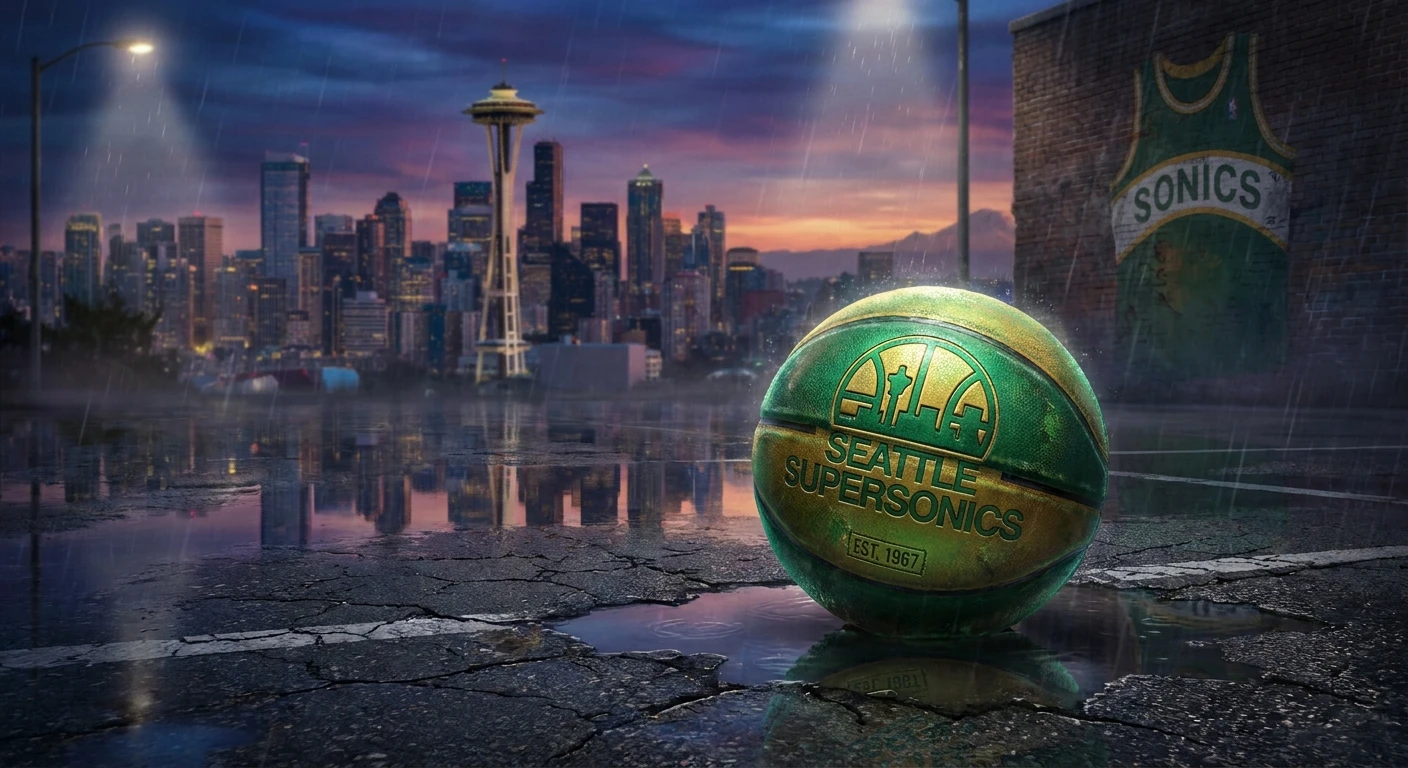
The Lasting Legacy of the Seattle SuperSonics
The Seattle SuperSonics represent one of the most legendary chapters in professional basketball history, leaving a cultural footprint that continues to resonate across the globe. Mention the green and gold to any longtime sports fan, and you immediately trigger memories of high-flying dunks, intense playoff rivalries, and a roaring crowd that literally shook the foundations of the arena. The impact of the Seattle SuperSonics goes far beyond a simple sports franchise; it is a profound cultural touchstone that defined the sports landscape of the Pacific Northwest for over four decades. From their inception in the late 1960s to their heartbreaking departure in 2008, this team gave the city an undeniable identity on the global stage, blending perfectly with the region’s famous grunge music scene and booming tech industry in the 1990s. Even today, the echo of their legacy heavily influences street fashion, modern sneaker culture, and the continuous dialogue surrounding NBA expansion. The void they left behind is still felt deeply by the community, creating a unique sports phenomenon where a defunct team retains an active, passionate global fan base. Over the years, the narrative surrounding the team has shifted from grief over their exit to a highly organized, vocal movement demanding their return. You simply cannot discuss the modern landscape of the league without acknowledging the systemic and stylistic blueprints laid down by this historic organization. Understanding their complete journey requires looking closely at the triumphs, the heartbreaks, and the undeniable magic they brought to the hardwood night after night.
The Impact of the Sonics on Basketball Culture
When you evaluate the broader impact of a franchise, you have to look at the tangible and intangible value it brings to a community. The Seattle SuperSonics provided an absolute masterclass in civic engagement, sportsmanship, and premium entertainment. The value proposition of having a top-tier professional basketball team in a major tech and cultural hub is twofold. First, it drives massive local economic stimulation. Think about the countless local restaurants, merchandise shops, parking attendants, and street vendors that thrived around the arena on game nights, creating a micro-economy fueled by sports fandom. Second, it serves as a powerful unifying force. It brings together people from all socio-economic backgrounds, neighborhoods, and walks of life under a shared banner of civic pride. For example, during the mid-1990s playoff runs, the entire region was gripped by an electric atmosphere, painting the town green and gold, with flags flying from cars and office buildings. Another prime example is the lasting influence on grassroots basketball; local kids who watched these incredible athletes grow up to become the next generation of professional talent, elevating the region’s high school and college programs.
Read also: The Epic 1996 NRL Grand Final: Manly vs St George; The Legacy of george webb (actor).
Here is a quick look at some of the most defining eras of the franchise’s history:
| Decade | Defining Team Identity | Key Figures & Legends |
|---|---|---|
| 1970s | Championship Pedigree & Grit | Lenny Wilkens, Dennis Johnson, Jack Sikma |
| 1990s | High-Octane Entertainment & Defense | Gary Payton, Shawn Kemp, George Karl |
| 2000s | Perimeter Dominance & Transition | Ray Allen, Rashard Lewis, Nate McMillan |
The cultural and athletic footprint of this organization continues to thrive for several core reasons that keep the memory alive:
- The Timeless Aesthetic Appeal: Their vintage logos, typography, and green-and-gold jerseys remain some of the highest-selling retro merchandise globally, worn by celebrities and fans who weren’t even born when the team played.
- The Defensive Blueprint: The aggressive trapping schemes and switch-heavy defenses they popularized in the 90s are still intensely studied and replicated by modern professional and collegiate coaches.
- The Civic Activism Model: The highly organized fan campaigns demanding a new team have created a unique template for sports activism, showing how a community can preserve a team’s history despite corporate relocation.
Origins of the Franchise
The fascinating story begins in 1967 when the league officially awarded an expansion team to the Pacific Northwest. At the time, the region was experiencing a massive economic boom, largely driven by the aerospace industry. The team’s name was a direct, clever nod to this industrial backbone. Boeing was actively developing the Supersonic Transport (SST) project, and naming the franchise the Seattle SuperSonics was a brilliant way to tie the basketball team to the futuristic, high-tech ambitions of the city. The early days were marked by the typical struggles of a new club trying to find its footing, playing games at the Seattle Center Coliseum and slowly but surely building a dedicated, vocal fan base that appreciated hard-nosed basketball.
Evolution of the Team
Throughout the 1970s, the team transformed from a scrappy underdog into a legitimate powerhouse. The pivotal moment came when they brought in the legendary Lenny Wilkens, first as a player and later as a head coach. His calm, calculated leadership culminated in the 1978-79 season, where the team captured its first and only NBA Championship by defeating the Washington Bullets. Fast forward to the 1990s, and the organization reinvented itself completely to match the fast-paced era. They became the most electrifying show in sports, headlined by a legendary point guard and power forward duo that specialized in blind lob passes, ferocious, rim-rattling dunks, and suffocating perimeter defense. They pushed the legendary 72-win Chicago Bulls to the absolute brink in the 1996 Finals, cementing their status as an iconic, unforgettable squad.
Modern State of the Sonics Legacy
The painful reality of 2008 saw the franchise relocated to Oklahoma City, subsequently rebranded as the Thunder. However, a highly specific legal settlement ensured that the colors, name, and historical records of the Seattle SuperSonics would remain in the Pacific Northwest, patiently waiting for a new expansion team to claim them. As we look at the sports landscape today, the city has entirely rebuilt its arena infrastructure. The completion of the state-of-the-art Climate Pledge Arena has positioned the market as the undisputed frontrunner for any upcoming expansion plans. The fans have absolutely not moved on; they have mobilized, keeping the memory alive through critically acclaimed documentaries, peaceful rallies, and unwavering vocal support that league executives cannot ignore.
The High-Pressure Defensive System
If you break down the tactical science of how the Seattle SuperSonics played during their peak 1990s era, you will quickly find a defensive system that was lightyears ahead of its time. Coach George Karl implemented a relentless, high-pressure scheme that relied heavily on exceptional lateral quickness, precise timing, and elite cardiovascular conditioning. The technical term for their primary strategy is the “trap defense.” In simple terms, this means instantly double-teaming the ball-handler the very moment they cross half-court or step toward the sideline, brilliantly using the boundary lines as an extra, immovable defender. This required a deep, almost instinctual understanding of passing lanes. They forced turnovers at a historic rate, which mathematically skewed possession metrics heavily in their favor, creating easy transition buckets before the opposing defense could set up.
Draft Analytics and Talent Acquisition
Long before modern analytics departments became the standard in professional sports, the front office utilized advanced scouting to find hidden market inefficiencies. They targeted players with specific wingspans, exceptional vertical leaps, and defensive versatility—traits that are now universally valued in today’s positionless basketball era. They calculated that generating fast-break opportunities through steals and deflections was statistically much more efficient than running slow, half-court offensive sets against set defenses.
Here are some fascinating technical facts about their peak performance metrics:
- The 1995-96 squad consistently led the league in steals, creating a massive fast-break possession advantage that heavily increased their overall True Shooting Percentage.
- They utilized early, innovative iterations of the pick-and-roll slip screen to counter aggressive defenses, maximizing their points per possession in half-court scenarios.
- Advanced metrics show their defensive rating during the 1996 playoffs was incredibly disruptive, specifically designed to neutralize isolation-heavy offensive schemes favored by other elite teams.
- The front office leveraged international scouting earlier than many of their peers, correctly recognizing the shifting dynamics and vast potential of global basketball talent.
A Fan’s Guide: Reliving the Glory
If you are a newer fan wanting to understand why this franchise is so universally respected, or an old fan looking to take a nostalgic trip down memory lane, you need a structured way to dive into the history. Here is a comprehensive 7-day plan to fully experience the magic of the Seattle SuperSonics from your own home.
Day 1: Watch the 1979 Championship Run
Start your journey right at the mountaintop. Find archived, full-game footage of the 1979 NBA Finals. Watch how Jack Sikma’s revolutionary reverse pivot jump shot and Dennis Johnson’s absolute lockdown defense completely dismantled the Washington Bullets. It is a brilliant masterclass in unselfish, team-first basketball that relied on ball movement and spacing.
Day 2: The Reign Man and The Glove
Dedicate this entire day to the culturally defining 1990s. Search for extended highlight reels of Gary Payton and Shawn Kemp. Focus intensely on their unspoken chemistry—the flashy no-look passes, the transition lobs from half-court, and the sheer, unbridled athleticism that made them the most entertaining and feared duo of their generation.
Day 3: The 1996 NBA Finals
This is strictly required viewing for any serious basketball purist. Watch Game 4 and Game 5 of the 1996 Finals. Observe the brilliant tactical adjustments made by the coaching staff to guard the greatest player of all time, and witness the incredible grit and physicality the team showed when facing playoff elimination on their home floor.
Day 4: Ray Allen’s Perimeter Mastery
Move your timeline into the 2000s era. Ray Allen’s time wearing the green and gold was marked by some of the most aesthetically perfect perimeter shooting ever recorded in sports history. Study his flawless footwork coming off screens and his shooting mechanics, which undeniably set the gold standard for modern volume three-point shooters.
Day 5: The Final Season and the Rookie Sensation
Look back at the bittersweet 2007-08 season. While it was an incredibly painful year for fans due to the impending threat of relocation, it importantly featured the rookie campaign of Kevin Durant. Watch his early, raw flashes of brilliance that proved beyond a shadow of a doubt that he was destined to be a generational scoring talent.
Day 6: Consume the Sonicsgate Documentary
To truly understand the civic heartbreak and the complex, often frustrating business politics that led to the team’s controversial departure, you must watch the award-winning documentary “Sonicsgate: Requiem for a Team.” It provides crucial, factual context regarding the arena funding disputes and ownership changes that altered the city’s history.
Day 7: Follow the Expansion Push
Bring yourself right up to the present day. Look into the current grassroots movements, explore the architectural marvel of Climate Pledge Arena, and read up on the ongoing dialogue regarding league expansion. Engage with dedicated fan groups online who are actively campaigning to bring the team back where they belong.
Separating Fact from Fiction
There is a lot of misinformation surrounding the rich history and sudden departure of the franchise. Let’s clear up some of the most persistent misconceptions with concrete facts.
Myth: The city simply stopped supporting the team financially, causing unrecoverable low attendance.
Reality: The fan base was incredibly loyal for decades. Attendance only began to drop significantly when the new ownership group made it blatantly clear to the public that they intended to move the team, creating a hostile, lame-duck environment for local supporters who felt betrayed.
Myth: The team name was just a random, catchy sports moniker invented by a marketing firm.
Reality: The name was deeply, intrinsically rooted in the city’s economic and industrial identity, specifically honoring the Boeing Supersonic Transport project, reflecting the region’s massive, world-leading aerospace industry.
Myth: The Oklahoma City Thunder completely erased the Seattle SuperSonics history and claimed it all.
Reality: While the Thunder inherited the franchise’s statistical players’ history, a highly specific legal settlement dictated that the Sonics’ name, trademarked colors, and logos remain exclusively in Seattle, legally waiting to be activated by a future expansion or relocated team.
Myth: The team only had one legitimately good era during the hype of the 90s.
Reality: The franchise was highly competitive across multiple distinct decades, winning a championship in the 70s, fielding incredibly strong playoff teams in the 80s, and maintaining strong relevance and producing All-Stars well into the 2000s.
Frequently Asked Questions
When did the Seattle SuperSonics win their only NBA Championship?
They secured the NBA Championship in the 1978-79 season, defeating the Washington Bullets in a thrilling Finals series that solidified their legacy.
Who is the all-time leading scorer for the franchise?
Gary Payton holds the prestigious record for the most points scored in franchise history, along with holding numerous other critical team records including assists and steals.
Why did the team leave the city in 2008?
The departure was the unfortunate result of a highly complex dispute over public taxpayer funding for a new arena, combined directly with the sale of the team to an out-of-town ownership group that fully intended to relocate them to Oklahoma City.
Will the Seattle SuperSonics ever return to the league?
There is incredibly strong, ongoing momentum for their return. With the recent completion of a state-of-the-art arena and clear interest from both executives and prospective local ownership groups, expansion seems highly plausible.
Where did the team play their home games?
For the vast majority of their existence, they played at the Seattle Center Coliseum, which was later extensively rebuilt, modernized, and renamed KeyArena.
Who was famously known as “The Reign Man”?
Shawn Kemp earned the iconic nickname “The Reign Man” due to his physically dominant, high-flying style of play and his unparalleled ability to take over games with spectacular dunks.
What colors did the franchise wear?
The team famously wore a vibrant combination of green and gold, which remain iconic, instantly recognizable colors in global sports fashion today.
Who drafted Kevin Durant?
The Seattle SuperSonics drafted Kevin Durant with the second overall pick in the 2007 draft, and he played his entire Rookie of the Year campaign in Seattle.
The legacy of the Seattle SuperSonics is an incredible, enduring blend of athletic excellence, massive cultural impact, and unwavering community passion. Their lengthy absence from the professional sports landscape has somehow only amplified their legendary, mythical status, keeping the vibrant dream of a green and gold revival completely alive in the hearts of millions. Take the time to share this rich history with fellow sports fans, and keep the conversation going loudly as we all patiently await their triumphant, inevitable return to the hardwood! Get involved in local fan groups and keep wearing the colors with pride.
Leave a Reply