The Real Story: Where is Max Verstappen from?
If you have ever watched a gripping Formula 1 race on a Sunday afternoon, you have probably turned to your friends and asked yourself: exactly where is Max Verstappen from? Honestly, it is a question that sparks debates in sports pubs all over the world. Just last weekend, I was sitting with a group of fanatic racing fans here in Kyiv, watching the intense battles of the 2026 season unfold on the big screen. We got entirely sidetracked arguing about his actual nationality. Half the table swore he was a pure-blooded Dutchman, mainly because of the massive, roaring Orange Army that follows him to every single track. The other half insisted he had completely different roots and that the orange flags were just a sporting choice. It got pretty loud and passionate!
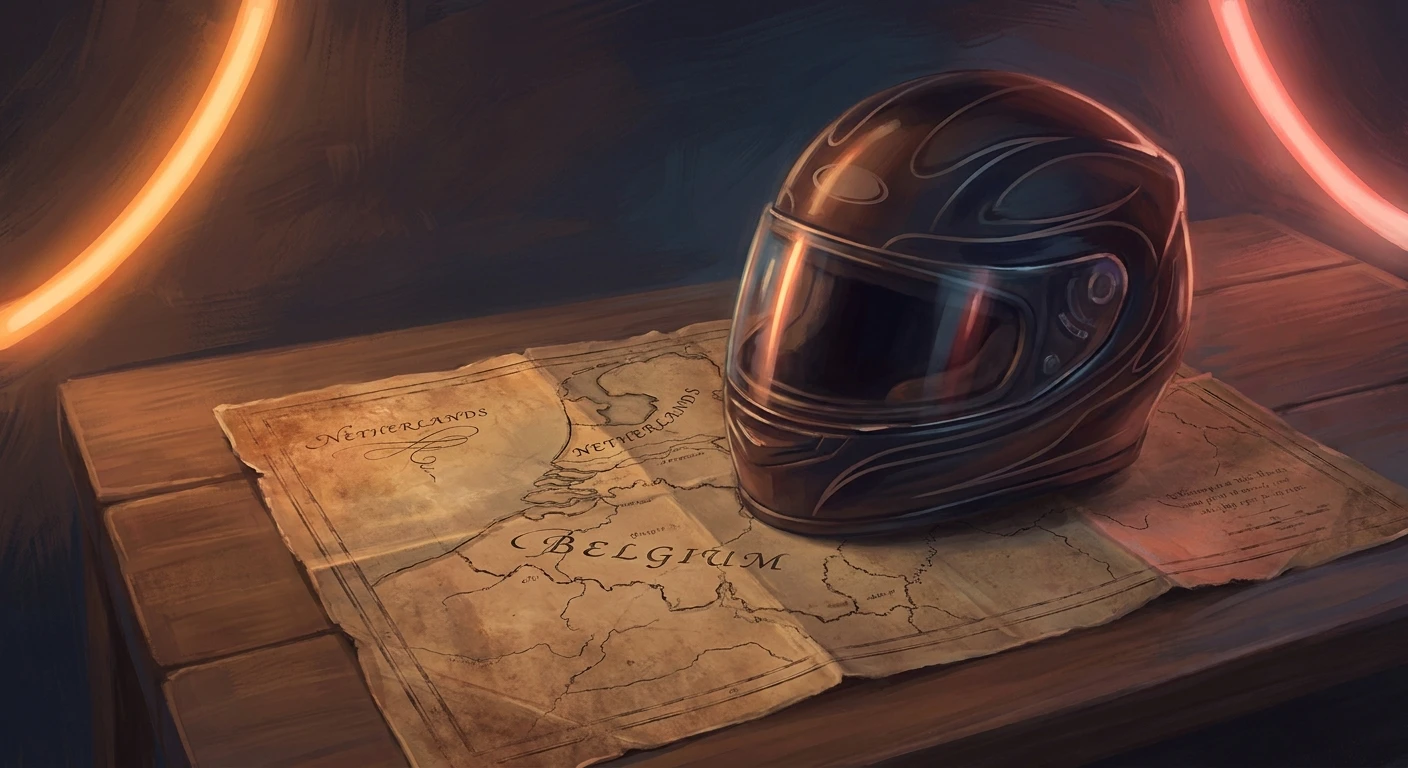
The truth is that his background is an absolutely brilliant mix of two neighboring European nations. Understanding his origins completely changes how you view his aggressive, calculating, and relentless driving style. He was born in Belgium, races under the Dutch flag, and currently lives a glamorous life in Monaco. But that simple sentence barely scratches the surface. If you really want to know what makes this champion tick, you need to look at the geographical and family roots that shaped his early years. Let me walk you through the fascinating, high-speed journey of this absolute powerhouse of a driver.
The Core Details of His Unique Dual Heritage
Let’s get straight to the hard facts about his birthplace, because the mix of cultures is what makes him so unique. Max Emilian Verstappen was born on September 30, 1997, in Hasselt, a city situated in the Flemish region of Belgium. However, his family dynamic is beautifully complicated. His father, Jos Verstappen, is a famous former Formula 1 driver from the Netherlands. His mother, Sophie Kumpen, is a highly successful former karting champion from Belgium. Because he grew up right on the border of these two countries, he soaked up the best of both racing cultures.
| Location | Geographical Significance | Verstappen’s Direct Connection |
|---|---|---|
| Hasselt, Belgium | Capital of the Limburg province in Flanders | His actual birthplace and early childhood home. |
| Montfort, Netherlands | Small Dutch town near the Belgian border | His father’s hometown and a place he spent massive amounts of time. |
| Monaco | The luxurious sovereign city-state on the Riviera | His current permanent residence and home base during the off-season. |
Knowing his origins is not just fun trivia; it actually gives you a distinct advantage when analyzing his races. Here are two clear examples of why this value proposition matters to any real fan. First, when he absolutely dominates a wet, rainy race at a track like Spa-Francorchamps, you know it is because he spent his entire childhood racing karts in the cold, unpredictable Belgian rain. He knows exactly how cars behave on slippery European tarmac. Second, when he shows that zero-compromise, elbows-out aggression, you are seeing the pure Dutch racing DNA passed down directly from his father, who was known for his completely fearless approach.
To summarize his complex identity, here are the core pillars you need to remember:
- He was born in Hasselt, Belgium, and holds dual citizenship.
- He was raised largely in the Belgian towns of Bree and Maaseik, right next to the Dutch border.
- He professionally identifies entirely as Dutch, racing under the Netherlands flag to honor his father’s sporting legacy.
Early Origins in the Low Countries
To truly understand his roots, you have to look at the families that created him. The Kumpen family, on his mother’s side, is essentially racing royalty in Belgium. His uncle raced in GT endurance championships, and his mother was famously quick, even beating future F1 drivers in her karting days. On the other side, the Verstappen family brought the heavy-hitting Dutch F1 experience. Growing up in a household where both parents understood the extreme demands of motorsport meant that his childhood was completely abnormal. Instead of playing normal games, his early origins were defined by the smell of high-octane fuel and burning rubber across the karting tracks of the Low Countries.
The Evolution of a Racing Prodigy
His evolution from a local kid racing near the border to a global superstar is mind-blowing. He spent thousands of hours at Karting Genk in Belgium, a track that became his ultimate testing ground. His father, Jos, was notoriously strict, acting as his mechanic, coach, and mentor. They would drive thousands of kilometers in a cramped van across Europe to attend various international karting championships. This gruelling schedule taught him unbelievable discipline. He learned how to tune engines, understand tire degradation, and mentally destroy his opponents before the race even started. The evolution was rapid; he skipped lower formula categories almost entirely, jumping straight into the highest tier of open-wheel racing because his foundational skills were already perfected.
The Modern State of the Champion
Fast forward to the modern state of his career. Now that we are deep into the highly competitive 2026 racing season, he has established himself as one of the greatest athletes in the history of the sport. He no longer lives in the quiet border towns of Belgium or the Netherlands. Like many elite athletes, he relocated to the luxurious streets of Monaco. Living in the Principality gives him privacy, perfect weather for training, and incredibly easy access to the European airport hubs needed for a grueling 24-race calendar. Yet, despite the yachts and the glamour, he remains deeply connected to his roots, constantly referencing the tough love and cold track days of his youth.
The Physics Behind His Driving Style
Let’s get slightly technical for a second, because his geographical origins directly influenced the physics of his driving style. Growing up racing heavily on the tight, technical karting tracks of Belgium taught him to master a concept called “trail braking.” This is where a driver keeps the brakes partially applied while turning into the apex of a corner. It maintains the weight of the car on the front tires, maximizing grip. Because the tracks in his hometown region are often wet and extremely slippery, he developed an internal gyroscope. He can instinctively feel the exact moment the rear tires are about to lose traction. You can see this today; his ability to balance a 1000-horsepower car on the absolute limit of adhesion without spinning out is unparalleled.
Technical Mastery and Telemetry
Beyond the physical feeling, there is the raw data. Modern F1 is driven by telemetry—massive streams of data measuring everything from brake pressure to steering angle. Because his father taught him the mechanics of the kart back in Genk, he understands this data intuitively. He doesn’t just drive; he processes information like a supercomputer. When engineers talk to him over the radio, he can compute complex strategy changes while managing incredible physical loads.
- Reaction Times: His visual and physical reaction times are consistently measured at around 0.2 seconds, vital for correcting sudden snaps of oversteer.
- G-Force Tolerance: Having built his neck muscles on European tracks since age four, he comfortably handles sustained lateral loads of up to 5G in high-speed corners.
- Braking Pressure: He routinely applies over 100 kilograms of force to the brake pedal in a fraction of a second, an essential skill honed in his aggressive early days.
- Sim Racing Precision: His heavy involvement in top-tier sim racing means he practices the mathematical perfection of racing lines daily, blending virtual data with real-world physics.
A 7-Day Guide to Exploring His Roots
If you are a massive fan and want to physically trace his journey, I have put together the ultimate 7-day road trip itinerary. This plan will take you straight through the heart of his origins.
Day 1: Arrive in Hasselt, Belgium
Start your journey right where the story began. Hasselt is a beautiful, historic Flemish city. Spend the day walking the charming streets, grabbing some local Belgian waffles, and soaking in the atmosphere. This is the exact city where he was born in 1997. It is quiet, unassuming, and the perfect starting point to understand the peaceful environment he came from before the madness of international racing took over his life.
Day 2: Visit the Karting Genk Circuit
Just a short drive from Hasselt is Karting Genk, famously known as the “Home of Champions.” This is an absolute must-visit. You can rent a high-speed kart yourself and drive the exact same corners he mastered as a kid. The facility is world-class, and the staff are incredibly proud of their local hero. You will instantly feel the challenge of the long straights and highly technical braking zones.
Day 3: Cross the Border to Montfort, Netherlands
Drive roughly 45 minutes across the border into the Netherlands to visit Montfort. This is the heartland of the Verstappen family. The transition from Belgium to the Netherlands is so seamless you barely notice it, which perfectly mirrors his own dual nationality. Spend time at a local Dutch cafe, chat with the locals (who are all fanatical F1 fans), and appreciate the strong Dutch culture that defines his public racing persona.
Day 4: Explore the Verstappen Shop in Swalmen
You cannot do this trip without picking up some official merchandise. Head over to the nearby town of Swalmen, where the official physical merchandise store is located. It is essentially a museum disguised as a shop. You can view his actual race-winning trophies, original helmets, and sometimes even the exact karts he used to win European championships. It is a brilliant tribute to his career.
Day 5: Experience Zandvoort’s Banked Corners
Drive up to the Dutch coast to the legendary Circuit Zandvoort. This is the home of the Dutch Grand Prix. While you might not be able to drive an F1 car, you can book track days or simply walk the perimeter in the sand dunes. Looking at the massively steep banking of the final corner—a corner designed specifically to maximize speed—will give you chills when you imagine him flying through it surrounded by orange smoke.
Day 6: Travel to Monaco for the F1 Lifestyle
Catch a flight down to the French Riviera and arrive in Monaco. This represents the modern era of his life. Walk the iconic track layout through the city streets. Stroll past the harbor, look at the mega-yachts, and grab a coffee at La Rascasse. It is the ultimate contrast to the quiet rural tracks of Belgium, showcasing just how far his immense talent has brought him.
Day 7: Sim Racing Experience at Home
Wrap up your trip by returning home and setting up a racing simulator. He is famous for spending his days off grinding on platforms like iRacing. Grab a steering wheel, boot up a virtual version of Spa-Francorchamps or Zandvoort, and try to match his lap times. It is the best way to physically connect with his relentless pursuit of absolute perfection.
Myths & Reality: Clearing the Air
Because he is such a massive global figure, plenty of rumors float around about his background. Let’s clear up the biggest misunderstandings.
Myth: He was born in the Netherlands and has always lived there.
Reality: He was actually born in Hasselt, Belgium, and lived in Belgium for most of his childhood and teenage years before moving to Monaco.
Myth: He purely relies on his father’s racing genes.
Reality: His mother, Sophie Kumpen, was an unbelievably talented racer who legitimately beat future F1 stars like Jarno Trulli in karting. His talent comes heavily from her side of the family as well.
Myth: He races for the Netherlands because he dislikes Belgium.
Reality: He has massive respect for Belgium. He races under the Dutch flag simply because he felt more closely aligned with his father’s professional racing network and the Dutch sporting identity growing up.
Frequently Asked Questions & Final Thoughts
Does he speak French?
Despite being born in Belgium, he grew up in the Dutch-speaking region of Flanders. He speaks fluent Dutch, English, and some German, but French is not his primary language.
Where does he live now?
He permanently resides in the Principality of Monaco, which is the standard home base for a large portion of the current racing grid due to privacy and tax reasons.
Why does he race for the Netherlands?
He chose to race with a Dutch license because he spent the vast majority of his professional racing development surrounded by Dutch sponsors, guided by his Dutch father.
Is his mother Belgian?
Yes, Sophie Kumpen is fully Belgian. She comes from a very prominent family in the Limburg region known for both business and motorsport.
Did he ever race under the Belgian flag?
In his very early karting days, he did occasionally compete using his Belgian documentation, but as he moved toward professional single-seaters, the Dutch identity was cemented.
Who is his father?
His father is Jos Verstappen, a former F1 driver who stood on the podium alongside legendary drivers like Michael Schumacher in the 1990s.
Where is his hometown?
While born in Hasselt, he considers the neighboring town of Maaseik in Belgium as the place where he truly grew up and went to school.
So, there you have it. The next time you are watching a race and someone asks you about his origins, you have all the facts. He is a brilliant product of Belgian karting tracks, Dutch racing aggression, and unmatched natural talent. His dual heritage is the secret sauce that created a modern motorsport icon. If you enjoyed this deep dive, share this post with your fellow racing fans and let me know in the comments if you plan on visiting any of these iconic locations!
Leave a Reply