
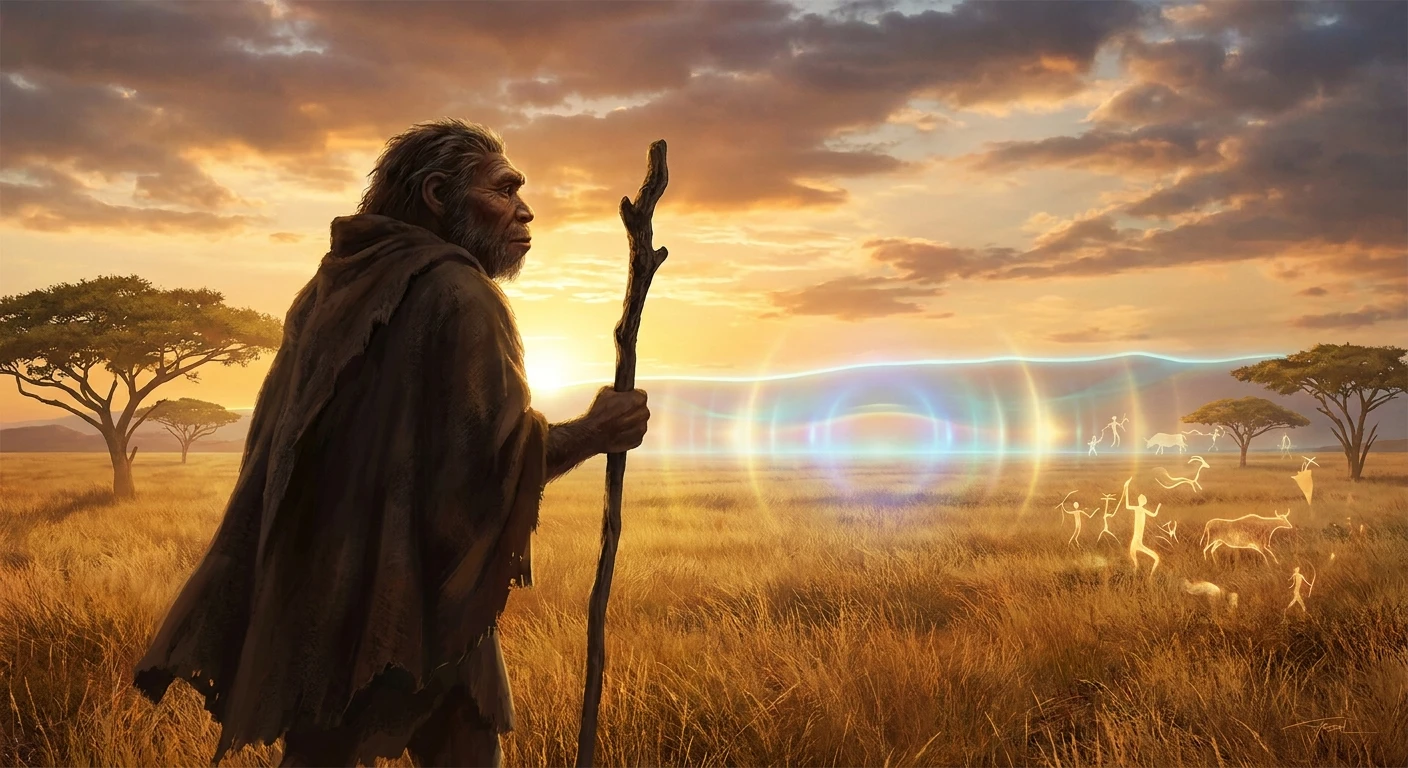
Exploring the mystery: who was the first person to die
Have you ever just sat back and asked yourself exactly who was the first person to die on our planet? It is a question that hits you late at night. You are definitely not alone in thinking about it. Growing up in Kyiv, I remember taking weekend walks near the National Museum of Natural History, staring through the glass at ancient hominid skulls, and wondering about their individual stories. Who was the absolute first? It is a fascinating topic that blends evolutionary biology, ancient history, and even philosophy.
Finding a definitive name or face is physically impossible due to the sheer mechanics of time and fossilization, but we can definitely track the earliest recorded evidence of human mortality. Our thesis here is straightforward: understanding the origins of human death requires us to look past simple myths and rely on hard paleoanthropological evidence. By tracing the fossil record, we can pinpoint the earliest known members of our species and their ancestors, effectively putting together a rough sketch of early mortality. If you are ready to get some real answers about our collective past, keep reading as we map out the timeline of human existence.
Defining the First Human Death
To really answer this question, we first have to define what a person is. Do we mean the first Homo sapiens? Or are we talking about earlier hominid ancestors like Australopithecus or Homo habilis? Depending on your definition, the answer shifts dramatically. If you follow religious or mythological texts, the answer is often tied to specific named figures like Abel from the Biblical Genesis story. However, from a strictly scientific and evolutionary standpoint, the first deaths occurred millions of years before written language even existed, deep in the savannas of Africa.
| Perspective | The “First” Individual | Basis of Evidence |
|---|---|---|
| Evolutionary Science | Unknown early Homo sapiens | Fossilized remains in North and East Africa |
| Biblical Text | Abel (first recorded death) | Religious scriptures and ancient manuscripts |
| Paleoanthropology | Older Hominids (e.g., Lucy) | Radiometric dating of ancient bone fragments |
Why does understanding ancient mortality even matter? There is a massive value proposition here for modern science. First, by studying how early humans died, researchers can trace the evolution of ancient diseases and immune responses, which directly helps us understand modern genetics. Second, analyzing ancient burial sites gives us profound insights into early human psychology and community bonding. When we see that ancient people cared for their dead, we recognize the birth of human empathy.
Scientists rely on a few core methods to determine the age and context of ancient remains. Here is how they do it:
- Radiocarbon Dating: Measuring the decay of Carbon-14 isotopes in organic material to estimate age up to about 50,000 years.
- Potassium-Argon Dating: Used for much older volcanic rock layers surrounding fossils, allowing scientists to date hominids millions of years old.
- Stratigraphy: Analyzing the layers of earth where bones are found; deeper layers generally mean older remains.
Origins of Human Mortality
Death is as old as life itself, but human mortality has a specific evolutionary timeline. Millions of years ago, early hominids like Sahelanthropus tchadensis walked the earth. They lived harsh, brief lives. The concept of death for these creatures was likely purely instinctual, driven by predation, starvation, or harsh weather. There were no names, no recorded histories, and definitely no gravestones. The absolute first individual of the genus Homo to pass away will forever remain lost to the massive geological shifts of our planet. The earth simply recycles organic matter too efficiently to preserve a complete record of every single life.
Evolution of Burial Practices
As early humans evolved, so did their relationship with mortality. Around 100,000 to 300,000 years ago, we see the first tentative evidence of deliberate burials. Neanderthals and early Homo sapiens began placing their deceased in caves, sometimes with tools or animal bones. This signifies a monumental cognitive shift. Death was no longer just a biological failure; it became a recognized community event. They started to wonder what happened after someone passed. This behavioral evolution marks the beginning of human culture as we recognize it today.
Modern State of Paleoanthropology
Fast forward to the present day, and the science of finding ancient remains has skyrocketed in precision. As of 2026, the technology used to scan earth layers and analyze microscopic bone dust is incredibly advanced. We have discovered sites like Jebel Irhoud in Morocco, which pushed the timeline of Homo sapiens back to about 300,000 years ago. The individuals found there are some of the oldest anatomically modern humans ever discovered. Did one of them die first among their specific tribe? Most likely. While we cannot name them, they represent the earliest scientifically verifiable human deaths we have on record.
The Science of Ancient Fossils
To grasp the reality of ancient mortality, you need to understand taphonomy. Taphonomy is the specific scientific study of how organisms decay and become fossilized. The truth is that fossilization is an incredibly rare lottery. When an early human died, their remains were almost always consumed by scavengers or dissolved by acidic soils. For a bone to become a fossil, it had to be buried rapidly in sediment, shielded from oxygen, and subjected to mineral replacement over tens of thousands of years. This means the fossils we do have represent only a microscopic fraction of the humans who actually lived and died back then.
Genetic Clocks Explained Simply
Beyond physical bones, scientists use something called a molecular clock to track human history. By looking at the mutation rates in modern human DNA, geneticists can calculate backward to find when specific population bottlenecks occurred. They can theoretically pinpoint the era of “Mitochondrial Eve” and “Y-chromosomal Adam.” These were not the first humans to exist or die, but rather the most recent common ancestors of all currently living humans. Their predecessors obviously died before them, setting the stage for our specific genetic lineage.
- Bone Mineralization: Organic bone matrix is replaced by silica or calcium carbonate, turning bone to stone.
- Carbon-14 Half-life: The isotope decays every 5,730 years, making it useless for fossils older than 50,000 years.
- Fossil Rarity: It is estimated that less than one-tenth of one percent of all animal life that ever existed became fossilized.
- Isotope Analysis: Teeth can hold stable isotopes that tell scientists exactly what an ancient person ate right before they died.
Step 1: Grasp the Geological Time Scale
If you want to genuinely understand this topic, you need a plan of study. Start by familiarizing yourself with geological epochs. The Pleistocene and the Holocene are the most relevant to human evolution. Understanding that “a million years” is just a blink in Earth’s history will give you the necessary perspective to realize why finding the singular “first” death is impossible. Look up visual timelines online to map out where hominids split from other primates.
Step 2: Study Australopithecus Afarensis
Next, read about “Lucy,” the famous Australopithecus afarensis discovered in Ethiopia. She lived roughly 3.2 million years ago. While she is not a modern human, studying her remains shows exactly how scientists determine cause of death in ancient bones. Researchers found evidence of fractures suggesting she might have died from falling out of a tree. This is a brilliant example of ancient forensic pathology.
Step 3: Examine Early Homo Sapiens Remains
Focus your attention on the Jebel Irhoud remains in Morocco and the Omo Kibish fossils in Ethiopia. These represent the absolute oldest known Homo sapiens. By studying these specific archaeological sites, you will learn about the harsh conditions early humans faced. These individuals died roughly 200,000 to 300,000 years ago, representing the vanguard of modern human mortality.
Step 4: Visit Virtual Fossil Archives
You do not need to travel to a museum to see these ancient bones anymore. The Smithsonian and other natural history museums offer incredible 3D virtual archives. You can literally rotate ancient skulls on your screen, inspecting the dental wear and cranial fractures that hint at how these ancient people lived and perished. It is an amazing way to connect visually with our deep past.
Step 5: Read Up on Radiometric Dating
Take an afternoon to watch educational videos on radiometric dating. Understanding the difference between radiocarbon dating and potassium-argon dating is crucial. Once you comprehend how we measure the decay of radioactive isotopes, you will understand exactly how scientists can boldly claim a specific bone is exactly 2.5 million years old without any written records.
Step 6: Compare Neandertal and Sapiens Sites
Look into the differences between Neanderthal burial sites (like Shanidar Cave) and early human sites. You will find fascinating debates about whether Neanderthals buried their dead with flowers. Comparing these two species shows how the conceptual understanding of death evolved parallelly among different hominid groups before modern humans became the sole survivors.
Step 7: Analyze Modern Forensic Techniques
Finally, look into how modern forensic anthropology overlaps with paleontology. The same methods used by detectives today to determine cause of death in modern crime scenes are often adapted to study ancient fossils. From blunt force trauma analysis to detecting ancient bacterial DNA in tooth enamel, the crossover between modern forensics and ancient history is absolutely mind-blowing.
Myths & Reality
Myth: The first person was completely alone when they died.
Reality: Early hominids were highly social creatures that lived in packs or tribes. It is highly probable that the earliest humans died surrounded by their community members, not in total isolation.
Myth: We have the exact skeleton of the very first human.
Reality: Fossilization is incredibly rare. The “first” human remains completely lost to time. We only have skeletons of individuals who happened to die in the exact perfect geological conditions required for preservation.
Myth: Ancient humans mostly died of old age in peaceful conditions.
Reality: The ancient world was brutal. The primary causes of death were severe dental infections, predation by large carnivores, starvation, and childbirth complications. Dying of “old age” was an extreme luxury.
Myth: Written records tell us exactly who died first.
Reality: Written language was invented only about 5,000 years ago in Mesopotamia. Humans had been living and dying for hundreds of thousands of years before anyone could write down a name.
FAQ & Conclusion
Did Adam die first?
In the Biblical narrative, Adam’s son Abel is actually the first recorded death (murdered by Cain), while Adam lived on for many more years according to the text.
Who is the oldest fossil found?
The oldest hominid fossil is Toumai (Sahelanthropus tchadensis), dating back about 7 million years, though he is an ancestor, not a modern human.
How old is Lucy?
The famous fossil known as Lucy is approximately 3.2 million years old, found in the Afar region of Ethiopia.
Can we find older fossils?
Yes, paleontologists are constantly digging. Even in 2026, new technologies are helping us locate deeper, older fossil beds in Africa.
What killed early humans?
Most early humans succumbed to environmental hazards, predator attacks, severe weather, and untreated physical injuries or infections.
Did they have funerals?
Evidence suggests intentional burials started happening around 100,000 years ago, indicating early forms of funerals or mourning.
What is carbon dating?
It is a scientific method that measures the remaining Carbon-14 in organic material to determine how long ago a living thing died.
Where did early humans live?
The earliest humans evolved in Africa, specifically across regions spanning modern-day Ethiopia, Kenya, and Morocco.
Are Neandertals older than us?
Neanderthals and Homo sapiens evolved around the same broad timeframe from a common ancestor, but Neanderthals eventually went extinct around 40,000 years ago.
Will we ever know the exact first death?
Scientifically, no. The exact first human death is completely erased by geological recycling. We can only track trends and oldest known survivors.
Ultimately, chasing the exact identity of who was the first person to die is a journey into the deepest roots of our existence. While we cannot put a specific name or face to the very first human to pass away, the fossil record gives us an incredibly rich narrative of survival, evolution, and community. We are all connected to those ancient ancestors who battled the harsh elements of prehistoric Earth. If you found this deep historical journey fascinating, share this guide with your friends and keep questioning the incredible history of human life!
Leave a Reply